
Why did Jesus tell stories? He actually tells us why, and his explanation will shock you.
In Mark 4:10, it says that when Jesus was alone with his twelve disciples and the others who were gathered around, they asked him what the parables meant. He replied, “You are permitted to understand the secret of the kingdom of God. But I use parables for everything I say to outsiders so that the Scripture might be fulfilled: ‘When they see what I do, they will learn nothing. When they hear what I say, they will not understand. Otherwise, they will turn to me and be forgiven.’”
So Jesus was using stories as a way of hiding information. This boggled my mind when I came across it because, as someone who teaches complicated technical topics to authors, I use metaphors and stories to make topics easier to understand. Jesus is saying he is doing just the opposite. He is using stories to make things harder to understand.
I did not understand this passage until I got married and had kids. Suddenly, this verse started to make sense because I could talk in metaphor with my wife, so the children couldn’t understand what we were discussing. While this is useful for playful banter in conversation, it is also at the heart of storytelling.
The art of writing fiction is about using narrative to convey and withhold information.
This is why every author should learn to write mystery, regardless of their preferred genre. Curiosity keeps readers turning pages, even for books they aren’t enjoying.
Have you ever finished a below-average movie or TV show simply because you were curious about something in the story and wanted an answer? People want the unknowns answered and the problems resolved. That desire is a powerful driver even outside the mystery genre.
Every genre can benefit from incorporating elements of mystery.
To weave mystery into your story, you must develop empathy for your reader. You must learn to see the story through their eyes and track what they know and don’t know. Successful authors do this instinctively, while beginners often focus only on the story they want to tell instead of the reader’s experience.
So how do you weave mystery into your novel in a way that keeps readers turning pages and delivers that deeply satisfying aha moment, regardless of what genre you’re writing?
I asked Sarah Rosett, a USA Today bestselling author of more than thirty mysteries. She wrote How to Outline a Cozy Mystery (affiliate link) and co-hosts the Wish I’d Known Then podcast for writers.
How do you get inside your reader’s mind?
Sara: It is very hard to do, but you have to pull yourself out of the story enough that you feel like you are reading it for the first time, especially during revisions.
You already know the whole story and all the answers, so you have to ask yourself, “Will this make sense from this point on? If I did not know that Bob was the one upstairs during the events that happened, would this still work?” You have to learn how to see your story with new eyes. For me, that requires a lot of revision.
Thomas: This is one place where beta readers are incredibly helpful. A beta reader approaches your story with fresh eyes. They do not know how it will end or what the conclusion is.
One effective technique is to get frequent feedback rather than only at the end of the whole book. For example, ask, “What questions do you have at the end of chapter one?” If the answer is “I don’t have any questions,” that is a bad sign.
There is a temptation, especially in epic fantasy and science fiction, to do all the worldbuilding up front. This often leads to big info dumps early in the story, which can be wearying. It also misses the opportunity to incorporate mystery and curiosity as readers slowly discover the world.
How does curiosity keep readers engaged?
Sara: Curiosity, even about a small thing, is enough to pull your reader through the story. If you do not have that spark of curiosity in the beginning, it is difficult to keep people engaged, regardless of what genre you’re writing.
Thomas: For example, almost all of Brandon Sanderson’s Cosmere books follow the same superstructure. You have a character who does not understand the rigid magic system of that planet. That character slowly discovers the magic system along with the reader. Typically, the story ends as the magic system becomes fully understood. He uses curiosity about the magic system to pull readers through the story.
Even when he writes sequels, he often introduces a new magic system or a new aspect of the world. At no point do you get an info dump where the mentor character says, “Let me fully explain the Force for you. Now there are no more questions.” Instead, you are constantly curious. Mystery connects beautifully to fantasy in this way, but it can connect with any genre.
Sara: That is a great example because many people think mystery must be tied to an object or a puzzle. While it can be, it does not have to be.
Curiosity about how the world works is still a form of puzzle. It does not have to involve a dead body or a kidnapper. It can simply be something that engages the reader’s desire to explore the world, which is why those readers are there in the first place.
Does the mystery have to be the ending?
Thomas: The mystery does not have to be how the story ends. Mystery often pairs well with romance. In many cozy mysteries, there is often a couple who get together, but the ending of those stories is never really in doubt. No one is wondering, “Are they going to get together?” You suspend disbelief while watching the Hallmark movie, but deep down, you know how it ends.
Some stories introduce multiple love interests, so you are unsure who the protagonist will end up with, but that is not how most romances work. The romantic arc is usually clear, but mystery elements woven into it can help keep readers turning pages.
How do you work in mystery elements without tying them to the ending?
Sara: One way to accomplish that is to start with a series of small questions. As each question is resolved, it naturally leads to the next one. You can interlink them so the curiosity builds over time.
Or you can have one thread, one puzzle, that runs throughout your story or even throughout your entire series. You might introduce something in book one, offer a few clues, reveal more in book two, and finally resolve it at the end of the series.
There are many ways to do it, but I like to begin with something small and gradually make it bigger. That feels like the natural progression. You do not want to start with a huge question and solve it early because that makes the later questions feel less compelling.
Thomas: It can be something as simple as, “Here’s some information that exists, and we’re not going to tell you what it is.” Tolkien does this well in The Lord of the Rings. The story opens with the poem about the nine rings for mortal men, the seven for the dwarves, the three for the Elven lords, and the one ring to bind them all.
Very quickly, you learn that the dwarven rings were lost or fell to the Dark Lord. The mortal rings corrupted the nine kings who wore them, turning them into the Nazgûl. But Tolkien does not tell you what happened to the Elven rings. And as a reader, you think, “Wait, I want to know what happened to the Elven rings!”
Near the end of the first book, you learn that Galadriel is wearing one of them. Later, you discover that Elrond is wearing another. But those answers make you wonder, “Who has the third one?” You do not find out until the very end of the story.
It is an open loop, an itch in your mind.
These kinds of mysteries work well. Some readers of The Lord of the Rings never noticed or cared, because it was not highlighted as a mystery. If they missed the puzzle, the story still worked. But for the readers who do pay attention, the question keeps them turning the pages.
How do you work mystery into other genres?
Sara: The elements are the same no matter what genre you write. You can take a puzzle or something unknown and weave it throughout your story. You want some things to be visible and others to remain invisible.
I think of it like an iceberg. Your reader sees the small part above the water, but the bulk of the information is hidden beneath the surface.

If a character has a secret, that secret may be hinted at occasionally, but the reader does not get much detail at first. As the story unfolds, more of the iceberg becomes visible. By the end, everything is revealed.
You can use this technique in any genre. The secret can be a character’s past, a relationship, or a lie. A good place to start is to give a character a secret and then ask yourself what they will do to keep that secret hidden. That alone gives you a framework for crafting mystery into the story.
Thomas: Once the secret or mystery is revealed, the reader reinterprets everything that came before it. Suddenly, you want to reread the story with new eyes.
This is what Jesus does with the parables. What big secret is he hiding? The secret of the kingdom of God is that not everyone who appears to be a convert is a true convert. The parable he was explaining was the parable of the sower. Not all the plants survive. Not all the fish are good fish. There are both wise virgins and foolish virgins.
In one of the synoptic gospels, Jesus even says this parable is the one that unlocks all the others. If you do not understand true and false conversion, many parables will not make sense. Once you understand the key, you want to go back and reread them. You begin to see foreshadowing. You realize some things were stated outright, but you did not recognize them at the time.
That desire to reread is powerful. Rereading leads to recommendations, sales, and a deep impact on a reader’s psychology, morality, and theology. The more someone rereads your book, the more influence it has.
Are mysteries re-readable?
True mysteries are less likely to be reread because the reader knows the solution to the puzzle. Would you agree?
Sara: I would say it depends. Many readers read mysteries for the characters, especially in series where characters grow and change over time. Those readers will happily reread to see the character journeys again.
Some readers do not even remember the puzzle much, especially if it was not their main interest. They reread mysteries the same way you might rewatch an old episode of Murder, She Wrote. You remember someone died in Cabot Cove, but you may not remember which suspect did it.
So there is rereadability, but it depends on what the reader values. If a reader is only there for the puzzle, then perhaps not, because you cannot experience the same shock again.
Thomas: My brother and I went through a board game-design phase. One prototype we never published was a game called The Butler Did It. In this game, the butler has murdered someone, and you are trying to figure out who the butler is. It’s an inversion of Clue.
Any element can become a mystery element. But many authors struggle to keep the mystery interesting. The idea that every author should write a mystery can feel intimidating. In our Five-Year Plan course, we have all our students write a mystery, and I encourage them to write a Sherlock Holmes mystery.
Holmes is in the public domain, so you do not have to build a world or invent a character. And writing Holmes forces you to learn how to write a character who is smarter than you. It is excellent training.

What do you need to know to outline a mystery?
Sara: When I start, I usually know three things:
- who the victim is
- who the murderer is
- how the murder was done
Then I create a pen-and-paper mind map. I put the victim in the middle and draw lines out to all the suspects. I figure out how each suspect is connected to the victim and what motive each might have had.
Then I create a set of suspects, clues, and motivations, and build from there.
I also work on what I call “innocent secrets.” If you have seven characters and every one of them has a dark, dangerous secret they would kill to protect, that gets old. So I include characters who seem suspicious for innocent reasons.
For instance, someone might be researching poisons. That looks incriminating, but maybe the real reason is that they are secretly writing a thriller and do not want anyone to know about it. They would hide their research, and it would look suspicious, but the reason is harmless.
These innocent secrets create highs and lows in the tension, just as your story structure does. You want variety in your suspects’ behavior and motives.
Thomas: You can also create false alibis. Someone might claim, “I was at the movies on Thursday night,” when they were not.
How do cozy mysteries differ from the mystery elements in thrillers?
Thomas: One interesting feature of cozy mysteries is that everyone typically has a motive. The victim is not a beloved figure. Everyone had a reason to want them gone. The question is simply, “Who did it?”
This prevents the reader from mourning the victim, which keeps the tone lighter. In thrillers or suspense, the victim is often someone good and sympathetic, so the reader grieves. The emotional experience is different.
Mystery, thriller, and suspense exist on a continuum. In cozy mysteries, like Hercule Poirot stories, the detective is never in danger. On the other end, you have the stories of Jason Bourne, who is always in danger. For him, the mystery is finding out who he is, which is a twist on the classic mystery structure.
What is the difference between mystery, thriller, and suspense?
Sara: A mystery is a puzzle. It is a whodunit. By removing the sorrow over the victim’s death, you allow the reader to focus on the puzzle and treat it as an intellectual challenge.
A thriller is more of a thrill ride. You usually already know who the antagonist is in a thriller. The question becomes whether you can prevent them from doing something bad. Can you figure out who is after you? It is a different way to structure a story.
Thomas: That is a good way of thinking about it. Suspense, I think, has to do with how much peril the protagonist is in. The danger does not have to come from the villain. It could be nature or society. For example, the character may have been falsely accused of a crime, and they have to prove it or solve the crime before they’re arrested.
In that case, the bad guy is not necessarily the source of the suspense. Or maybe he secretly is. Maybe it was the chief of police who did it and framed the protagonist. There are so many ways you can play with this. That is what makes the genre so fun and why writing this kind of book is so helpful for growing your writing skills.
Sara: With any type of mystery, there are a lot of moving parts. Even if you are only including mystery as a subplot in another genre, you still need to make sure all the pieces are there. You do not have to have it perfect in the beginning, but by the end, you should be sure you have laid all the clues and all the red herrings.
You want your reader to say, “Of course, this is the answer. It was there all along, and I did not see it.” That is what makes it satisfying. If your clues are not there, the reader will finish the book and think, “I could never have solved this anyway,” and that leads to frustration, not satisfaction.
How do you use clues and red herrings effectively?
Thomas: The term “red herring” originates from fox hunting.
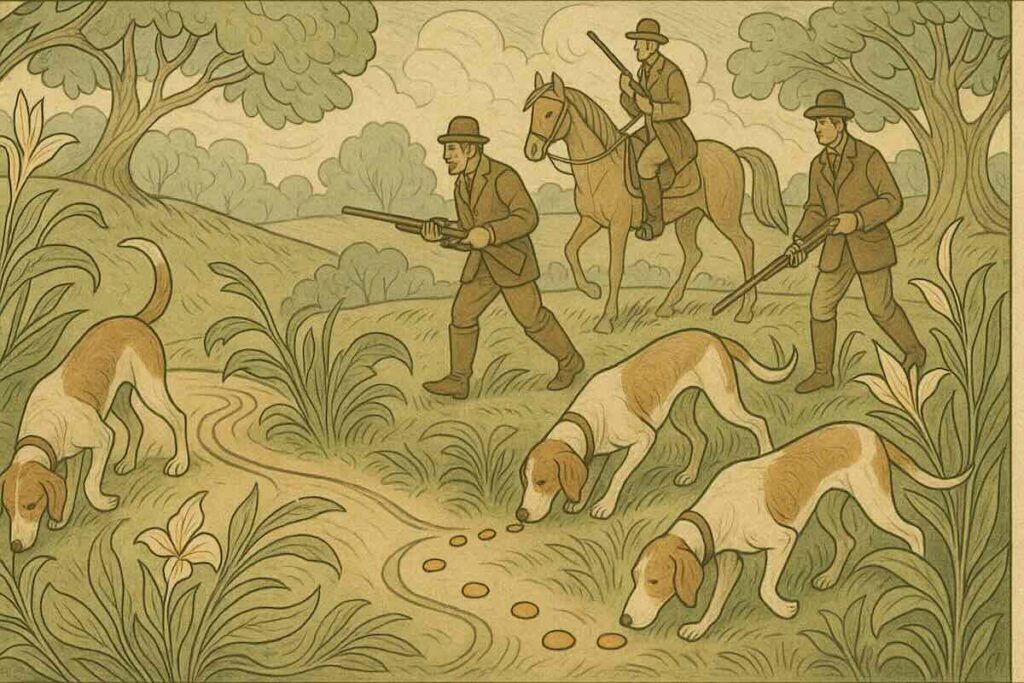
When fox hunting was popular, trainers taught hounds to track scents by starting with short trails and gradually extending them. As the dogs improved and became increasingly able to track scents for long distances, trainers would drag a dead red herring fish across part of the trail. Its strong scent split off from the real trail. This technique trained the hound to ignore the overwhelming stinky fish smell and follow the subtler, true scent.
A red herring in a story does the same kind of thing. How do you work red herrings into a mystery?
Sara: I think of clues and red herrings as two sides of the same coin. Almost anything can be a clue or a red herring. You just have to decide whether it points toward the solution or leads the reader away from it down a false path.
When I am plotting, I need to know where the story is going and what the correct trail is. Then I can go back and create diversions that pull the reader’s attention away from the true path.
Discovery writers may simply start writing and try to keep four or five suspects viable. When they get to the end, they see which suspect emerges as the murderer.
As you add clues and red herrings, I recommend building a strong path of genuine clues, then hiding those clues as much as you can so they are not obvious. With red herrings, you may hide them less carefully, so they stand out more, like the stinky fish that overwhelms the real scent.
What are some techniques for hiding clues?
Sara: Here are some of the main techniques:
Hide clues in a list.
Readers often have trouble keeping track of lists, especially lists of times or locations. If you are dealing with timetables or who was where at what time, a key clue buried in that information is easy to skim over.
Follow a clue with something dramatic.
You can reveal an important clue, then immediately have something dramatic happen. The big moment distracts the reader’s attention from what they just learned.
Let the sleuth discount the clue.
Your detective can learn a piece of information and immediately dismiss it. “It could not have been Jennifer. She is too sweet,” or, “She has an alibi, so it cannot be her.” Later, the sleuth discovers that their assumption or information was wrong. In close point of view or first-person point of view, the reader tends to trust the sleuth’s instincts, so they discount the clue as well.
Use miscommunication or misinterpretation.
One of my favorite examples is from an Agatha Christie story where a character says, “I am a leper.” When I first read it, I took it figuratively, as “I am an outcast.” At the end, you find out it was meant literally. The person actually had leprosy. That revelation makes you reinterpret everything that came before.
Place clues early in the book.
If you introduce a key clue early, readers may simply forget it by the time they reach the climax because they have processed so much information.
Overload the data, carefully.
This is related to hiding clues in a list. If you overwhelm the reader with suspects, timetables, or train schedules, it is easy for a vital detail to be overlooked. I would caution writers to use this sparingly because it is very easy to lose the reader entirely. Agatha Christie does it brilliantly, but it is a high-risk technique.
That extra data must be very interesting to readers. That is what Christie does so well. She wraps the information in drama, often gossipy interpersonal drama, so it is entertaining even while it is confusing. Red herrings are everywhere, but the reader enjoys following them.
Lay a false trail.
You deliberately construct a path that encourages the reader to assume a particular person is guilty or that a certain sequence of events happened when it did not. You sometimes have to build elaborate dead ends so the reader follows them, hits the wall, and has to mentally backtrack.
A lot of mystery writing comes down to planning your true path and your dead ends, then deciding how you will guide the reader along those paths. The specifics vary with your genre and style, but those are the general ideas.
How does misdirection work?
Thomas: In a sense, this is magic in the literal sense of stage magic, where everything is about misdirection. The magician has a beautiful assistant in a sparkly dress on one side of the stage, and the least interesting part of the stage is where the magic is happening.
Your eye is drawn to the sparkly dress, so you miss the trick itself.
I used this technique when I proposed to my wife. She knew I had asked her dad’s permission, so she knew a proposal was coming, but I still wanted the moment to be a surprise.
I set up a very romantic date in downtown Austin. We visited historical sites that were significant to our relationship, and I did not propose. Then I invited her to a vaguely described event later in the week, on Saturday. I sent a calendar invite and labeled it something generic like “outing.”
That was the misdirection.
We had a recurring tradition of getting dinner with my grandmother on Tuesdays. On the way there, I said, “We are early. Let’s go catch Pokémon at this park.” She did not know there was a photographer hiding in the bushes and that I was about to propose.
She was distracted by the romantic date that did not end in a proposal and by the mysterious Saturday event, so she never suspected Tuesday. That is misdirection. It is not magic in the occult sense. It is magic in the sense of directing and redirecting attention.
In fiction, you can do the same thing. You give the reader the clue that cracks the whole mystery, but you put it in the least interesting paragraph in the book. It is the paragraph where their mind drifts a bit. Then the very next paragraph is highly entertaining, the equivalent of the lady on stage in the dazzling dress.
This is why learning to write mystery is so important. Most authors do not realize that the entertainment factor is a dial they can control, and yet it is a dial you can turn too far. If a book is too exciting or too suspenseful, it becomes too stressful for some readers.
How do you know how much violence or suspense to include?
Sara: No, my readers would be upset. They would think, “Who wrote this book? This is not a Sarah Rosett book.” My readers are not expecting violence.
Thomas: Exactly. You tune the dial. Your readers are probably comfortable with a certain range of violence and intensity. By contrast, Jonathan Sugar, my co-host on Author Update, writes for Marines who have seen combat. His audience can handle having the dial turned all the way up. Their real lives are more violent than most books.
This goes back to empathy. To have empathy for your reader, you have to know who your reader is, specifically. Not all readers are drawn to all fiction. Not all readers “get” every story.
That was Jesus’ point with the parables. He essentially said, “You are going to understand these, but everyone else will not.” The implication is that later it would be the disciples’ job to explain the parables.
You can imagine early evangelism sounding like, “You remember Jesus, right? You remember that parable about the wise and foolish virgins? Here is what it means.” The story that made no sense back then suddenly makes sense. Something they had heard but not understood becomes clear.
And that is the power of red herrings and revelation.
How do you foreshadow without giving away the ending too early?
Sara: It is very tricky. I like to have a plan and know where the story is going. But there have been times when I reached the end and thought, “Oh my goodness, the person I planned to be the murderer is not the murderer after all.” Then I have to go back, change things, and relay some clues.
I want the reader to feel they could have solved the mystery. To make that possible, all the clues must be in place along the way. Part of that is putting the clue on the page but hiding it, or using misdirection so the reader does not grasp its full meaning at the time.
You take care of your reader by giving them everything they need to solve the mystery. You say, “Here is all the information. Here is the path to the answer,” but you make the path challenging. That challenge is what my readers want. Readers who prefer darker writing may not want a puzzle. They want the experience of watching a character survive impossible odds or navigate a post-apocalyptic world.
So I start from the end and make sure foreshadowing and clues are woven into the story in bits, not all at once. If the mystery is tied to a character or their past, I drip that out a little at a time. I do not use info dumps. A small hint is enough to keep readers thinking, “Why is this person like this? What really happened?” Those questions keep them reading.
Thomas: Male readers tend to prefer info dumps, but you still hold something back. You always leave out one piece of information that they will not get until the next info dump. You are constantly bread-crumbing the truth along.
That is key to maintaining tension and curiosity. You never want to answer every question before the end of the story, or at least before the dénouement. You can answer all the questions, then have one last chapter where we see the couple living happily ever after or watch the hero return home. That is good. You do not want to end too suddenly.
You must maintain curiosity. When that curiosity breaks, readers close the book, go to sleep, and wake with no desire to pick it up again because there are no unanswered questions.
Learn more about How to Write Endings Readers Can’t Stop Talking About.
Sara: One way of highlighting unanswered questions is by using multiple protagonists. You follow one character’s storyline until you reach a tense moment. Then you switch to the other character’s point of view. Readers want to know what happened to character A, but they’re now with character B.
It is the same concept. You pull one thread along, then switch to another. Maybe a letter is delivered. As a reader, you desperately want the character to open it and read it. Instead, the scene shifts or the character gets busy. You keep reading because you want to see that letter opened.
Thomas: One approach that can be taken too far is “mystery box” writing, which became very popular in Hollywood for a while. In that approach, every question is answered with another question, and no final answers are ever given. That is where it breaks down.
Answering a question with a new question drives the story forward, but you still have to deliver at the end. Many television shows written in this “mystery box” style have incredibly unsatisfying endings because the writers never learned how to write a satisfying conclusion.
An author I really like, Larry Correia, was so unhappy about this trend that when he finished writing Son of the Black Sword, he dedicated it to George R. R. Martin with a note that basically said, “See, it’s not that hard.”
Fantasy readers loved it. They were eating popcorn over that dedication.
You really do have to deliver. There is this concept of Chekhov’s gun. If you put a gun on the mantelpiece in the first act, that gun needs to be fired in the third act. The gun can be a red herring, but it has to be intentionally used that way. Otherwise, it becomes an unsatisfying loose end.
Why was there a loaded gun on the mantelpiece if no one ever fires it? Why was it in the story at all? Are you overwhelming the reader with irrelevant details? If so, you need to make that “irrelevant” information relevant in some way.
That brings us back to Agatha Christie’s interpersonal drama. She includes so much soap-opera-style drama that a mystery just happens to be happening inside of it. Everyone has opinions, secrets, and relationships. Those elements become the lady in the dazzling dress, the entertaining surface that hides the mechanics underneath.
Sara: Endings are so important. You have to tie everything off neatly, or your readers will be frustrated. If your subplot is a mystery subplot filled with mystery-box elements and no resolution, that frustrates readers.

It annoys me when I feel a TV series or a book series is being stretched out just to keep me hanging on. That feels manipulative. When I sense that, I lose interest. You must give readers a satisfying ending.
In my books, the dénouement usually shows the characters in daily life again, with order restored. That is the essence of mystery. Justice is done. The community is either back to normal or improved.
You may see relationships mended, friendships repaired. The wrap-up shows that everyone has survived, the questions are answered, and life can go on. That is one reason I have started watching Korean dramas. They are often limited series with actual endings. They may not be perfect, but they do end. A lot of Western television tries to keep viewers hanging forever and never ties anything off, which I find frustrating.
Thomas: That mystery box fatigue builds over time. We tolerated it for Lost because it was new and innovative. But the fact that Lost ended poorly makes us even less patient with that structure now.
Part of the problem is worldview. Many writers, including Christians, come out of university with a postmodern worldview and do not even realize there are other options. They’re swimming in postmodernism and don’t realize it. Postmodernism ultimately leads to nihilism.
Learn more about how your worldview impacts your story telling in the following episodes:
- How to Write Fiction with a Christian Worldview with Brian Godawa
- World-Building and Worldview: How Good Theology Can Make Your Book More Interesting
In the postmodern worldview, power and value are linked. A person’s worth is tied to their power. That is why, for a postmodern thinker, it is so important for women to have the same power as men. If they do not, they cannot have the same value, because value and power are the same thing in that system.
The problem with seeking power as the ultimate good is that it ends in a very sad, nihilistic place. It is Conan on his throne with his sword, weeping because there is nowhere left to conquer. He asks, “What was the point of it all? I have heard the lamentations of my enemies, but I still feel empty.”
At least Conan is honest enough to go there. Most stories are not willing to go fully into nihilism. The authors are not willing to say, “Everything is meaningless,” even though that is where their worldview leads. Because their worldview does not have a satisfying conclusion, their stories cannot have satisfying conclusions.
That is why we live in the era of the never-ending series. Everything keeps going and going because postmodern writers, trained in postmodern universities, do not know how to write an ending. They do not live in a world where there is divine justice, where morality is absolute, and where some things are evil simply because God has declared them evil.
Instead, morality becomes what the powerful impose on the weak. “The powerful do what they will, and the weak suffer what they must.” That is deeply unsatisfying. It is also an opportunity for Christian storytellers, because Christian storytelling can be better.
You can learn more in our episode about How to Write Endings Readers Can’t Stop Talking About.
We believe in consequences. We believe the wicked will be judged, that there will be divine, cosmic justice, and not only eternal justice but justice in this world as well. That is one reason The Lord of the Rings is so satisfying. Ultimately, the Ring defeats itself.
In Tolkien’s worldview, sin is self-defeating. The Ring compels Gollum to cast himself into the fire because Gollum violated an oath taken on the Ring. Even though it means the Ring is destroyed, it is more important that the oath be fulfilled. That reflects Tolkien’s belief that sin contains the seeds of its own destruction.
You do not see that in most of the countless Tolkien imitations. People say, “Why is my story not as good as Tolkien’s?” Well, Tolkien’s worldview was robust. He had to defend it weekly against C. S. Lewis over ale. If you have to defend your worldview to C. S. Lewis on a regular basis, it is going to get very strong.
Find people who will challenge your thinking. Develop a worldview that has a clear sense of right and wrong, grounded in truth rather than feelings. Your story has a moral system, whether you intend it or not. That moral system shapes whether your ending feels satisfying and also supports your mysterious elements. It all connects.
Learn more about The Key Ingredient for Timeless Christian Storytelling: Morality.
What common mistakes do new mystery writers make?
Hiding Too Much
Sara: I have made all of these myself, but one big mistake is hiding too much. Authors can be so careful to conceal important clues that they do not give readers enough information. Then the reader just feels frustrated.
Wrong Number of Suspects
Another common mistake is having either too many suspects or not enough. If you only have one or two suspects, it becomes a numbers game. As the great detective eliminates people, the answer becomes obvious too quickly. You need more than one or two suspects.
On the other hand, if you have too many suspects, by the time you reach the end and try to wrap up all the storylines, the reader may be confused. Even if you are writing in another genre and using mystery only as a subplot, those two issues still apply. You want to make sure the story makes sense, and your reader can keep up.
Thomas: That requires balance. This is one reason mystery is such a good genre to practice in. It doesn’t reward extremes. Having two suspects does not work. Neither does having 200 suspects. Twenty suspects might work if you start killing some of them off.
When you get to that final room where the detective points at the culprit, there should only be a manageable number of faces. You might start with twenty and lose a body every chapter, but by the end, you need a focused group.
Sara: Agatha Christie used to say it is always the person who makes the most sense. She was just so good at covering her tracks that readers discounted that person.
What should writers read to learn mystery techniques?
Thomas: I think reading Sherlock Holmes and Agatha Christie is critical. Learn from the masters. Mystery is one of the genres least affected by the zeitgeist. It changes very little over time, and the old mysteries do not go out of style.
The Hound of the Baskervilles has been remade countless times. Every episode of Scooby-Doo is essentially The Hound of the Baskervilles. They scrape the paint off the “demon dogs” and reveal they were not supernatural after all. They pull off the villain’s mask and discover it was just a man the whole time. Every episode is that one Sherlock Holmes story in a new wrapper.
Most viewers do not realize they are watching a retelling of Holmes because the setting changes. Now it is a group of seventies kids and a talking dog. That change is the dazzling surface that keeps you from noticing you are seeing a familiar pattern.
Sara: I would definitely agree that writers need to read the classics to absorb their ideas, problem-solving, and puzzle structures. But I think modern mystery readers want more character development than those early stories provided. Many of those books were primarily puzzle mysteries. Often there was no dénouement at all. The puzzle ended on the last sentence, with no wrap-up and no “where are they now” for the characters.
Today’s mystery readers still want the puzzle to be the central focus, but they also want more character development. Especially in a long-running series, readers want to see the protagonist grow and change, even if the changes are not huge.
I would encourage writers to read a few newer books as well, just to see what is coming out now.
Thomas: That leads perfectly into my three pillars for becoming a good writer, which long-time Novel Marketing listeners have heard me talk about many times.
- First, read the classics in your genre.
- Second, read current bestsellers in your genre.
- Third, read books on craft.
Tell us about your book, How to Outline a Cozy Mystery (affiliate link)

Sara: It is a workbook with questions and blanks for you to fill in. The goal is to give you a framework for starting a mystery. It takes you through the elements you need and helps you build a structure so you can start writing.
It is not a book on how to write every page of the novel. It is a book on how to plan the story.
Thomas: You can work elements of mystery even into nonfiction and even into podcasts. So go write more mysterious stories. Honor God by writing mysterious stories.