
Have you ever watched a medical show and wondered, “Is that really how this works?” Does CPR always succeed the way it does on TV? Can you splint a broken bone with duct tape? Do doctors still use maggots to clean wounds?
Years ago, novelists could get away with medical inaccuracies because only a small percentage of readers knew better. And yes, doctors still use maggots in certain cases, and CPR rarely works the way television portrays it.
Then Google arrived. Readers could look up answers in seconds. Now AI has raised the bar even higher. Readers carry AI tools in their pockets that can score at the top of medical exams. It has never been easier to fact-check a novel.
If your book contains a medical inaccuracy, one of two bad things will happen:
- A reader notices the error, which damages your credibility and the verisimilitude of your story,
- The reader believes the misinformation and acts on it, which propagates the spread of bad medical advice. It’s one of the most harmful mistakes an author can make.
So how do you ensure your medical details are accurate, especially if you have no medical background?
I asked Ronda Wells, who is a physician and an award-winning romantic suspense author. On her website, NovelMalpractice.com, she helps authors imagine deadly diseases and figure out how to maim, kill, or even heal their characters.

If I’m not writing a medical thriller, do I really need to know a lot of medical facts?
Thomas: A lot of authors say, “I don’t have medical content in my book. It’s just an action novel. People get hurt and die, but there are no hospital scenes. Do I really need to learn this?”
Ronda: You do.
Thomas: Any time someone is injured, that is a medical event. This is an area where authors can easily damage their credibility or miss an opportunity to increase tension.
Jim Butcher handles this well in The Dresden Files. In those books, magic cannot be used for healing. Only God can heal. As Harry Dresden fights increasingly dangerous enemies, he accumulates injuries. He continues to suffer from concussions and other trauma in later scenes. His decision-making is impaired as his symptoms linger. That realism heightens the drama.
Too often, the careless author creates a scene where a character survives a car crash and is boxing in the next scene with no apparent effects from the crash.
Ronda: I see this all the time. Authors take the easy way out instead of learning enough to use the medical details for dramatic effect.
Authors often use leukemia this way. The character is diagnosed, given six months to live without a transplant, and suddenly a long-lost relative appears as a possible donor. The story typically hinges on whether that person will donate, but the author does not really understand the transplant process.
How should authors research medical details?
Thomas: If I am writing a romance with a medical thread, such as leukemia, cancer, or heart disease, how should I educate myself to achieve real verisimilitude?
Ronda: When I teach my class, “Novel Malpractice,” I tell authors to start with people they know. If they have a medical professional in the family, ask them for guidance or referrals. But it is important to find the right specialist. A general physician may not know the intricacies of a particular injury or treatment.
Another option is to consult reliable resources created specifically for writers. I have been building articles on my website to help authors ask the right questions about common medical scenarios.
Thomas: I also built a tool for the Patron Toolbox called the Medical Fact Checker. It scans your manuscript for medical inaccuracies. I even tuned it to handle fantasy so that it does not panic when someone casts a healing spell. It acts like a knowledgeable doctor friend who is willing to play along.
You can set the time period and location, so it will adapt to a Civil War setting, for example. Doctors then did not understand germ theory and behaved differently. Handwashing before surgery was not standard practice. Surgeons might move from one gangrenous patient to the next without changing instruments.
The tool does not tell you what to write. It simply flags potential problems after the fact.
What is it really like to have a concussion?
Thomas: Concussions are common in fiction. Boxing, blunt force trauma, battlefields, or car crashes often result in a character’s concussion. Many fictional characters have likely been concussed without the author realizing it.
What does it feel like to be concussed, and what are the appropriate and inappropriate treatments? It is fine to depict bad medicine in your story, but don’t let the bad medicine work.
Ronda: I have had two concussions, so I can speak from experience. I also wrote an article for Killer Nashville Magazine on the subject.
Concussions vary by age and individual, but one of the biggest mistakes authors make is assuming that a mild concussion puts someone into a coma. That does not happen.
Thomas: Often the concussed person does not even realize they are concussed.
My grandfather-in-law told me he was hit hard during a high school football game. He remembers the third quarter but has no memory of the fourth, even though he kept playing. He woke up in the hospital and learned they had won but did not remember playing in the fourth quarter.
Today, that would not happen. I recently saw a game stopped because a player appeared concussed. Officials pulled him out immediately for evaluation. The protocol around concussions has changed.
Do concussions cause amnesia?
Ronda: Years ago, people did not understand traumatic brain injury as well as we do now. Your grandfather-in-law likely experienced retrograde amnesia, which is very common.
There are two primary types of amnesia related to concussions. Retrograde amnesia affects memories from before the event. Anterograde amnesia affects the ability to form new memories after the event.
My mother had a massive stroke. It spared many of her functions but erased half of her retrograde memory. She did not remember that my father had died or that she had attended his funeral. It took six months of repetition for her to stop asking where he was. That was anterograde difficulty.
There are also organic causes of amnesia, such as brain tumors, infections, and head injuries.
Then there is dissociative amnesia, which novelists love but often mishandle.
What is dissociative amnesia?
Ronda: Dissociative amnesia is typically triggered by emotional trauma. The brain attempts to protect itself from overwhelming psychological pain. This is the type where someone walks away from their life and later resurfaces without memory of who they are. It is rare, and it is usually portrayed inaccurately.
Thomas: A famous example is The Bourne Identity. Jason Bourne experiences a psychological break connected to a traumatic event. He is injured, pulled from the ocean, and wakes with no memory of his identity.
How well do you think that story handled amnesia?
Ronda: They actually based it loosely on a real case from the 1800s involving someone with the last name Bourne. In the story, his personality shifts and flashes of the former identity breaking through are fairly accurate.
Overall, they did a good job.
Should you base major medical plotlines on real cases?
Thomas: If a major medical event drives your story, it may help to base it on a real historical case or a personal experience.
I have noticed that people who have lived through a specific medical condition often speak about it fluently. They may not understand other areas of medicine, but when discussing their own diagnosis, they use precise terminology and demonstrate deep understanding. They have spent hours with specialists, so they know the details.
Ronda: Whether you experienced it personally or walked through it with a parent or child, using what you know creates authenticity.
Medical accuracy does more than protect your credibility. It deepens tension, strengthens realism, and honors your readers by treating their trust with care.
How do you write about rare forms of trauma convincingly?
Thomas: For common injuries, personal experience helps. But for rare and exotic conditions, that approach falls apart. If I want to write a character with traumatic amnesia, I probably do not know anyone who has experienced it.
I was once in a serious car accident involving an eighteen-wheeler. When I regained consciousness, people asked me what happened. I believed we had a head-on collision with the truck because the last fragmentary memory I had was seeing its headlights rapidly approaching in my rearview mirror before we were knocked off the highway.
That single memory reshaped the entire narrative in my mind. I reconstructed the event incorrectly. If we had actually collided head-on, I would not be here recording this podcast. Large portions of my memory are still missing. I cannot fully trust what I “remember” about that event because some of it may be reconstructed from what others later told me.
Trauma can leave you unsure about which memories are real and which are fabricated.
Ronda: That is fascinating. I recently watched a K-Drama built around that exact dynamic. Two brothers were separated by a traumatic kidnapping. One brother had visible scars and lied about what he remembered. The other grew up believing a narrative shaped by family secrets. Twenty-five years later, they finally uncovered the truth and reconciled.
It was a powerful example of how narrative memory can be distorted by trauma.
Thomas: Fiction is uniquely suited to explore this. The medical event itself is often not the most narratively interesting part. Illness or injury, on its own, is not inherently dramatic. The consequences of the injury make the scene compelling.
- What can the character no longer do?
- How does the injury alter their internal narrative?
- Does suffering deepen wisdom and humility?
- Does it produce envy and bitterness?
A character’s response to suffering reveals both their moral character and their story character. The more your protagonist suffers, the more the reader learns about who they really are.
How can we accurately portray wound care in our stories?
Thomas: In many television shows, there is a frantic urgency to remove a bullet, as if it were radioactive. In reality, digging out a bullet often causes more bleeding, and bleeding is the real threat.
Ronda: Exactly. In real life, surgeons frequently leave bullets in place. Removing them can cause more damage than benefit.
Thomas: There are veterans who still carry shrapnel from decades-old injuries with no ongoing issues. The projectile that did not kill them at the time does not automatically need to be removed later, especially not in the non-sterile environment in your story.
The same principle applies to arrows.
Ronda: Yes. Do not pull out the arrow.
Thomas: Especially if it is barbed. Breaking off the shaft and stabilizing it is usually safer than yanking it free.
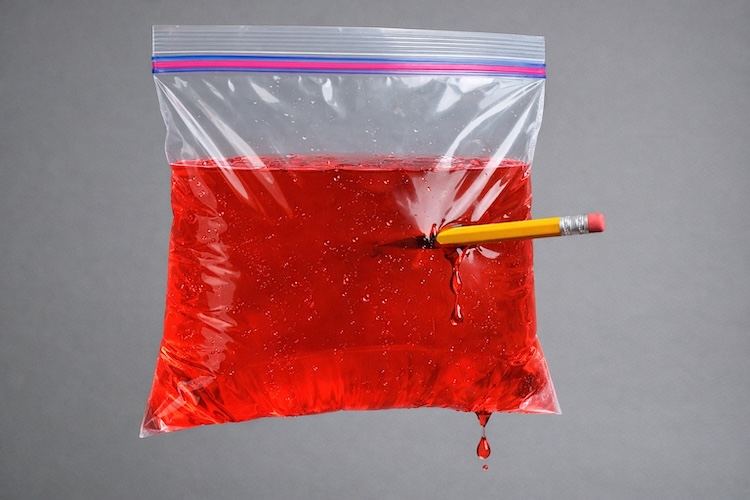
Consider what would happen if you filled a Ziplock bag with water and stabbed it with a pencil. The water would not pour out until you removed the pencil. If you are shot with an arrow, you are the bag and the arrow is the pencil.
How accurate was ancient wound care?
Thomas: In medieval or ancient settings, authors often depict battlefield cauterization by having characters pull a hot iron from an open fire. In some contexts, especially with severe limb injuries, cauterization may have been the only way to stop fatal blood loss.
We also tend to assume people in the past were medically ignorant, but that is not true.
The Romans performed trepanation, removing portions of skull and replacing them. Archaeological evidence shows skulls that healed after such procedures. That indicates remarkable surgical knowledge.
Medical knowledge has been discovered, lost, and rediscovered many times. Scurvy is a classic example. The cause and cure of scurvy were identified, forgotten, rediscovered, and forgotten again. Even in the early twentieth century, people were dying from a disease whose solution had been known for generations.
Ronda: Many ancient civilizations were surprisingly sophisticated. Babylonian surgeons used honey and sugar on wounds, both of which we now know have antimicrobial properties. Maggots were used to clean necrotic tissue. The Romans observed that vinegar reduced infection, even if they did not fully understand why.
Without coordinated record-keeping, knowledge can disappear. But people often observed cause and effect accurately, even if their explanations were incomplete.
How do writers make distinctions between types of wounds they inflict on their characters?
Ronda: You must identify the mechanism of injury. Was it blunt force, sharp force, or penetrating trauma? Each produces different tissue damage and requires different treatment.
Forensic evidence differs as well. A gunshot wound presents differently from a stab wound. Internal damage patterns vary significantly.
Understanding that difference immediately changes how you write both the medical response and the investigation.
How fast can someone bleed out?
Thomas: One common mistake in fiction is underestimating how urgent blood loss can be.
Ronda: In my online group, Trauma Fiction, this is one of the most frequent questions. How quickly can someone die from blood loss?
It depends on which vessel is damaged. If the carotid artery is severed, unconsciousness can occur within about thirty seconds. Death can follow within a few minutes.
Other wounds bleed more slowly, but severe blood loss is always urgent. A person can typically lose about half their blood volume before death becomes likely, and that threshold varies by size and conditioning.
What does shock actually feel like?
Thomas: Many authors also miss the opportunity to portray shock accurately. Shock is not just panic.
Ronda: There are different kinds of shock. Emotional shock relates more to psychological trauma.
When we speak medically of shock due to blood loss, we mean hypovolemic shock. The body no longer has enough circulating volume to sustain organs. One way to describe it is that the world begins to narrow. Vision tunnels. Sound fades. Consciousness slips away gradually.
Thomas: There is often a sense of calm or even euphoria. The person who is dying may be the least panicked person in the room. That serenity can be dangerous because it impairs decision-making. In medical settings, we do not allow trauma patients to make major decisions because they are not fully processing information.
Ronda: They are not thinking clearly. The brain is the last organ to lose blood flow, so if cognition is already impaired, the body is in serious trouble.
How can a character’s experience of shock affect how you write from their point of view?
Thomas: Shock creates powerful narrative possibilities. If you are writing from the injured character’s point of view, they become an unreliable narrator. Their perceptions distort and their reasoning degrades.
The Hunger Games handles this well. As Katniss experiences increasing physical trauma, her narration becomes less reliable. She misinterprets events and even sleeps through key moments. The film adaptation cannot replicate that internal distortion because the camera remains objective. The novel’s first-person perspective allows readers to experience her compromised cognition.
The movie was shot from a cinematic point of view. Most movies are shot with an omniscient, cinematic POV where the camera shows the truth. But that is not always the case. Some films play with perspective and show the same moment differently depending on who is experiencing it. But most of the time, the camera functions like an omniscient narrator.
That is also what most readers prefer. Limited omniscient third person is popular in the ACFW crowd, but people are often more comfortable with omniscient storytelling than they realize. They watch omniscient TV constantly, and many classics are written in omniscient POV.
So do not believe anyone who tells you limited third is the only way to write.
Medical accuracy does not diminish drama; it intensifies it. When you understand how the body truly responds to trauma, you gain access to deeper tension, richer character development, and more believable storytelling.
Can a broken bone be deadly?
Thomas: Broken bones are easy to underestimate because modern medicine treats them so effectively. But if you are in the wilderness, a broken leg can be fatal.
Ronda: Yes. A broken femur, by definition, often involves significant internal blood loss, typically one to two units. Pelvic fractures can also bleed heavily. Brain bleeds are especially dangerous because there is nowhere for the blood to go. Pressure builds inside the skull and can be fatal.
I recently spoke with an agent who turned out to be a physical therapist. She told me she will start reading a manuscript, see a character “break an ankle,” and then immediately stand up and run away. If you get those details wrong, it breaks trust fast.
How does the setting affect the danger of a broken bone?
Thomas: Broken bones, when treated appropriately, are usually not life-threatening. Many people break a bone at some point in their lives.
But your story’s setting changes everything. In a place with competent care, a fracture is painful and inconvenient, but manageable. In the middle of nowhere, it can become an emergency.
In Boy Scouts, one of the main scenarios we trained for was how to get someone with a broken bone off a mountain to the nearest road. If you have enough people, you can improvise a stretcher with two sturdy poles and t-shirts as straps. It works surprisingly well, but you need multiple carriers.
If there are only two people on a mountain, a stretcher is much harder. Dragging a stretcher is rough and unstable. Carrying someone on your back is exhausting. Every choice creates consequences, and those consequences create tension.
Added urgency, like being hunted, needing to reach shelter before nightfall, limited supplies, or a broken bone all become powerful engines for creating tension. Accurate medical constraints increase verisimilitude and raise the stakes.
Ronda: And you are definitely not running with a broken finger, much less a broken arm. People will claim, “I can still run, it’s just a broken arm,” but can you? Try it. It causes intense pain because every footstep reverberates through your whole body.
How can authors portray poisoning accurately?
Thomas: Poison is less common today as a method of murder, partly because we have gotten better at recognizing and treating it. Historically, though, poisoning was everywhere. In ancient Rome, poison shaped imperial succession again and again.
Also, the poison in The Princess Bride is not called “iocane powder,” but the concept is not entirely far-fetched. Arsenic is a white powder that dissolves easily, and slow arsenic poisoning can resemble rapid aging.
Arsenic is called “the king of poisons and the poison of kings.” Some monarchs who “aged quickly” may have been poisoned over time.
What are the major categories of poisons, and how do they work?
Ronda: The first thing to remember is that the dose makes the poison. Even water can be poisonous. Certain brain conditions can cause a person to drink excessively, and that can disrupt electrolytes so severely it becomes fatal.
Many medications are essentially controlled poisons. At the right dose they heal, at high enough doses they kill.
Thomas: That connects to the Princess Bride character who built up a tolerance to “iocane powder.” You can do that with some poisons, including arsenic. In the ancient world, King Mithridates was famous for taking daily microdoses to build resistance. That practice influenced monarchs for centuries.
Wine tasters are dramatic in fiction, but a taster does not protect you from slow poisons like arsenic.
Ronda: You can broadly categorize poisons by how they are delivered: injected, ingested, inhaled, or absorbed through the skin. Skin absorption is less common, but it exists.
After that, you can classify them by chemical class and by what systems they target.
What systems do common poisons target?
Thomas: Let’s talk about what they target in the body. Why does arsenic look like aging?
Ronda: Arsenic accumulates where it should not. It can deposit in hair, which is why hair analysis can sometimes detect exposure.
The liver and kidneys are usually hit hardest because they are the primary detoxification organs, especially the liver.
Other poisons target the nervous system. Mercury is a classic example, the origin of “mad hatter” syndrome.
Thomas: Hat makers used mercury in processing the gold details on hats. Mercury can be absorbed through the skin, so repeated contact can cause neurological symptoms.
Narratively, that is interesting. You could have a good king who slowly becomes erratic, and the twist is that he is being poisoned through contact, not ingestion.
What poison kills instantly in the “sip and die” scene?
Thomas: In fiction, we often see the food taster take a sip and drop dead immediately. What poison can do that?
Ronda: Very few. The only one that comes to mind is cyanide. It acts quickly.
Thomas: What does cyanide do?
Ronda: It interrupts a critical chemical process involving oxygen use at the cellular level. The system essentially locks up, and death can occur rapidly.
Miffie Seideman is a pharmacist and the author of The Grim Reader: A Pharmacist’s Guide to Putting Your Characters in Peril (affiliate link). Her book is excellent. She does not focus exclusively on poisons, but she covers many credible ways characters can die. I highly recommend it.
Thomas: This kind of research can be tricky with AI because some systems shut down when asked about poisons, even when you tell the AI that you’re a novelist. Results vary by model and by how strict the safeguards are.
What’s the “perfect” invisible poison?
Thomas: I remember an episode of Monk where someone was killed with nitrogen gas. That is a great example of “the dose makes the poison,” because nitrogen is in your lungs right now. Air is mostly nitrogen.
Nitrogen is inert, which is a scientific way of saying it is boring. It does not react much.
But if the air becomes 100% nitrogen, you can die from oxygen deprivation. The eerie part is that you may not realize what is happening the way you would with carbon dioxide buildup.
In the show, the toxicology seemed normal because nitrogen is always present. That made it a compelling mystery. How did this person die? Where did the nitrogen come from?
For mystery authors, this is where things can get deeply technical. We probably need a forensic pathologist or medical examiner for those questions.
What are your medical pet peeves in novels?
Thomas: Are there any common pet peeves you see in fiction?
Ronda: My biggest frustration is when authors do not understand how their doctor character was trained or what level they are at.
A very well-known romance-focused movie company once portrayed a surgeon who had completed a general surgery residency but did not match into the specialty she wanted. So, according to the script, she went to Alaska to take a “fellowship” in general medicine or family practice.
That is not how medical training works.
I eventually created a handout explaining what doctors actually do and how their training progresses, because many writers do not know the difference between a medical student, an intern, a resident, a fellow, a staff physician, or a specialist.
There is a great deal of confusion.
What is the difference between a resident, fellow, and attending physician?
Ronda: It comes down to what training they have completed and in what order.
You cannot be a fellow without first graduating from medical school, completing an internship, and finishing a residency. Training is sequential. Each level builds on the one before it. And very often now, when you see a physician, their primary role is to determine which specialist you need. They are not necessarily trying to manage every condition themselves.
Thomas: One area where AI can actually be helpful is in connecting information across disciplines. Some doctors I know use AI to get second opinions because it can synthesize research from multiple specialties.
One physician even suggested that, in the future, failing to consult AI for a second opinion might be considered malpractice. No doctor can read every study ever published, but AI can. It can process vast amounts of data and identify relevant connections quickly.
That does not replace talking with a real physician. But for authors who cannot afford hourly consultation fees, AI can help with foundational questions before you approach an expert. It is also useful for brainstorming.
For example, suppose you know your heroine needs to be sick in an 1850s setting. Tuberculosis is overused. What else might fit historically? Dysentery killed many people on the Oregon Trail. AI can help you understand what dysentery is, what it looked like in the 1850s, and how it was treated at the time.
That historical context matters.
In the 1800s, unsafe water was a major cause of illness. Clean water initiatives and public water fountains emerged in part from the Temperance movement. Alcohol was often safer than untreated water because fermentation killed pathogens.
I once saw this principle play out at a wedding. The salsa had been left out too long, and half the guests who ate it got sick. The half who drank alcohol with the salsa did not get sick. The alcohol likely reduced the bacterial load in the salsa.
Back in the nineteenth century, people who drank boiled tea instead of untreated water were known as “teetotalers.” Boiling water reduced the disease risk.
When you combine accurate medical detail with accurate historical context, you increase verisimilitude. Readers who know the history will notice.
Do doctors even have time to speak with novelists?
Ronda: There is a misconception that doctors are unwilling to help writers. If you call a doctor and say, “I am writing a book about this,” you may be surprised. Many are delighted to discuss something other than their next surgery.
Thomas: The first time someone asks, most doctors are flattered and eager to help. If they are receiving constant requests, their enthusiasm may decrease. That is why your local physician or someone you know personally is often a better choice than a celebrity doctor who receives daily inquiries. It is a significant favor. If they do visit with you, at a minimum, thank them appropriately.
When should you research the medical details of your story?
Ronda: Figure out the medical details ahead of time. Too many writers come to me when they are nearly finished, and their entire premise is medically flawed. I have seen authors rewrite entire novels because the foundation was wrong.
People often say, “Just put an X there and research later.” That approach does not work with medicine, especially if you have a medical character or a medically driven plot.
Thomas: If the medical element is integrated into the story, it drives tension. A character with a broken leg who also knows that invaders are coming creates urgency. Will they escape the blizzard in time? Readers keep turning pages.
You cannot simply sprinkle medical jargon over a plot the way some science fiction uses technobabble. Almost everyone has personal experience with healthcare. Many readers are deeply interested in medical topics and can easily look up facts. Some will use AI to check your work, so you should use AI first to check yourself.
If you want to make your book medically accurate, you have options. Consult experts like Dr. Ronda Wells. Read resources such as Novel Malpractice. Talk with the physician at your church. Use AI thoughtfully. But do something.
Accuracy, especially accuracy appropriate to time and place, strengthens your story.
I just listened to your Bad Medicine podcast. I identified strongly with the leukemia example. My husband has been on daily oral chemo for almost 20 years for Chronic Myeloid Leukemia. When first diagnosed in 2006, I thought it was an automatic death sentence. My grandfather died of leukemia in 1954. Medical science has come a long way since then.Transplants are still a treatment option, at least for some leukemias, but it’s not always the best option. Anyway, I could go on.
I appreciate you talking about medical writing by authors who are not medical professionals. For my current work, I just researched influenza treatments in the 1940s. I want to be correct, but it’s hard to find professionals who lived in and remember that era. I’ll probably leave treatment at aspirin and supportive care—hopefully that will be safe!
Thank you for supporting authors, especially beginners like me. God bless you!
I’m a retired oral & maxillofacial surgeon, and attended weekly cancer committee meetings during my residency ~1985. Things have changed a lot over the decades, so I reached out to a few oncologists to get their opinions on a current cancer committee scene I’d written. Though they seemed nice enough, I got zero information from them, as though they were too busy or were guarding some professional secrets. Really disappointing, even strange.