
Middle-grade books just went through a generational change that the rest of publishing will soon face.
Gen Z is famous for being screen zombies, but Gen Alpha grew up in a very different world with much less access to screen time. I teach a fifth-grade Sunday school class at my church, and one of the discussion questions in our curriculum related to social media. When I asked them about social media, one of the kids asked honestly, “What’s social media?” She was in fifth grade and had no idea.
I said, “Well, it’s like Instagram or TikTok,” and many of the kids just blinked at me. Gen Alpha is very different from Gen Z.
Gen X parents tended to give their kids a lot of access to phones and social media. Millennial parents put far more limits on screen time and internet use.
Millennials like me came of age during the dawn of social media, and we know how toxic that permanent online record can be. We are very suspicious. We lack the Gen Xers’ optimism when it comes to social media.
The way authors write for middle-grade readers is shifting dramatically. That shift will soon hit YA and adult fiction as that age group of readers grows up. They are very different from kids just a few grades above them.
There’s a growing narrative in publishing right now that “middle grade is dead.” The thinking is that kids don’t want to read books anymore; they just want graphic novels or manga. We’ve talked about why Japanese and Asian stories are resonating so much with young people, but it’s not because they don’t want to read.
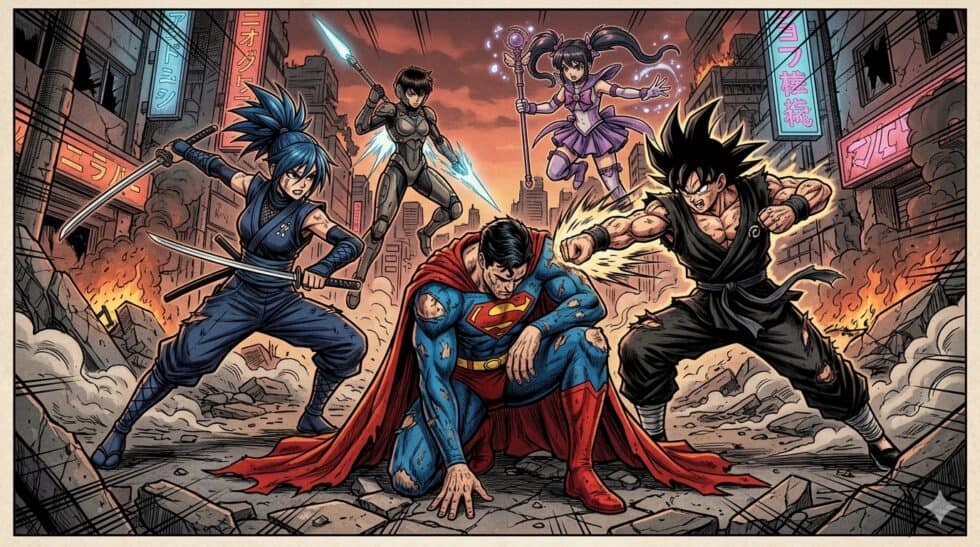
I think the narrative about kids not wanting to read is wrong. Kids I interact with read a lot of books. They haven’t rejected reading. They’ve rejected a particular reading experience that no longer meets them where they are.
They don’t resonate with Harry Potter the way Gen Z and millennials do. After Harry Potter came out, books got longer and longer. Maybe kids don’t actually want to read a 350-page novel. So, it’s not that they don’t want to read; they just don’t want to read a tome.
Meanwhile, parents at every homeschool conference and bookstore keep asking, “Do you have something for my kid who won’t read?” If those kids have only been presented with tomes or books that don’t hold their interest, they don’t even want to give reading a shot.
Do you have a book for my kid who won’t read?
Middle-grade author J.J. Johnson wrote the answer to that question by getting on the floor and playing with his own kids. He developed a technique to write the kind of books that kids who don’t like reading want to read. He’s an award-winning author and the Director of Marketing for the Realm Makers Conference.
Thomas: You’ve said that middle grade is the best age to write for. Why is that?
J.J.: My son started kindergarten around 2020, and we all know how disruptive that year was. He fell far behind in reading at a time when I had begun writing middle-grade stories and had published my first book the year before. I decided to take it on as a challenge, to help him get off screens and rediscover the joy of reading, and to help other kids do the same.
I was a reluctant reader growing up as well. I didn’t like reading, and I had to fight to read a book. I started thinking about the challenges I faced as a kid and how I could help kids get excited about reading while also helping parents get their kids off screens.
How do you approach starting a book for a reluctant reader?
Thomas: Many of those reluctant readers are boys, and part of the issue is that the books chosen for them are often selected by the women in their lives. Women tend to focus on stories about people and relationships, while many boys are more interested in books about things, such as machines, action, or how stuff works. If you give a boy a people-centered story, he may think, “This isn’t for me. I’d rather read about guns, tanks, or trains.”
How do you approach starting a book for a reluctant reader?
J.J.: We tell ourselves a lot of lies in publishing, like boys don’t want to read, men don’t want to read. But when you write books that boys and men want to read, they will read.
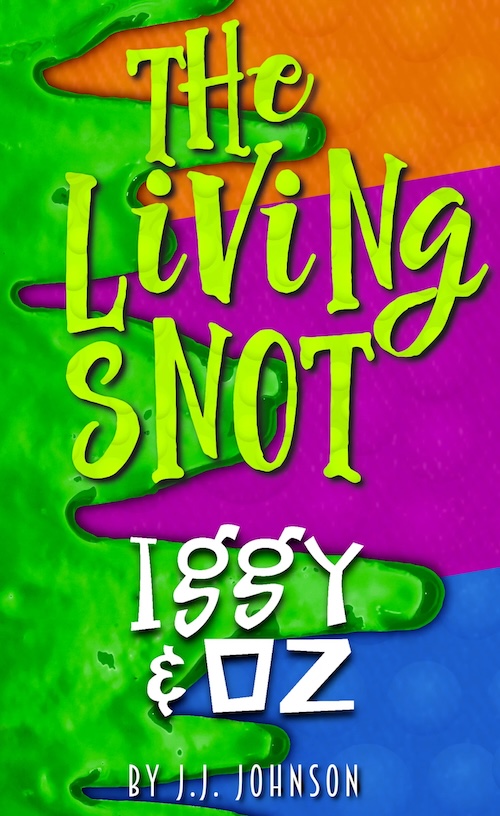
I start with the thing that’s going to make a kid stop and say, “Ooh, that’s a cool title.” One of my books is called Iggy & Oz and the Living Snot. Most people will think that’s disgusting, but the title is what hooks reluctant readers and gets them excited.
My new book is called Surviving the Midnight Hurl at Camp Whurl. It all starts with the title. The title should be something kids want to pick up. I ask myself whether the title will get boys excited about reading, and then I develop the story from there around that basic premise.
What about childish gross content?
Thomas: Don’t be afraid to be gross. I learned this from teaching Sunday School. I was given the task of presenting the story of Jael, who kills an enemy with a tent peg. I figured that if the children’s director assigned the story, I’d go as far as scripture does. You can bet I had those kids’ attention. They were not zoning out or wandering around. They were listening.
Being willing to “go there” with gross subjects. It might be too gross for a female reader, but that is why you must know your Timothy, especially when writing middle-grade fiction. Boys and girls like entirely different books.
People think that middle grade is one category, but that’s like saying you want to create a single conversation for the entire high school cafeteria. Every table in that cafeteria has a different conversation. The jocks are talking about something different than the nerds, and the band nerds, board game nerds, and computer nerds are all having different conversations. You need to adapt your writing for a specific table at that specific middle school.
Some kids are into Pokémon, and others don’t know who Pokémon is. Some homeschoolers may have no idea who Pikachu is, but others have strong opinions about Bulbasaur versus Charmander.
J.J.: That’s where you need to narrow it down to who exactly you’re writing for.
Some kids like mysteries, and others like adventure. The FFA kids are into dogs, horses, and cows. There are kids who are into science fiction and fantasy, and kids who are into sports.
Figure out exactly who you’re writing for and then start talking to the kids. Ask what they want to read. I’ve mostly talked with kids to learn what they want to read, and with their parents to understand what they wish was available.
What’s the biggest mistake authors make in writing for middle grade?
Thomas: The biggest mistake YA and middle grade authors make is writing to themselves when they were that age, assuming the world and its challenges are the same. Culture is changing quickly. Challenges faced by one generation are often different and sometimes the opposite of challenges faced by the next generation.
The Boomers’ big issue was promiscuity. Young people are not facing that problem right now. Celibacy rates are higher amongst young people now than they’ve been since we’ve been measuring. They’re not struggling with that. Instead, they’re struggling because they’ve never been on a date, they have no hope of getting married, and they’re giving up hope. It’s a completely different fear.
Same thing with drugs and alcohol. Today’s kids aren’t doing drugs and alcohol like you did when you were a kid. The rates are the lowest they’ve ever been. Same with smoking. Instead, their rate of anxiety is higher than it’s ever been since we’ve been measuring such things. It’s breaking the chart.
What’s more, anxiety is a sin. In the Sermon on the Mount, Jesus says that lust is a sin and anxiety is a sin. If you’re going to go after one sin by quoting Jesus, you have to go after the other. Both could be framed in therapeutic or moral language.
What are escape hatches, safety nets, secret mirrors, and judgmental best friends?
Thomas: You’ve described books as “escape hatches, safety nets, secret mirrors, and judgmental best friends.” What do you mean by that?
J.J.: The judgmental best friend is the character who just says it how it is and has no filter. My son would play Minecraft with his friends, and we had an open Discord channel where we could hear their conversations.
The judgmental best friends just let it out. Usually, there’s a kid who doesn’t get offended by it and another who takes it personally.
It’s always fun to play with those different character traits and base them on those characteristics. The characteristics change a little from generation to generation, but it’s amazing how many remain the same. Kids today face different societal problems than we did when we were growing up, but the judgmental best friend is timeless and a great character to play with.
Thomas: Our Gen X listeners are very offended right now because, in a Gen X moral framework, being judgmental is the worst possible thing. That was a very different era. Now everyone’s judgmental. The only real question is which moral system you’re going to abide by.
Kids in public schools are being presented with a very in-your-face moral system that’s defined by intersectionality. They don’t use the word “holy,” but the moral system they’re being taught says that the worst possible thing you could be is “privileged.” The best possible thing you could be is “underprivileged.” Therefore, the more privileged a child is, the more evil they are, and there’s nothing they can do to fix it. The more underprivileged a child is, the holier they are.
One hack for getting to know middle-grade kids is to volunteer in your church’s Sunday school. Listen to them talk to each other and note the kinds of questions they’re asking. If you want to create believable middle school characters, you need to know how real kids talk today. They don’t talk like the characters from The Goonies from the 1980s.
J.J.: For the past several years, I’ve been the game guy at VBS. When the fifth and sixth graders come in, it’s always interesting to hear what they like and how competitive they get. I record those things in my notes app and put them straight into a book.
Kids talk to one another in fragments, and trying to present that in dialogue can be difficult. But when kids read that fragmented dialog, they resonate. Don’t listen to yourself talk, and don’t think about how you think kids talk. Go listen to kids talk. It’s critical.
How do you keep a reluctant reader turning pages?
Thomas: Start by listening to how kids talk and what they care about. That’s essential for any author, especially in middle grade, since you’re not the target reader. The more your audience differs from you, the more you need to listen.
How do you write the kind of book they want to read?
J.J.: I purposefully keep my books short. When I researched middle grade, parents said many books, like Harry Potter, felt too long and dense. Their kids didn’t want to tackle them. They wanted something closer in length to Goosebumps, which run about 23,000 to 25,000 words.
I write complete stories within that range, using plenty of white space, short chapters, and fast pacing. The story is driven by action and dialogue, often in a strong first-person voice. I focus on a diverse cast of characters who work together to solve a problem, because that’s what kids respond to.
The best feedback I get from parents is, “My kid never reads, but they couldn’t put this book down.” That’s the goal. I want each chapter to raise enough questions that kids keep turning the page.
How do short books hack the incentives to get kids reading?
Thomas: Kids live in a world of incentive structures for reading, and as an author, you can work with those structures. Many rewards are based on books completed. A school might run a summer reading program, where reading 20 books earns a pizza party or some other prize.
If you write a 20,000-word book, a kid can read five of your books and get credit for five. If you write a 100,000-word book, they do the same amount of work but get credit for only one.
Chapters work the same way. When my oldest daughter was learning to read, I paid her a dollar per book. When she moved to chapter books, I paid a dollar per chapter. She spent those dollars at the “Store of Daddy” to buy screen time. Then she found the A-to-Z Mysteries, which are about 20,000 to 25,000 words with 13 chapters. She could finish one in an hour or two and come back expecting $13.
Short chapters and short books tap into these reward systems. Families, schools, and libraries use them, and even Pizza Hut’s reading program does the same. If you’re indie publishing, shorter books also offer higher margins. Don’t try to recreate Harry Potter. That’s not the path. It defined a generation, but it’s not what kids are reading today.
How do you build confidence in reluctant readers?
J.J.: Every finished book builds a reluctant reader’s confidence. Teachers tell me, “They want the next one.” That’s the goal.
My own kids would rather watch Unspeakable or Dude Perfect than Star Wars because YouTube moves fast. I try to write chapters that move fast because kids need that sense of progress. When they close that last chapter, especially readers who started school mid-pandemic and are behind, they build confidence and fall in love with the story. Everything follows from that.
How do you write for both public school and homeschool kids?
Thomas: Knowing your target audience is really important. Public school kids are very behind on reading. Public schools have done a bad job teaching literacy for generations, and it’s gotten worse in recent years. You have high school seniors going into college having never read a book of any substance. They’ve only read snippets, and they’ve been taught what to think about those snippets.
On the other hand, homeschool kids are often reading four or five grades above their level. For Christian authors, the homeschool market is much bigger, with a lot more potential sales. Yet if you’re targeting homeschool children, you have to write at a higher reading level, or they’ll get bored.
This is one reason traditional publishers struggle. They’re blind to the homeschool market. They assume a fifth grader in homeschool is the same as a fifth grader in public school, is the same as a fifth grader in a university-model charter school. Those are three entirely different educational experiences with three entirely different literacy rates. How do you navigate that as an author?
How do you write for different reading levels and experiences?
J.J.: That’s the hardest part. When I went to the Teach Them Diligently conference in Branson, Missouri with Realm Makers, I talked to a lot of people transitioning from public schools into homeschooling. That ended up being my sweet spot.
A lot of parents said, “We’re starting to homeschool. This is our first or second year, and our kid struggles to read. All they want to read is Dog Man.” Nothing against Dog Man because those books get kids reading, but they’re graphic novels. That group of reluctant readers became my niche.
At Descendant Publishing, we have different authors covering different niches. Alan Brocken writes to a higher reading level, and I’m writing to reluctant readers. Even in the homeschool market, you still have younger kids coming out of public school who are struggling to read or just haven’t had that spark.
I’ve been able to serve both the public school and homeschool markets by finding those reluctant readers. They may be a smaller niche in the homeschool market, but they still need stories they can enjoy.
Thomas: This is the strategy of focusing and being okay with your book not being for every table at the cafeteria. In focusing on one table rather than trying to write something generic for all of them, you’ll sell a lot more books.
Kids want something written for them specifically, not for children generally. Otherwise, they’d just be reading the old stuff.
Are kids done with broken protagonists?
Thomas: We’re navigating a generational change between Gen Z and Gen Alpha. As a middle-grade author, you’re among the first to be exposed to Gen Alpha’s reading preferences.
We’re also going through a cultural transition affecting all generations, where we’re transitioning from the third turning, or the grim dark turning.
You can learn more about the turnings, or the saeculum, as the Romans called it, in our episode How to Write Stories Readers Will Love by Knowing the Zeitgeist.
A story like Diary of a Wimpy Kid is set in a broken world and has a loser protagonist, and it was very resonant in that third turning. In the third turning, “good times make for weak men.” Diary of a Wimpy Kid is the epitome of that.
Now we’re shifting into the fourth turning, when “hard times make for strong men.” Instead of a story about a loser outcast who does magic, kids want a story about the captain of the football team who helps establish norms and building good. He’s more of a King Arthur-type character.
The publishing world is still making more Diary of a Wimpy Kid-type books, and they’re not resonating because they want to read about powerful heroes who are doing big things and making a difference. They’re finding that in LitRPG and Eastern fiction.
One Piece and Code Geass are Asian stories with powerful characters. Readers find them more resonant, which is an indictment of our publishing gatekeepers.
How are you navigating writing powerful characters?
J.J.: When I first started writing Iggy and Oz, it was like Diary of a Wimpy Kid but more hopeful. These kids are on an adventure, like kids on bikes having fun in a small neighborhood. The new book, Surviving the Midnight Hurl at Camp World, has a protagonist who isn’t weak. He’s strong, confident, almost overconfident, yet has some things in his past.
Kids are starting to discover that they need heroes and want to read heroes. That’s why LitRPG has taken off. Nobody in Christian publishing is publishing LitRPG, by the way, which makes no sense to me.
Thomas: Christian authors like Seth Ring are making millions with LitRPG.
J.J.: Seth Ring has it down. He’s really hitting that market. Kids are looking for heroes they can enjoy who aren’t always broken and who look a lot like them.
Not everybody comes from a scarred past or a rough home situation. Some kids aren’t weak. They’re strong and want to be heroic, and they want to figure out how to navigate all of this.
In my new series, I’m exploring writing a strong protagonist with a little bit of a rough background, but he’s not afraid to question things or be the hero. He’s not afraid to step out and take care of it. All kids want clear, definitive heroes. The anti-hero model might be phasing out, and I don’t think that’s a bad thing.
Why doesn’t “relatable” work anymore?
Thomas: The grim dark era was all about relatability. Gen Alpha doesn’t care about relatability. None of the fiction that’s resonating with them is “relatable.” Some of the characters aren’t even human.
These are kids who play Minecraft, and there’s nothing relatable about Minecraft, but it is aspirational. Minecraft is about building and establishing things to make the world different. In Minecraft, you change the world permanently. You have this unbelievable, powerful sense of agency.
It’s the same with Legos. Young boys want to build and change things. They don’t care about relatability. They care about aspiration.
A generation ago, if they came from a broken background, they’d say, “I want to read about another character from a broken background who’s a loser just like me.” Now they want to read anything but that. Today, boys want to read about a king who conquers, makes the world different, and builds a kingdom.
How do cultural cycles shape what kids want to read?
Thomas: This generation shift from Gen Z to Gen Alpha and the cultural turning are clicking at the same time. Culture goes in cycles. Scientists have observed this for hundreds of years. Even Solomon commented that there’s nothing new under the sun. There’s an 80-year pendulum that swings back and forth, and once you learn to see it, you can see how it affects music, art, writing, and politics.
I have a podcast called Author Update where we talk about zeitgeist and cultural changes. Everyone is noticing the vibe shift, but not everyone realizes we’ve gone through this shift many times before.
If you look back at the last time we went from a third turning to a fourth turning, you can get a sense of what fiction resonated, and it can guide your cultural resonance. This matters most when targeting young people because they’re the most affected by the blowing of the wind. They’re the most likely to use the current slang and to dress in the current fashion.
I think the last gasp of the grimdark third turning was Skibidi Toilet. That is super grimdark, but it’s losing its resonance. Kids aren’t vibing with that in 2026 the way they did in 2024. They’re looking for things that are more aspirational and heroic.
We’re leaving grimdark and entering noble dark. The setting is still dark, but in a grimdark story, you have a loser character in that setting. In noble dark, you have a hero in that dark setting. The world is broken, but I’m going to fix it, and I do.
J.J.: The writers I know are writing heroic stories. People are looking for hope, and we’ve been missing that, whether in Hollywood or fiction.
Kids see the stress their parents go through. My kids are 13 and 11, and even though we try to keep it away from them, they still see it. They want stories where heroes are heroes. My kids can’t stand Revenge of the Sith. It’s about Anakin turning to the dark side, which is depressing. As a Star Wars geek on the Gen X/millennial border, I’m all over that, but kids today want something heroic.
If you’re getting into middle grade, the hero’s journey is a perfect place to start. It doesn’t have to be the small farm boy going off to save the world. It could be the prince set to inherit the kingdom. Kids just want heroic, fun stories full of adventure that keep them glued to the pages.
What can LitRPG teach middle-grade authors?
Thomas: LitRPG is very much a zero-to-hero story. In the opening pages, you typically have a character who’s level zero and struggling to get by, with some strange, unfair advantage.
Some newer LitRPG is breaking from that. There’s a Jonathan Sagar LitRPG where it’s basically a Marine sent to hell, but he’s a Christian. He becomes Doom Guy with a holy shotgun killing demons. He starts off already a Marine, so he sees a demon and he’s like, “Oh, no.” He takes the shotgun and kills it. I am here for the entire rest of the story. Christian Doom Guy. Let all the demons die. We will raid the gates of hell.
J.J.: Some LitRPG is progressive fantasy, and the character continues to progress and get more powerful. Other stories begin with a protagonist who is overpowered. It’s a great genre. I love it. I’ve tried to write it, but I can’t.
Thomas: You can take principles from it, though. Your hero may go through an evolution where they’re progressing and growing in power, or they may not, but you can learn why it’s appealing. People who read LitRPG will read beyond LitRPG.
For middle-grade readers, I don’t know if LitRPG itself is particularly resonant because part of what makes it catnip for millennial men is the nostalgia. It reminds them of the glory days of EverQuest and World of Warcraft. It touches that nostalgia while also appealing to the current zeitgeist.
How do you lean into gross humor without alienating the parents?
Thomas: One of the worst things for an author is fear, whether it’s fear of being too silly, too loud, or too gross. Fear makes for tame, boring writing.
How do you navigate the grossness without alienating the parents, who are the ones with the money?
J.J.: Let me tell a quick story about how I came up with my newest book, which is actually a book about a camp full of vomit.
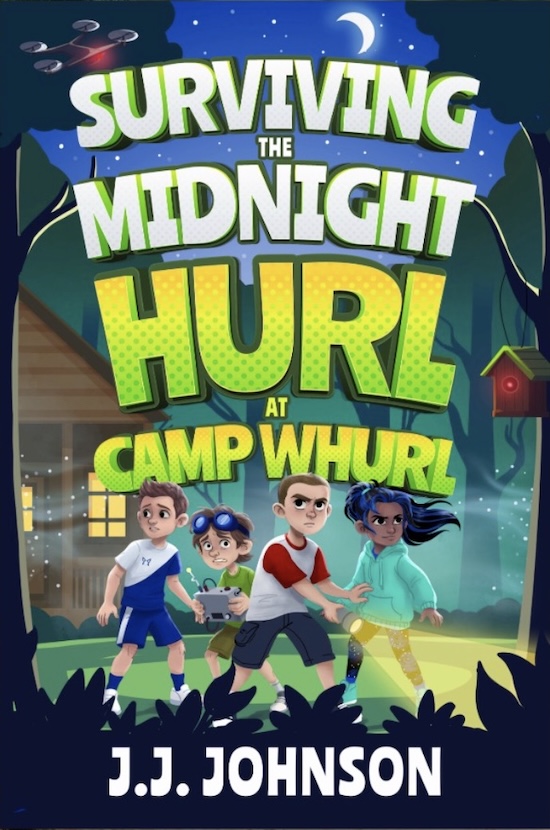
My kid goes to church camp with about 700 kids. We get a call on the third night from the youth pastor, which is not what any parent wants. He tells us, “Miles has the stomach bug.” We ask if he’s okay, and he says, “Yeah, we put him in quarantine with the others.”
It turns out that about 150 kids had come down with a norovirus outbreak and started projectile vomiting all over camp.
We drove down and picked him up because they were canceling camp. On the way home, he’s telling me the whole story. They didn’t have enough toilets for everybody, so some kids had to use mop buckets.
I’m sitting there thinking, this would be a great story. What if this camp was sinister? What if they were testing these kids for some sort of government experiment?
I got home, jotted down some ideas, and told my wife about the idea, figuring she’d shoot it down. She said, “You’re the only one who could probably write that and get away with it.”
I went to Steve Raza, who writes sci-fi for Enclave, and two other friends. All three said the same thing. I wrote a book about a camp that starts vomiting, with these kids trying to figure out what’s going on and who this evil lunch lady is.
Kids like gross things, especially boys. Boys aren’t afraid to lean into gross humor, and dads aren’t either. They’ll say, “Ooh, that’s a cool concept.”
A mom will look at the cover and go, “That sounds disgusting,” but then she picks it up because she has to know. I’ve found that parents are more than willing to give it a chance if they think their kid will enjoy it and sit down and read it.
Don’t be afraid to lean into fun, energetic, gross humor, as long as it doesn’t cross moral boundaries. You have to navigate it in a way that’s sensitive, but kids want to laugh. They want to enjoy your story. Not even girls are afraid of gross things.
Fear can hold you back from writing a good story.
How can you write a story that reaches both boys and girls?
Thomas: If you write for boys, you’ll get girls as well. Not all girls, but some. If you write for girls, you only get girls. If you write for both, you only get girls. Part of the reason Harry Potter did so well is that it was written exclusively for 12-year-old boys. If you can get 12-year-old boys, you can get everyone.
Hollywood historically targeted 13- or 14-year-old boys. If they could get those boys to the theater, everybody else got pulled along. If the boys wouldn’t come, they wouldn’t sell tickets. Once you understand that, movie decisions from the ’80s, ’90s, and 2000s suddenly make a lot of sense.
What are the three Cs of writing middle-grade stories?
Thomas: The three Cs of writing middle-grade stories are character, craving, and conflict. What are those three Cs, and why are they important?
Character
J.J.: It always starts with character. Kids want to know who the character is and whether they can see themselves stepping into those shoes as the hero. More than relatability, kids want to see how they would respond if they were in those shoes.
Creating the right character makes that connection. They may not see themselves exactly like that character, but they may know somebody who is exactly like that character, and that may be the connection that gets them going.
You want the kid to ask the question, “What would I do if I was there?” That’s why good, strong characters are important.
Craving
The craving is the plot engine.
What does the character want? It’s more than just a goal. I want to know what the character craves more than anything. Craving is different from a goal. Craving is a passion that drives you. It’s something you want to see for yourself, your friends, or your family.
Conflict
The conflict is what stands in their way of getting what they crave. They have to overcome it. That could be a giant blob of living snot, plastic dinosaurs that have come to life, a group of teenagers who get soda pop that gives them superpowers, or the fact that they can’t go anywhere because they can’t drive.

Kids have a limited worldview. Mom and Dad have a huge say in where they go and what they do, so the story world might be the neighborhood, the school, or the house. They don’t have as much freedom as YA readers, where the whole town might be open to explore.
Fantasy and sci-fi are a little different, but kids still have a limited worldview because they’re just starting to get to a point where they’re seeing the world isn’t quite black and white. There’s a little bit of gray there.
Thomas: Middle-grade readers are just beginning to grasp nuance. My own kids really want to know who the good guys and bad guys are. A character like King Saul is tough for them. They hear about Saul and ask, “Wait, was he a good guy?” He was when he saved the people of Jabesh Gilead, who later risked their lives to rescue his body from the Philistines.
But if you were David, Saul wasn’t a good guy at all. His character changed over time, and that’s hard for a middle grader to process. You can introduce some nuance, but too much makes the story impenetrable.
I think this is a key difference between middle grade and YA. YA can support more complicated characters. Clearer good guys and bad guys make middle grade more approachable, and that matters because kids this age emulate what they see.
My wife and I are very aware of this. Even if a show like Adventures in Odyssey isn’t racy, if the kids in it are too bratty, my wife will turn it off because our children start repeating those words. It’s monkey-see, monkey-do at that age.
There’s a time to grapple with morally complex characters, but what makes middle grade special is that you can explore real themes narratively without relying on anti-heroes. Processing an anti-hero is difficult at any age, but at 10 or 12, it’s especially hard.
J.J.: This is where a good beta reader or editor matters. I like to write sarcastic characters, but sometimes my sarcasm comes across as disrespectful to an adult figure in the story. A good beta reader will say, “You might want to tone that down.” You have to be careful with the humor and the sarcasm.
When you’re dealing with characters like a bully, you have to be careful not to paint them as an anti-hero or morally gray character.
Kids need clear characters. They’re either good or bad. “This guy’s a bully. We don’t like him. Even if he does help us from time to time, we still don’t like him because the things he does are bullyish.”
You don’t want to expose them to something they’re not quite ready to explore. For example, you might talk about Jesus’ 12 disciples, but you may not want to talk about Judas yet. That’s a conversation for when they turn 13.
Why does the shift from grim dark to noble dark matter?
Thomas: This connects to a bigger cultural shift. In the grim dark era, heroes weren’t very good, and villains weren’t very bad. The move toward noble dark is significant. Grim dark gave us complicated, Thanos-like villains.
Noble dark wants the Terminator. Give me a villain whose defeat brings pure catharsis. When he melts in the lava, I feel relief and nothing else. You don’t get that with a Thanos-like character. Noble dark draws a clearer line between good and evil, and that matters both culturally and for young audiences.
One thing that pulled my kids out of The Empire Strikes Back was how disrespectful Luke was toward authority. He came across as a foolish brat, and they lost interest. They kept saying, “Why is he leaving the training? He’s supposed to stay.” It didn’t make sense to them.
Boomers watching that film cheered the rebellion against authority, but that sassy, stick-it-to-the-man attitude doesn’t resonate the same way with this generation.
J.J.: That is why character development requires writers to watch, study, and listen to kids to learn what they’re enjoying right now. This is the first digital age generation. These kids were born right around the time the iPhone was coming out.
They’re exposed to so many things we didn’t get to experience. I try to explain what a Blockbuster was to my kids, and they’re like a deer in headlights. They have no concept.
Thomas: Young people are surprisingly respectful, even to complete strangers. Many young men have called me “sir” in interactions at the park or at some function. I would have never done that at their age.
This is one of those generational shifts. They’re more respectful towards authority than I was, and I feel like I was more respectful than Gen X. Gen X was the maximum “rage against the machine, disrespect authority” generation. The pendulum was on its upswing with the boomers, peaked with Gen X, started going down with the millennials, and now with Gen Z.
In Gen Alpha, there’s much more respect toward authority, and they want to see stories where there’s alignment between the generations.
They’re relieved to see Dalinar Kholin and Adolin Kholin together, working together in The Way of Kings by Brandon Sanderson. These two generations, the father and the son, are in alignment. Adolin respects his father. His craving is to earn the respect of his father. They’re in alignment as the House Kholin, and their conflicts are external.
You would have never seen a story like that resonate in the 1980s, where the young man is in alignment with his old man.
J.J.: Sanderson is hitting that generation very well with his connection to his fans and his stories.
Kids today are very trusting. We have to paint characters the right way so that kids understand, “This is definitely good, this is definitely bad,” and “Here are the things you should question versus the things you shouldn’t.” Painting that picture is very important, and that’s what kids crave.
How do you get middle-grade books into the hands of readers?
Thomas: You still have to sell these books, and a big challenge with middle grade is that the buyers and the readers aren’t the same people. Middle-grade kids are broke, and when they do spend money, it’s typically not on books. How do you get your books in front of the middle-grade market?
J.J.: I attend homeschool conferences, and I partner with public schools.
I’ve done a ton of Zoom calls over the years where I tell teachers if they sell 20 books to their class, I’ll do the Zoom call for free. I’m more interested in kids getting the book and reading it. That connection started by accident during the pandemic because teachers were starving for content.
With homeschool conferences, working with Realm Makers has been key. Scott and Becky go to four or five homeschool conferences a year to get our books in front of audiences. They can sell 70 to 500 books, depending on the convention.
I think authors need to step outside their comfort zones and start doing more live events. We’re moving toward direct-to-consumer sales. Do small live events, whether it’s working with independent bookstores, going to street fairs, local farmers markets, or craft fairs, then do a couple of big live events throughout the year.
It’s an investment, but making one-on-one connections with fans is probably the most important thing to do right now. If they make that one-on-one connection at a book signing, a craft fair, a farmers market, or a big homeschool conference, they usually become returning customers.
When I’m online, I’m talking to parents. At the conferences, I’m making the connection with parents, but I also want the kids to get interested. At schools, you’re interacting directly with kids. It’s two different types of marketing.
That’s what intimidates a lot of people about middle grade. The gatekeepers are school librarians, teachers, homeschool co-ops, and parents. Getting the book into kids’ hands takes more effort, but it’s not hard. The most important thing is the one-on-one connection with parents and teachers.
Thomas: In some ways, it’s illegal to market to children online if they’re 12 and under. There are a lot of privacy protections. You really shouldn’t have a 10-year-old on your email newsletter. That’s potentially breaking American law, but you absolutely can have that 10-year-old’s mom on your email list.
There’s a real advantage to the in-person approach.
When J.J. talks about selling a gross book to an adverse mom, he’s describing an in-person situation. He learned how to sell a gross book to a mom in person, interacting at homeschool conventions and other events. Once you learn how to do it in real life, you’ll learn how to do it online. You’re not going to learn how to do it online first, because you can’t watch someone’s face as that sense of disgust causes them to click away from the page altogether.
In this case, it’s not about getting the 13-year-old boy to want to read the book about snot. It’s about convincing the 40-year-old mom to buy a book about snot for her 13-year-old boy. Once you figure that out, the sales keep going.
Any final tips for breaking into the middle-grade market?
J.J.: It all goes back to listening to kids and parents. I won’t say ignore publishers’ wish lists, but I think you can find your niche audience and break through without them.
I had a lot of success as an indie before I ever signed with a traditional publisher, and I still do indie publishing. It’s not as hard as people think to get your books out there independently. Bookstores want to work with you because if they can bring kids in, they bring the whole family in. Working with different groups and building those relationships matters.
So don’t be afraid to go independent if everyone rejects you. Everyone rejected my first book, and it still did well and won an award.
Thomas: I don’t think any Christian publishers are having success in the middle grade market right now. Most of them don’t even publish middle grade because they don’t know how to navigate it. They know they can’t adapt to generational shifts, so they’re not trying. The ones who are trying aren’t finding much success because they have no concept of the homeschool market and the millions of dollars there.
On my other podcast, Novel Marketing, I’ve interviewed individual authors who’ve sold millions of middle-grade books to homeschoolers, with no traditional publisher involved. Some of these solo authors outsell entire traditional publishers in their market, doing $13 million a year in book sales.
- Hear their stories:
Innovative Indie Marketing with S.D. Smith - How Connor Boyack Sold Millions of Books Directly to Readers
So, it can be done, but it often means working outside the traditional publishing apparatus.
I hope your new publisher cracks the code and invests seriously in this space, because there’s real money to be made for publishers willing to adapt to the culture and the generations by writing books kids actually want to read, not books the publisher would have wanted as a child. That takes empathy. It takes what I’d call the general’s view: the ability to get inside someone else’s head, think their thoughts, and anticipate what they want.