Have you decided to write a book but feel overwhelmed by how much there is to learn? Have you wondered where to start and what to focus on first? Do you wish you could learn from one of the greats who has walked this road before you and knows how to do it successfully?
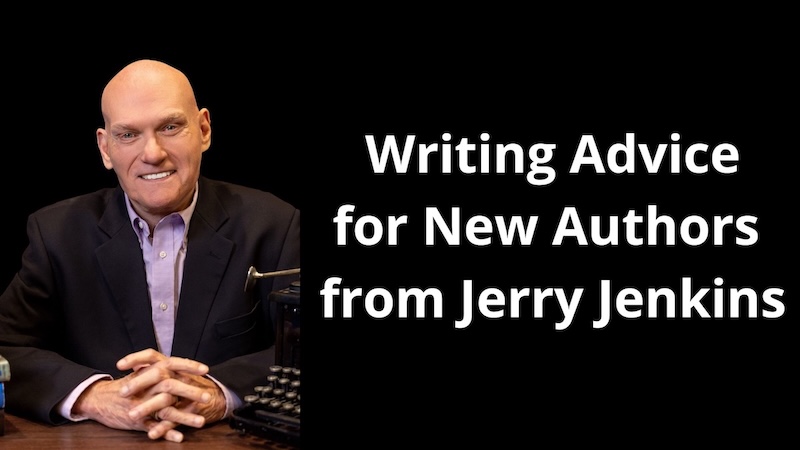
If so, this episode is for you. I recently interviewed renowned Christian author Jerry B. Jenkins. He is a New York Times bestselling author who has written 215 books and sold more than 73 million copies. His Writers Guild has helped thousands of authors on their writing journeys, and his bestselling Left Behind series has forever changed the reputation and trajectory of Christian fiction.
Where should new authors begin?
Thomas: What do you say to the writer who says, “I’ve decided to write a book for the first time, and I’ve just started. Where do I begin?”
Jerry: The first thing I tell people is not to start with a book. That may sound counterintuitive, but a book is where you arrive, not where you start. I talk to people all the time who say, “I want to be a published writer, and I’ve got a book idea.” I ask what they’ve written, and they say, “Nothing. I’m starting with a book.”
I say, “No, you are not.”
Starting with a book is like asking a kindergartner to skip straight to graduate school. You need to go through your primary grades, then junior high, then high school. You need to learn how to work with an editor, how to be rejected, and how to take input.
I used to say, “Develop a thick skin.” But after all these years, I still have not. When I receive an editorial letter from a publisher’s editor, I let it sit for 24 hours, so I do not react defensively. Otherwise, I would be tempted to say, “Don’t you know who I am? Don’t you know how many books I’ve written?”
During that cooldown period, I remind myself that the editor is on my team. They want the best possible final product. Maybe they have something important to offer. And if there is something worth fighting for, I have earned the respect to say, “Let me dig in on this one.”
But my first advice is simple. Do not start with the book.
Thomas: If this sounds controversial, remember that Jesus said, “Whoever can be trusted with very little can also be trusted with much.” Be faithful in small things before moving on to bigger ones.
The challenge is that most people do start with the book. They get an idea for a novel, write 10,000 or 20,000 words, and then ask, “Is this any good? Am I any good?”
My advice is to set aside your first 10,000 or 20,000 words. Do not delete it. There is good material in there. But first, be faithful in small things and write some short stories. It is much easier and cheaper to get feedback on something short than on 150,000 words, especially if you are repeating the same mistakes across the entire manuscript.
Jerry: I had to learn this the hard way, although I was fortunate enough to learn it very early in my career. People often ask about my stack of rejection letters, as Stephen King talks about, but that never really happened to me, not because I was so good, but because I started so young.
I talked my way into a sports-writing stringer job when I was 14 years old. The sports editor did not realize I was that young and that my mother was waiting for me in the car because I could not drive. I covered high school games, and then my mother drove me to the newspaper office.
I was edited hard. I probably had a quarter-million clichés edited out of my system as a teenager. You need that. You need to learn that you do not have to say everything in your head. Writing concisely and quickly helped me, but it is not about speed. It is about quality.
After my time as a sports writer, I became an editor of Sunday school papers, then editor of Moody Magazine. By the time I wrote my first book, I was already in the business. I knew how to work with editors, how to be critiqued, and how to at least pretend to have a thick skin. Those are the experiences that prepare you to arrive at your first book.
How can new writers develop their writing skills?
Thomas: Journalism is helpful because you work in narrative forms without inventing the story. You tell the game as it happened, not as you wish it had.
One of the things we recommend in the Five-Year Plan course for new authors is to start writing short stories. A short story forces you to practice ending a story. Many authors rewrite their beginning a hundred times and write only one ending, then decide it is “good enough.”
You need practice writing a satisfying ending, and short stories help you do that.

Jerry: One of the great developments in recent years is flash fiction. You can write very short pieces. Online, I often share a photo and ask people to write a six-word story. Not a caption, but a story with some pathos. That is hard to do in six words.
Flash fiction might be a paragraph, two paragraphs, or a page. It teaches you to introduce your main character, present the trouble they face, show what they do to resolve it, and deliver a finish.
Ideas for novels are a dime a dozen. Agents do not want your idea. They want to know whether you can finish.
Anyone can start a novel. The challenge is surviving what I call “the marathon of the middle.” You must keep providing setups and payoffs to keep readers turning pages. When you reach the ending, give it the time it deserves. If you set a June 1 deadline and are not satisfied with the ending, take another month. Walk. Think. Try alternatives.
People love to be educated and entertained, but they never forget when they are emotionally moved. Think of the three E’s: educate, entertain, and emotionally move. If you have multiple endings, choose the one that moves you.
How do you manage writing quickly and writing well?
Thomas: There is a quote often attributed to Shigeru Miyamoto from Nintendo, though he may not have said it. “A delayed game is eventually good, but a rushed game is forever bad.” Nintendo is one of the few companies that consistently releases good games because they refuse to rush.
The same applies to books. Take the time to make them good.
And yet, Jerry, despite your commitment to quality, you have still written more than 200 books. How do you manage speed and quality?
Jerry: That has been tricky for me as a writing coach. I constantly say, “It is not about speed. It is about quality.” If anything I write looks rushed, I rewrite it. At this stage, some publishers would take anything with my name on it, but that would not serve my readers or me.
For about half a century, I averaged roughly four books a year. Now I am closer to one and a half, which feels more sustainable. I still have passion and drive, but not the same stamina. Nothing should look rushed.
I could stop writing, but I would feel like a sloth. I believe I am mono-gifted. Writing is what I do. I still have something to say, so I say it. Do not write just to be a writer. Write because you have something to say. Write from the overflow of your passions.
What is the most essential aspect of good writing?
Thomas: One of the Ten Commandments of Book Marketing is to love your reader as much as you love your book. Some writers produce a smash hit, then get sloppy on later books, thinking their name will carry them. Over time, readers care less for their books because the author stops loving the reader with that same excellence and effort. Loving your reader means sacrifice, hard work, and cutting the book down to the length readers want.
Jerry: Especially today, when attention spans are shorter. One of the hallmarks of my teaching is the golden rule for authors, which is “Reader first.” Put it on a sticky note and keep it in front of you. Write what you would want to read, and what you believe your reader wants to read.
I will not name names, but there is a well-known author whose first book exploded. The second book was rushed and disappointing. The third book improved again. The pattern repeated. Every other book was mediocre because the rushed ones were not given the time they needed.
How do you find your writing voice?
Thomas: The big question many new writers ask is, “Is my writing any good?” It is easy to either accept every editorial change without thinking or reject all feedback as ignorance. But you are responsible for protecting your voice. The problem is that many new writers do not yet know what their voice is or what is worth protecting.
So, before we get to handling feedback, how do you cultivate your voice?
Jerry: People make this too complicated. Voice is passion. I tell a story about when I met my wife on a blind date. I fell hard and drove through the night, thinking, “I have to tell someone.” I stopped at a friend’s all-night gas station and sat on a 55-gallon oil drum, talking about Diana for two hours. By the end, I realized I had been sitting in motor oil, and I did not even care.
That is voice. It is the way you speak when you talk about what matters most.
Tell your best friend your favorite story about your first concert, your biggest accomplishment, or the thing that gets you out of bed in the morning. Listen to how you talk when you care deeply. That is your writing voice.
Thomas: Children are always happy to listen to stories. Many great writers from the past, and many modern writers, got their start by telling stories to their children.
Telling bedtime tales is the oldest form of story, going back to the misty dawn of time. Parents have always tried to get their children to calm down and go to sleep. As a parent dealing with this right now, nothing about it feels exotic. I am convinced my ancestors 2,000 years ago were dealing with the same thing and probably telling similar kinds of tales.
Children listen nonjudgmentally. They help you build that storytelling muscle and find your voice. Even if your protagonist’s motivation is not fully sorted out, children simply enjoy the story.
Jerry: That reminds me of one of my favorite Seinfeld lines. I saw him live here in Colorado Springs a few years ago. He talked about marrying later in life, around age 50, and learning that with children, you cannot simply read them a bedtime story once. They want it over and over. “Read it again. Tell it again. Do it again.” He finally told his daughter, “You know what my bedtime story was? Darkness.”
Thomas: I often talk to children’s book authors who pitch their book this way: “Children love it so much they want to read it over and over again.” That is actually a terrible marketing pitch to the customer, who is the parent.
If you want to sell your book like crazy, there is one magic phrase: “One sentence per page.” When a parent hears that, they say, “Shut up and take my money.” But if your book has a lot of words and you tell them, “Your child will want to read this every night for the next 90 nights,” a parent thinks, “What am I inflicting on my future self?”
How can reading shape a writer’s voice?
Thomas: Another part of voice is how you naturally tell a story. “Write like you talk” matters, but some people do not speak very well, so writing exactly like they talk is not a good goal. They need to elevate their communication.
I recommend that authors become well-read, specifically in three categories:
- Bestsellers in your genre, to understand what is selling and what readers currently want.
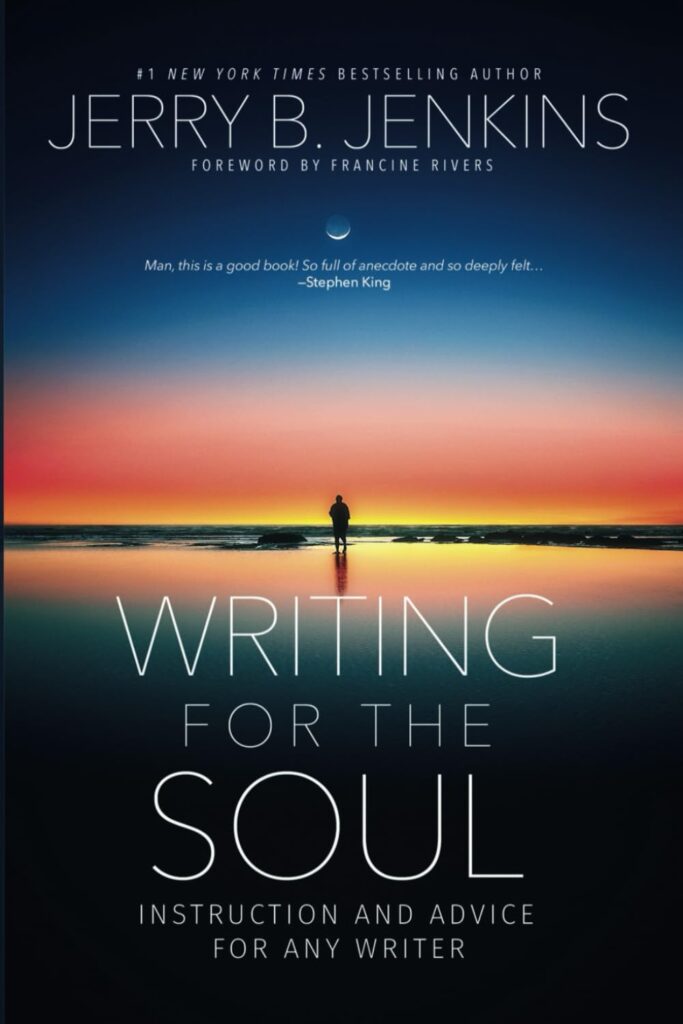
- Books on craft, like your book Writing for the Soul, by Jerry Jenkins, The Elements of Style by Strunk and White, and On Writing by Stephen King. There are many craft books, and they do not all agree, which is why you should read more than one so none of them becomes “the Bible” for you.
- Classics, not just the current bestseller list, but books that have continued to sell decade after decade.
If you do that, it will inform the way you “talk on the page.” It will shape your voice.
Jerry: That will absolutely affect your voice. You learn by osmosis. Writers are readers, good writers are good readers, and great writers are great readers.
I often read the opposite of what I am writing. Right now, I am writing fiction, so my reading is nonfiction.
People often ask whether I prefer writing fiction or nonfiction. My answer is usually, “Whatever I am not writing at the moment.” About two-thirds of my work is fiction, and I probably do prefer it. But when I am in the middle of a novel, I find myself thinking, “I wish this were nonfiction so I would not have to make things up, so I would know where I am going.” When I am writing nonfiction, I sometimes wish it were a novel so I could send this character that way instead of this way.
The important thing is that you are always reading. If you are not reading every day, you are in trouble. I once received a letter from someone who wrote, “I am not much of a reader, but I want to be an author.” My response was, “Well, good luck with that.”
You must be a reader if you want to be a writer.
Thomas: This is like taste in food. Imagine someone saying, “I don’t really like food. I just like macaroni and cheese.” The classic three-year-old diet is peanut butter and jelly sandwiches and mac and cheese. It is not nutritious, and it is boring.
Writers say similar things like, “I don’t want to read books in my own genre because they will make me derivative. I don’t want to read classics because they are old and boring.” It is the same as a child refusing to taste a new food. As a writer, you want to expand your palate.
These books are popular for a reason. Classics are classics for a reason. As you develop your taste, you can decide what you do not like, but there is a huge difference between disliking something you have never tried and disliking something after giving it a real chance.
You hear people say, “I don’t like Christian fiction.” When you ask which Christian novels they have read, they admit they have not read any. They have decided it is all badly written without tasting it. It is like the three-year-old insisting there is nothing beyond macaroni and cheese.
How can intentional reading habits transform a writer?
Jerry: I feel very parental when I do writing coaching. I find myself saying, “This is good for you because I said so.”
Years ago, the Christian Booksellers Association held a meeting near Washington, D.C., and a group of about 40 of us were invited to George W. Bush’s residence. We rode over on a bus from the convention center. For some reason, I was the only person on that bus who thought to bring him a book. We were all publishers, editors, and authors. I brought him a history of Moody Bible Institute that I had just written.
As I went through the receiving line, I said, “I brought you a gift,” and handed him the book. He said, “Thank you. I will read this tonight.” I am sure I looked skeptical, and I said, “Oh. Okay.” He replied, “No, I really will. I read a book a day, and this will be my book for tonight.”
Later, I looked it up. He was a speed reader who truly did read a book a day.
Thomas: When I was in high school, a man challenged me to read a book a week. He said, “If you will read a book a week, there is nothing you cannot do.” I took that seriously. It was hard to maintain in college, especially before I discovered audiobooks, but once I did, I kept close to that pace and still try to read about 50 books a year.
I once read more than 100 books a year, but life got busier, and I started consuming more podcasts and book-adjacent content. Reading that much changes your approach. When you only read one book a year, you get very picky. You only want the latest book from your favorite author, and you do not experiment.
When you need to find a new book every week, you become more open. “Sure, I will give that one a try.” To return to the food analogy, you discover that Brussels sprouts can taste good if you do not boil them to death. Grilled Brussels sprouts are delicious.
The same is true in reading. You may have only read one kind of book and decided you do not like anything else, but as you explore new genres, you discover styles you love.
I want to expand that “classics” category to include classics outside your genre. There are techniques you can learn from reading mysteries, historical, and other genres. As you broaden your reading, you get better. Your taste becomes more nuanced. You know what is good and what is not.
How should writers read the classics?
Jerry: One caveat with classics is that most of them are written in omniscient viewpoint, which is not fashionable today. People say, “This writer did it, and the classics do it, so I will write in omniscient viewpoint too.” I tell them, “That was a hundred years ago. Take what you can from it, but be careful.”
Right now, I am reading a classic I cannot believe I waited this long to pick up. I have read a lot about Mark Twain in his autobiography and biographies of him. They are fascinating. But I had never read Tom Sawyer or Huckleberry Finn.
While I am reading Huckleberry Finn, I am also reading The Gales of November, about the sinking of the Edmund Fitzgerald. I will read a chapter of Twain and then a chapter or two of the Edmund Fitzgerald book. It keeps me going. I love it.
Thomas: If you are on a Mark Twain kick, read his essay “Fenimore Cooper’s Literary Offences.” James Fenimore Cooper wrote The Last of the Mohicans, and Mark Twain thought he was an absolute hack and tore him to shreds.
Many of Twain’s famous quotes on writing come from that one essay. He quotes Cooper, shows what Cooper did, and explains why it is bad writing.
Jerry: Twain never held back. He told it like it was, no matter who he was talking about.
Thomas: His famous line, “Use the right word, not its second cousin,” comes from that essay. Cooper used a lot of second cousins.
I think Mark Twain is still one of our greatest American authors, certainly of the 19th century. Historically, America was known for poets. We had wonderful poets early on, but the more literary, longer-form fiction was dominated by England. Twain was the first American to show we could write long-form fiction on that level, and then he showed we could make fun of the British, too.
How can new writers strengthen their writing?
Jerry: Another famous line came from the poet Robert Frost, who said, “No tears in the writer, no tears in the reader.” That has become a hallmark of my teaching on education, entertainment, and emotion.
People tell me, “This was hard to write. I found myself weeping.” I say, “If you are weeping while you write, your readers are sobbing.” That is what you want. They will feel it ten times more than you do. Make sure it moves you.
Thomas: There is an emotional closeness, a pathos, that happens when you are willing to type while crying. The temptation is to wrap your raw feelings in layers of words, to protect yourself from truly being understood. “I do not want to hurt people’s feelings. I do not want to make them sad, so I will dump a bunch of adjectives and adverbs between the reader and me.”
That is the opposite of good writing. Good writing strips away that padding and lets people feel what the writing is trying to say. They cannot feel it if you are not willing to feel it first.
Jerry: One of my most common editorial comments is, “Just say it.” Writers surround a simple idea with so many words that they slip into what I call “written-ese.”
It is like the person writing the church bulletin who wrote, “A good time was had by all,” rather than writing, “We had a party, and everyone had a great time.” Just say, “We had a great time,” then quote someone to prove it.
Thomas: Passive voice is perfect if you want to say something without actually saying anything. “Mistakes were made” tells us nothing. We do not know what the mistakes were or who made them. We just know “someone somewhere is sorry.” That is very different from saying, “I made a mistake. I am sorry. Here is what I am going to do to fix it.”
That second version is far harder to write, but it is far more powerful and emotional.
Jerry: When I want to sleep, I want to be passive. If I write passively, I am putting readers to sleep. That is how it works.
Is your protagonist proactive or reactive?
Thomas: Doers do deeds that change the world. Some people do not believe that. There is a whole worldview that says we are victims of fate, or characters in a simulation with no agency. When people with that worldview write stories, the stories are often boring. Things just happen. The protagonist does not make decisions.
That shows up at the sentence level and at the narrative level. Are your characters making choices that matter? The characters we return to make meaningful decisions.
Sherlock Holmes moves the plot forward. He is not dragged along by events. He is pushing the plot and pro-tagging hard. That is one reason there has been a Sherlock Holmes movie in theaters almost every decade for more than a century.
Jerry: Sometimes writers finish a manuscript and wonder why it just lies there, flat on the page. Read it again and ask whether your main character is proactive or reactive.
In so many stories, I see 300 pages of things happening to someone, followed by their inner monologue. The writer may be good at inner monologue and portraying how the character is sad, upset, angry, whatever, but it is all a response to things happening to them.
At some point early on, the character needs to say, “I am not going to put up with this anymore. I am going to do something about it.” The reader thinks, “Yes, me too. That is what I would do.” Now they identify with your character, who is finally being proactive.
Thomas: My favorite example of this is Katniss Everdeen. In my head, in the first draft of The Hunger Games, Katniss was simply selected for the Games. That is passive and boring.
I like to imagine Suzanne Collins getting editorial notes saying, “You need to make her proactive.” So instead of Katniss being chosen, Collins creates a sister, builds scenes that show how much Katniss loves her, and then has the sister selected. Katniss volunteers as tribute. That line, “I volunteer as tribute,” is one of the most iconic moments in the whole book because it is the moment she truly becomes the protagonist.
It is a small change to the plot, but a massive change to the character. You learn much more about Katniss, and she becomes more appealing because she is active and has agency.
Jerry: She is virtually volunteering for suicide, because the odds are so heavily against her.
Who should you ask for feedback?

Thomas: At some point, I have to get feedback. Bad feedback can be worse than no feedback. What is your advice on who should give that initial feedback?
Jerry: It’s important to look for someone in the business who sees a lot of manuscripts. That is getting harder in the traditional publishing world, but it is still the ideal.
People often recommend beta readers, and I think you must be very careful with them. I recently got an email asking, “What ten or fifteen questions should I give my beta readers?” My answer was, “Do not ask them anything. Ask them only to read your manuscript and say nothing else.”
If they never get back to you, that tells you something. They do not know how to tell you they did not like it, or they did not finish it.
If they say, “Wow, that was really something. I cannot believe you finished a book. I could never do that,” they did not like it either. You know that intuitively.
If they come back and say, “I loved this. I could not put it down. I told my friends. I hope you get it published. I was a little confused by this character,” then you should take notes. That is a fan. This is someone who enjoyed your story but got confused in one place. You do not want anyone confused. Make it clear.
How should you interpret beta-reader feedback?
Thomas: Beta readers often propose terrible solutions to very real problems. The temptation is either to think, “That is obviously wrong. You do not know what you are talking about,” or to adopt their solution without thought because they are a beta reader and you want to honor their feedback.
I like to compare it to your car, making a squeaking sound every time you stop at a red light. You take it to the mechanic and say, “My car squeaks at red lights. I think it needs more oil.” That solution is wrong. The real issue is your brakes.
A trained mechanic hears “squeaking at a stop” and knows it is probably the brakes. They ignore the proposed solution and focus on the underlying problem.
Editors are like that. They help you solve the real problem that beta readers are reacting to. Maybe everyone says, “The character needs to do this,” but the root issue is actually in a different scene on a different page.
This is why I would not get your very first feedback from beta readers. It takes maturity to sort through those comments. It is especially difficult if your beta reader is your high school English teacher and you are used to believing everything she says. You may need to ignore one suggestion and embrace another.
Jerry: If you are in a critique group and ten people have read your chapter, you may get ten different ideas. I have seen writers try to satisfy everyone. Then whose book is it? It becomes everyone’s book, not yours. It is not your voice or your message.
If six or seven out of ten say, “I did not like the main character because he was this or that,” or “she was too snarky,” you might pay attention. A main character can and should have flaws, and they should be relatable, but they should not be repulsive. Make a note.
If one person says, “I felt this way,” think it over. Do you agree or not? If you do not agree, that is one opinion. It is still your book. You answer for it.
Critique groups can be helpful, especially groups like Word Weavers International. They know how to critique without being cruel. But make sure at least one person in the group has real experience in the business, with both success and failure, and knows how to work with publishers and editors. Otherwise, it is the blind leading the blind.
I have seen critique groups where everyone hates everything, and writers go away discouraged and give up. That is just as bad as groups where everyone loves everything, and no one improves or gets published because no one is giving concrete, valuable feedback.
Learn more about beta readers and editorial feedback in the following episodes:
- How to Find and Work with Beta Readers
- How to Get More 5-Star Reviews With Beta Readers, Editors, and Launch Teams
- Working with Beta Readers, Crowdfunding, and More with Curt Iles
- When to Ignore Your Editor
- How to Overcome the Fear of Book Promotion
- A Storytelling Revolution: Inside the World of Serialized Fiction
Why is the most dangerous kind of feedback for writers?
Thomas: Toxic positivity is a real problem in this industry. It becomes a crabs-in-a-bucket situation. Someone is trying to climb out and reach excellence, but everyone else pulls them down.
They say, “It is perfect just the way it is. You are perfect just the way you are. You do not need to change anything. You already have everything you need.” That sounds encouraging, but it is not true.
You can become a better version of yourself through suffering. That is not a popular message, but it is true. When you suffer in the gym, you get stronger. When you strain your mind, you get smarter. That is the whole idea behind education. It is not meant merely to be fun. It is meant to change you.
Jerry: I am currently writing a novel with a theologian, and he is refreshing because almost every day he says, “I want to know what is wrong with this so I can fix it. I want it better. Do not worry about insulting or offending me.”
So I will cut some of his darlings and say, “This is anachronistic,” or “This does not work, and here is why.” He responds, “Great. Let us make it better.” That is the attitude you want.
How do you know which idea to write next?
Thomas: People also want feedback on the idea itself. This is more advanced. Newer writers often treat their idea as their baby. They do not want any other ideas because this one is special.
With experience, you realize ideas are a dime a dozen. Execution matters more. Still, a strong idea is an advantage over “yet another Sherlock Holmes story.” When you have five ideas, how do you know which one to work on next?
Jerry: One of the banes of the creative life is that the more you write, the more ideas you get. They tempt you to stop what you are doing and chase the new shiny thing. The grass always looks greener on the other side of the fence.
I tell writers, if you get a new idea while you are working on a project, jot it down and set it aside. Finish what you are working on.
When you are done, you may have six, eight, or ten ideas for new novels. Take half a day. Go sit in a park, rent a cheap hotel room, somewhere you can think, and start prioritizing them.
Ask yourself, “Which of these would I most want to read? If I could choose only one, which excites me most? Which idea would draw me back to the keyboard each day?”
That question is imperfect because writing any book eventually gets hard. You will get tired of it and want to show it to someone new, just so they can say, “Hey, there is something here.”
Even so, choose the idea that excites you most and write it all the way to the end. While you write, more ideas will come. The idea that was second on your old list may no longer be first. Something new may move to the top. Each time you finish a project, make a fresh list and prioritize it again.
The goal is to make sure you are always writing from the idea you are most passionate about.
How can you test your ideas?
Thomas: Generating ideas is a skill you can practice. My advice is similar to yours, and I use a technique borrowed from Hollywood called “writing the poster first.”
Often, before a screenplay is written, filmmakers think about what the movie poster will look like, and they “write the poster first.” They create a short pitch they can use to get feedback and funding.
My version is to write the back-cover copy first. Write the marketing paragraph that promises why this book will be fun or compelling to read. That forces you to flesh out the idea a bit, and it gives you something you can test.
When you are with friends or potential readers, you can pitch these concepts. You may notice that one idea gets polite nods, while another makes people say, “Wait, when is that book coming out? Can I buy it now?”
When people lean forward and ask for the book that does not exist yet, that is a strong signal. That idea may be the one with real market demand.
Learn more about writing back cover copy in the following episodes:
- How to Write Bestselling Back Cover Copy
- How to Optimize Your Amazon Listing with Bryan Cohen
- From Book Blurb to Bestseller: How to Craft Compelling Amazon Pages With Dave Chesson
How did you know you were ready to write your first novel?
Jerry: I realized I was ready to write my first novel after I had written 18 or 19 nonfiction books, many of them sports biographies. I had an idea for a novel and mentioned it to a few friends in publishing.
I said, “I want to write a novel about a judge who tries a man for a murder the judge committed.” Everyone said, “Whoa!” Then I took it to a publisher, and they reacted the same way. The idea worked, and that book really launched my fiction career.
Sometimes all you need is one sentence that answers, “What is this about?” At first, I did not even know who the main character was. When I finally wrote the book, the judge turned out to be a woman. Most people do not assume that when they first hear the premise. I wasn’t even thinking that at the start.
All of that emerged in the process of discovery while I was writing, especially since I am a pantser.
Thomas: Your approach to “writing by the seat of your pants” is what we mean by “pantsing.” The more politically correct term is “discovery writing,” which is far less fun and far less memorable.
To learn more about “pantsing,” listen to our episode on Discovery Writing 101: How to Craft Gripping Stories Without an Outline.
How can introverted writers start connecting with other writers?
Thomas: Another key part of growing as a writer is connecting with other writers. Writing begins as a solitary activity. It is just you alone in a room with your laptop.
A lot of people say, “I would love to join a critique group, but I do not know a single other author. No one at my church is a writer. No one at work is a writer. I do not know anyone in publishing. How do I even start meeting the people I need to meet to take the next step?”
Jerry: In this day and age, it is easier than ever. Go on social media and put the word out that you are looking for like-minded people who are trying to write, want to write their first book, or have already written a few and want to talk about writing.
You will find plenty of people. You can also search for groups. Word Weavers has groups all over. There are similar organizations, both Christian and secular. Many libraries host writing groups.
One thing I have noticed is that most novelists are introverts. As public as my career has been, I am an introvert too. Speaking, media, and events are part of the job, and I enjoy them, but I am happiest at the keyboard.
Eventually, though, you want to meet readers and other writers. You want to realize you are not the only “crazy person” trying to do this. In my own writers guild, we have people from all over the world involved virtually. Many will never meet in person. We may have an occasional conference, but most of the connections are online.
So if you are an introvert who thinks you do not want to meet people, you may be surprised. You will probably reach a point where you do want that connection and will be relieved to discover you are not alone.
Why are writers conferences so valuable?
Thomas: Even for introverts, conferences are powerful. Introversion and extroversion are about energy, not whether you like people. Most authors lean introverted, but that does not mean they dislike people. It just means they need a break now and then.
A conference is contained and structured, and when it is over, it is over. You have a new conference coming up that looks really good. Tell us about it.
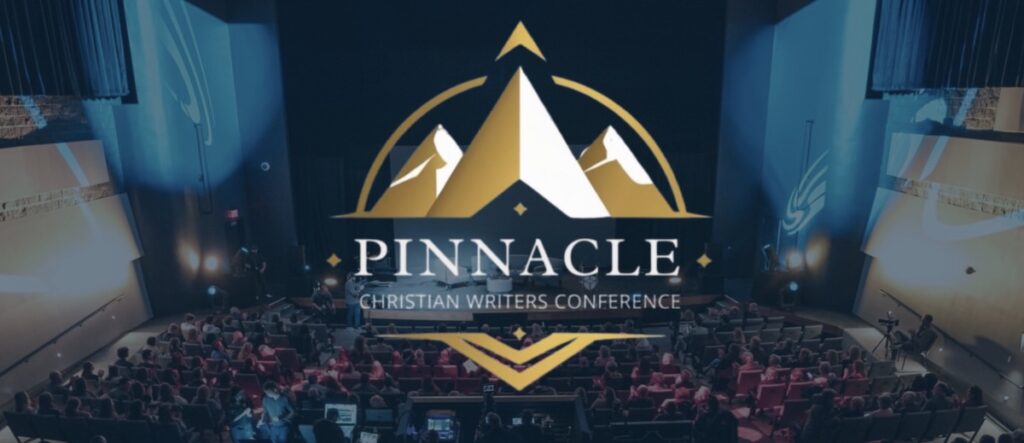
Jerry: It is going to be something special. I am hosting it on the campus of Colorado Christian University in Lakewood, Colorado, just west of Denver. They have a beautiful new building and a great performance hall.
I have invited some of the best people I know and have worked with for years. Angela Hunt and James Scott Bell will be there. Eva Marie Everson, who leads Word Weavers International, will be on faculty. Chris Fabry, who has his own daily radio program, will also be there. He was once a protégé of mine. We have written 55 books together. I like to think I taught him to write, but he has probably surpassed me in terms of critical acclaim. DiAnn Mills will be there as well.
We will have one-on-one appointments with experts, breakout sessions, and keynote addresses. We have room for 498 people.
The event is called the Pinnacle Christian Writers Conference. It will be held April 17–19 at Colorado Christian University. I serve on the board there, and the school has the Jerry Jenkins Creative Writing major. We will have a lot of help from the library and faculty. It is going to be fantastic.
I know many brand-new writers are afraid to attend a conference. They imagine walking into a room with nearly 500 people and not knowing anyone. What actually happens is that you are warmly welcomed. Within the first 10 or 20 minutes, you will meet people who are just like you. You will fall into a little circle, form a small group, and probably make lifelong friends.
The biggest thing we have to remind people is, do not stay up all night talking. You will be exhausted for the program the next day. People love getting to know others who are on the same path. You will see everyone from absolute beginners to widely published authors. I cannot wait. It is the first conference I have personally hosted in about 10 years. I used to do this annually at the Broadmoor Hotel in Colorado Springs, and we had wonderful groups and speakers. This one is going to be great.
Thomas: It is a solid lineup. These are “Thomas-approved” speakers.
Angela Hunt is our most frequent guest on The Christian Publishing Show. She is an excellent teacher. Eva Marie Everson has an episode about Word Weavers. They really are a strong answer to the “writer group” problem.
You are exactly right about not staying up too late. My Novel Marketing Conference could not be more different from yours. It is only about book marketing. We do not schedule anything in the evening. People go to dinner, then they are done. The next morning, they are refreshed. Some still find ways to stay up talking, but there is no pressure from the conference program to keep going late.
It is a room full of introverts. It is good to go back to your room and decompress at the end of the day.
A common mistake writers make is that they refuse to go until they have a book to pitch. Then, at that first conference, it is like everyone is invisible to them. All they see are agents and editors. They barely attend sessions. They are not there to learn. They are there to ambush someone in the hallway.
It often goes badly. Only at the second or third conference do they start getting real value.
My advice is to go to a conference before you have something to pitch. That takes all the pressure off. You are simply there to learn and make friends. You are not stressed about a manuscript. You are not hunting for “that one agent.” You can soak up teaching and build relationships.
Then, when you return the next year, or go to a different conference with a project to pitch, you have already gotten the “first conference jitters” out of the way. You know what to expect. You have attended sessions, learned a lot, and gotten answers to questions you did not even know to ask. The learning curve is steep, and a conference gives you a big step up in a concentrated, life-changing way.
How can you get the most from faculty and one-on-one appointments?
Jerry: Even if you have nothing to show yet, it is valuable to schedule one or two one-on-one appointments with experts.
You can simply say, “I am brand new at this. I have ideas but have not written much yet. What would be your advice? How should I start?”
From someone like me, you might hear, “Do not start with a book. Start with short stories.” Someone else might say, “Consider self-publishing first,” or “Hold off on that.”
There are many myths about publishing. People think, “If I self-publish a book and it sells 200 copies, I can then get it picked up by a ‘real’ publisher.” But you won’t unless you sell 20,000 copies. A traditional house will probably assume you tried to get it published with them and could not, so you went independent.
There is so much to talk about and learn at a conference, even if you don’t have a full manuscript.
Thomas: Bring some flash fiction. In a 15-minute appointment, someone can read your entire piece and give feedback. You can get a critique from the best in the business that you could not get in any other context. They are too busy to respond to cold emails, but at a conference, they are there to help.
It is also lower pressure. They are not acquiring your flash fiction for publication. It is purely about helping you improve the craft.
It is easy to fixate on the artifact of the book and not the skill of writing. It is like saying, “We had a really good basketball game.” Maybe your team won because the other team’s star player was injured. That does not necessarily mean you are good at basketball. Losing a game does not mean you are bad, either.
Having an expert watch you shoot free throws for five minutes and say, “Do this one thing differently,” is far more useful than someone telling you, “Good job on the game.” Focusing on craft and treating it like work matters.
There is a worldview that hustling is bad, that work is bad, and that if you are not enjoying every minute, something is wrong. In the book of Genesis, we see that after Adam sinned, part of the curse was work in thorns, thistles, and sweat.
If you do not like hustle culture, do not blame the hustle bros. Blame the God of the universe, who cursed the ground because of sin, so that now we must work in thorns and thistles. There will always be parts we do not enjoy. Even Jerry Jenkins, after more than 200 books, still gets editorial letters that sting. The thorns and thistles never fully go away.
Through that struggle, we become better writers and better people.
How do professionals evaluate skill?
Jerry: I liked your analogy about the expert watching a game. I think of baseball scouts.
A scout once came to watch my son, who was a strong catcher. His team lost 16–1. My son hit into a double play and got thrown out stealing. He felt awful and thought, “I looked terrible.”
The scout said, “We are not here for the score of a high school baseball game. We are not looking at the box score. On that double play, you hit the ball so hard there was no way they were not turning two. We liked your speed. We liked your arm.”
They were looking for skills, not results.
Publishing professionals are similar. As you said, show them your flash fiction. They might say, “In this sentence, if you say this, you do not need to say that. See how the meaning stays the same?” And you realize, “Oh, that is how you tighten prose.”
You can learn a great deal that way.
Thomas: There are many good writers’ conferences, but there is only one Jerry Jenkins, and he only has one conference: the Pinnacle Christian Writers Conference.
To be clear, I will not be at this conference. But if I were just getting started, this would be one of the conferences at the top of my list. I like the Pinnacle Christian Writers Conference, Write to Publish, and Blue Ridge. Those are my top three.
If you are just getting started, my advice is to attend a conference in your local area if possible. If you are in Colorado, you have no excuse not to try to come to this one. It is not very expensive, and it is not far.
If you live in Maine or Florida and there is a closer conference you can afford, attend that one. But if you can afford to fly, or you have miles, a conference like this is worth it.
I have rarely met a new writer who went to a conference and was not blown away by how much they learned. One of the great strengths of a conference is what I said earlier: you learn answers to questions you do not yet know to ask.
The internet is great at answering questions you already know how to phrase. You can come to ChatGPT, Google, or AI Thomas and ask. But if you do not know what to ask, that blank box just blinks at you.
Sometimes you are sitting at lunch, overhearing two authors talk about business, agents, contracts, protagonists, or anything else, and you think, “That never even occurred to me. I did not know to ask that.” Or you realize, “I have no idea what metadata is.”
There is a lot to learn. A conference is a great way to take a big step forward quickly. Another great way, of course, is to stay subscribed to The Christian Publishing Show.
What final encouragement do you have for brand-new writers?
Jerry: I believe you need to write almost every day, whether you are writing for publication yet or not. You must exercise those muscles. You do not want them to atrophy.
This may sound counterintuitive, but do not put too much stock in what your loved ones say about your writing. I hear from so many people who say, “My grandmother, my aunt, my uncle, my spouse, they all love everything I write.” That is wonderful, and they are probably being kind. But you also need someone in the business to look at your work.
Then listen closely. If you truly want this, you can do it. But you will not “find” the time. You have to make the time. We are all busy. You must carve it out. Maybe you watch less television. Maybe you skip a few concerts.
Give yourself time to learn the craft.