
Back when I spoke at writers conferences, I spent a lot of time chatting with the other faculty. One thing I started to notice was that many of the editors and agents at these Christian conferences didn’t go to church. Or at least not regularly. That was weird, but I didn’t put much thought into it. Some of them did go to church and had vibrant spiritual lives.
Then I talked with an author at a homeschool book fair whose Christian agent fired her in 2016 when the Christian agent found out she voted for Trump. I thought that was weirdly political, but it was just one agent, and I didn’t even know the agent’s name. I let it pass.
Then, a few years ago, the Evangelical Christian Publishing Association started a DEI Certification for Christian Publishers. Not The Bee wrote a post explaining how the initiative was led by Tina Constable, the same person behind Barack Obama’s book at the secular publisher Penguin Random House.
Then I started noticing how many conservative authors with massive platforms were getting rejections that said their platforms weren’t big enough. Platform size was obviously not the real reason their books were getting rejected. Many of these books went on to be very successful, published as indie books or with secular publishers. I finally started to wonder, “Has the Christian Publishing Industry gone woke?”
Then I read Shepherds for Sale (affiliate link) by Megan Basham. Megan is an investigative reporter who has exposed the many Christian organizations, like Christianity Today and the Gospel Coalition, that get a lot of money from leftist, pro-abortion organizations. These donations helped push those publications to the left politically.
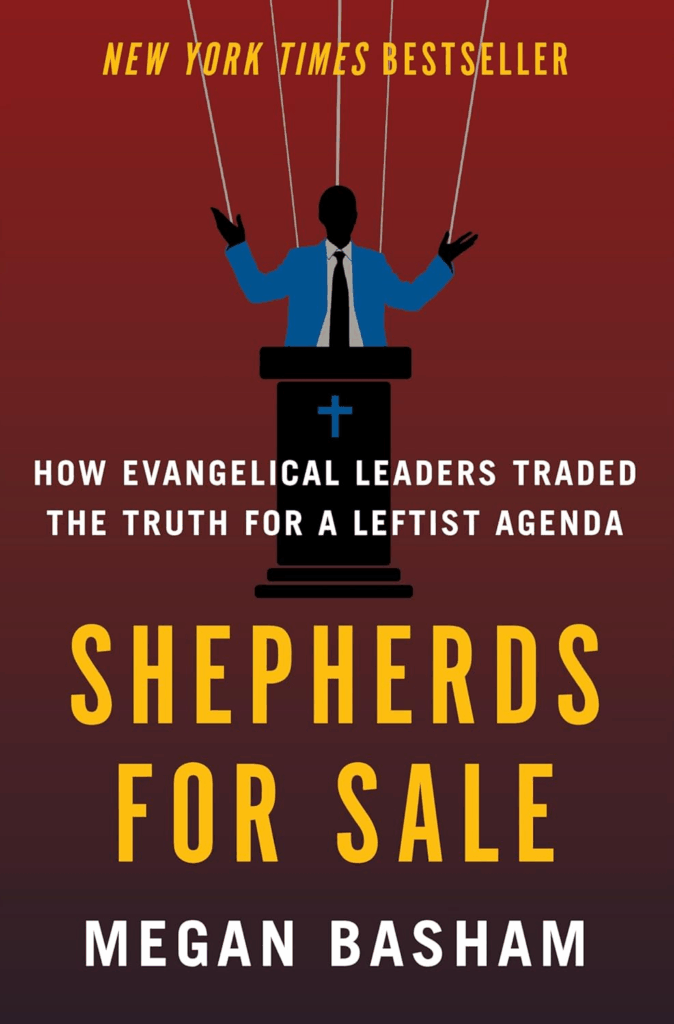
Shepherds for Sale was one of the most important Christian books published in the last ten years, so I checked to see who published it. It wasn’t published by a Christian publisher! None of them would touch it, apparently.
Then Charlie Kirk was martyred. And the many people in the Christian publishing industry were silent about his death. Most figures in the industry had no comment, but Charlie was a man who led massive tent revivals on college campuses, including the tent!
At his memorial service, hundreds of millions of people around the world heard the gospel. It was one of the largest audiences in history to hear the gospel at a single event. The response from the Christian Publishing Industry? No comment. If you don’t believe me, search the various Christian Publishing websites, blogs, and social media accounts for mentions of Charlie Kirk.
At one point, Charlie had five of the six bestselling books on Amazon, so I looked up which Christian publisher published him. It turns out none of his books were published by ECPA-affiliated Christian publishers. None of the Christian publishers would touch Charlie Kirk.
If you are known to be conservative, it doesn’t matter how big your platform is, how good your writing is, or how many books you are likely to sell. If you are like Charlie Kirk, Christian publishers will reject you for political reasons. The rejection letter won’t cite political differences. It will say you were rejected because your platform “wasn’t big enough.” It’s an unfalsifiable statement because no one will ever say how big is big enough.
The water temperature of leftism rose, little by little, until we got to the point where the most important Christian voices, like Charlie Kirk and Megan Basham, couldn’t find a single Christian publisher to publish their books. Both had platforms that reached millions and messages that needed to get out.
Evangelical readers (who make up the bulk of Christian readers) overwhelmingly lean to the right. But the Christian publishing industry, professionals who make money off these conservative readers, leans so far to the left that it silences voices on the right.
Now, big claims require big evidence. I’m not asking you to take my word for it. I’m not even asking you to take the word of the authors sharing their own experiences in the comments.
Here is a test you can run yourself. Go to the traditional publisher’s website and review the list of nonfiction books. See how far you have to scroll before you find a pro-life book. And if you find one, make sure to double-check the book because some books that appear to be pro-life are actually attempts to redefine the term by deconstructing what it truly means. At most publishers’ websites, you would have to scroll through years of books to find a pro-life book. This means you are scrolling back in time to an entirely different pub board.
This is a great test because the abortion question is uniquely theological. We’re not arguing over the marginal tax rate. This is a moral question about the biggest sin our society has ever committed.
Should we be repenting of or celebrating abortion?
The pro-abortion argument is that abortion “is not murdering a baby in the womb because the fetus is not a human person.”
This is a fundamental theological question, and an important one for Christians because it strikes at the heart of the incarnation.
When Jesus was conceived by the Holy Spirit, had Christ come in the flesh? Was Jesus, in Mary’s womb, a human person? We have to be very careful here because if we deny Christ’s humanity, we are falling into Gnosticism, or what the Apostle John calls the “antichrist spirit.”
In 1 John 4, it says, “By this you know the Spirit of God: every spirit that confesses that Jesus Christ has come in the flesh is from God, and every spirit that does not confess Jesus is not from God. This is the spirit of the antichrist, which you heard was coming and now is in the world already.“
We don’t need to wait for Left Behind’s Nicolae Carpathia. The antichrist spirit is in the world already and is denying the humanity of Christ.
Some may argue, “The spirit of Christ didn’t come upon the baby until the baby was born.” But separating the body of Christ from the spirit of Christ is the Nestorian heresy. The Council of Ephesus condemned this heresy in 431 AD.
So let me ask you this question: Have you ever even heard this theological argument against abortion? The argument that denying the humanity of an unborn child is a lie from the antichrist spirit. If not, why not?
As you do your research, you may find a few publishers who will still publish pro-life books. There are even a few pro-life literary agents left. They tend to keep their heads down and avoid discussing politics to avoid persecution from the leftist Christian publishers.
This is just one obvious example, but the leftist gnostic worldview seems pervasive in both fiction and nonfiction.
To talk me down on topics like this, I like to bring in Chase Replogle. He is a pastor, a successful author, and the host of the PastorWriter podcast.
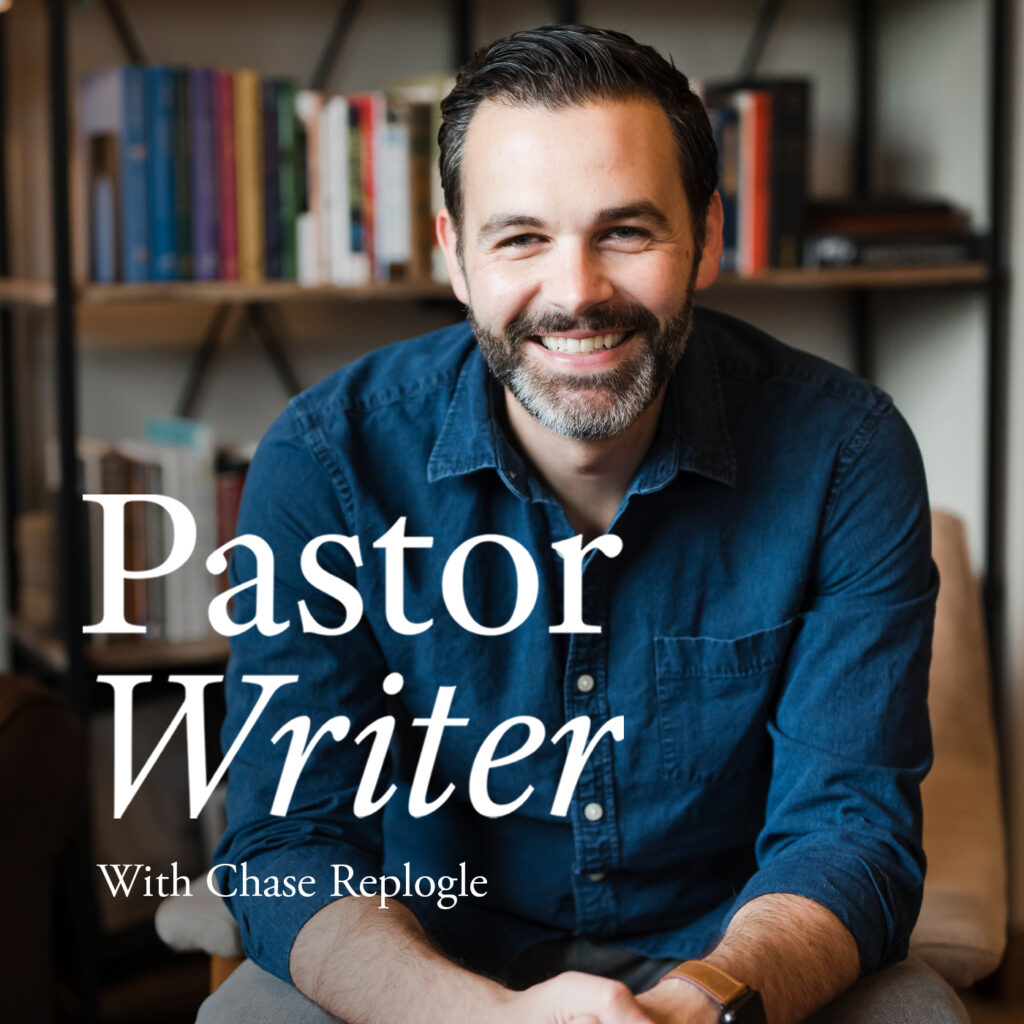
So, Chase, am I crazy? Is Christian publishing going woke?
Is Christian publishing going woke?
Chase: I’ve been thinking about your thoughts here and doing some research on my own. Of course, I come to the topic with my own experience.
Number one, I’ve published traditionally, so I’ve gone through this process several times. I’ve even done a little bit of ghostwriting that’s been traditionally published, so I’ve seen it from that side as well. As host of the Pastor Writer podcast, I’ve interviewed many Christian authors over the years.
I see all the publishers’ catalogs, have good relationships with their publicists, and have made a point to interview a wide variety of authors. Lately, though, it’s become increasingly controversial which authors you talk to and which books get published.
I had Eric Metaxas on to talk about his book Is Atheism Dead (affiliate link). It was basically an apologetics book. It wasn’t political at all, and our entire conversation was about apologetics. But boy, the backlash I got! Over and over, the line that was used was “platforming.” The criticism for “platforming” this person was extremely strong.
It made me realize how the climate of ministry has changed. I came into ministry when pastors were apolitical. We were taught that your congregation consists of people of all political persuasions. Usually, political discussions were about tax policy or foreign policy. The pastor’s job was not to take political sides. Of course, you had views and were allowed to speak on moral issues, but there were plenty of political issues that weren’t considered moral questions.
That’s certainly not the case now.
It’s getting harder and harder to navigate being apolitical for several reasons. Number one, both speaking and not speaking are now seen as political acts. If you don’t speak on a topic, your silence is considered political. Many of the conversations dividing our nation are moral questions that are connected to historical orthodox teachings. Abortion is a perfect example.
Should Christian publishing reflect the reality of the Christian church?
I did some digging into statistics on the voting percentages from the 2024 election. According to Pew, 59% of all Protestant voters (a large umbrella of Protestants) voted for Donald Trump and considered themselves Republicans. For Catholics, it was 52%. It’s harder to get specific numbers on just evangelicals, but many polls show that as much as 85% of evangelicals voted for Donald Trump and Republicans.
We know that when it comes to the evangelical church, the book-buying market is largely right-leaning. I’m a little uncomfortable using the terms “right” and “left” because it’s complicated, but we all understand what those terms mean. At the same time, we’re in this weird moment where even part of the right has drifted into holding some progressive views on things. So, it’s complicated to talk about left and right.
What we’re really talking about is a historically orthodox understanding of Christian theology versus a progressive understanding of Christian theology. The theological questions dividing the church and culture are pretty clear. Abortion is right at the top. Human sexuality, identity, gender identity, critical theories, Marxism, and other critical approaches to race or identity are major dividing lines.
Then there are issues like origins and the reliability of Scripture. These are not like debates over AI, which is a new technology worth discussing from different perspectives. But when it comes to things like human sexuality or abortion, the church has historically held a consistent view from the very beginning. Increasingly, there is a growing percentage of Christians who are taking more progressive stances on these topics that differ from the historically orthodox beliefs.
So all of that is my introduction to ask, “Should Christian publishing reflect the reality of the Christian church?” Meaning, if there’s a percentage of progressive Christian ideas in the church, you’d expect some of that to appear in Christian publishing. But if 85% of evangelicals tend to hold orthodox Christian views on these social and cultural topics, do we see 85% of the publishing catalog titles holding to those historically orthodox views?
I don’t think anyone could honestly say that’s the case. Even if you wanted to argue it’s 50/50, that’s still out of alignment with the people in the pews and the churches they represent.
Is this publishing pattern intentional?
For me, the question becomes, “Is this pattern intentional?” There certainly seems to be a pattern.
When a publisher turns a book down, that decision is extremely subjective. It’s not just the editor; it’s the whole publishing committee. That’s a closed door to you as an author. You don’t know what was said, how your book was evaluated, or why the final decision was made.
Often, all you hear is something vague like, “This isn’t a good fit for us,” or “Our catalog doesn’t have room for this book right now,” or “We’ll keep an eye on this author, but the platform’s not quite there yet.” It’s very opaque trying to understand the reasoning behind a rejection.
It would be helpful if publishers were more transparent about how they make those decisions, because right now we don’t know what’s motivating them. We’re left to wonder why so many books seem disconnected from the majority of evangelical Christians. How are publishers making those decisions? What’s leading them?
There is a pattern, and I wonder if it’s intentional. Are editors and publishing teams who hold these positions determined to push them into the market? Or is it more of a cultural bubble, which I tend to think is the case.
People who work in publishing houses, which are often owned by secular parent companies, live in certain worlds, attend certain churches (if they go at all), and share similar conceptions of culture and what cultural questions are pressing. All of that influences how they believe Christian publishing should respond.
How you perceive the cultural conversation and how you believe the church should speak into it inevitably drive publishing decisions.
For many Christians, when they imagine a lost person, they almost always imagine a left-leaning, progressive lost person, and that person certainly exists. But for years now, we’ve been told to be winsome, to be generous, to strain all our language and empathy toward articulating a compelling gospel witness to the person on the left.
The thought has been, “Whatever you do, do not offend.” And I get that. I wrote a book called A Sharp Compassion (affiliate link), which is all about offense.
I’m not saying we should seek to offend everyone we disagree with. I have lots of conversations with people who are left-leaning and unsaved, and I’m happy to talk with them in a winsome and compelling way.
How do you share the gospel with those on the right?
Chase: My issue is that many people never recognize that there is also a lost person on the right.
We are rarely willing to show that same level of generosity, winsome engagement, and articulate, thoughtful, reasoned response when presenting the gospel to someone whose worldview comes from the right.
In one direction, we feel the need to lean in, publish books, and even give ground in order to earn a hearing or start a conversation. In the other direction, we feel more inclined to scold, chastise, belittle, and name-call.
That happens increasingly in the Christian world. So, for me, one of the underlying principles is that I don’t think we recognize how large and how lost the culture on the right is, and we seem far less interested in engaging it for the sake of Christ.
Thomas: There are a lot of gym bros, gun bros, and boat bros who are lost and dead in their sins. But there’s a shocking openness to the gospel among these guys. Many are out there on their own, seeking Christianity and Christians who will accept them.
A video went viral late last year of a guy on a motorcycle. He was approaching a crosswalk as a priest was crossing. The biker said, “Hey, Father, how you doin’?” The priest turned, responded warmly, and blessed him. They had this really positive encounter.
It was shocking in the best way.
Part of the reason the video went viral was how respectful the man on the Harley was toward the Catholic priest and how loving and accepting the priest was toward him. The priest didn’t instantly judge him, thinking, “Oh, you’re on a motorcycle; you must be a bad person.” Instead, it was a genuinely inviting, touching moment that reached millions of viewers.
Every single person on a motorcycle needs Jesus, just like every single person sipping a latte at Starbucks needs Jesus. We’re all sinners, we’re all broken, and we’re all in need of salvation.
Why is it a mistake to imagine “the culture” as urban and left?
Chase: The other mistake it makes is imagining there is “a culture.” We tend to imagine “the culture” as primarily urban and to the left. There’s still that old idea that if we could win culture-creating centers like New York and L.A., these hubs that produce media and shape culture, then we’d have a greater impact for Christ. But that’s a very 1950s way of viewing the world.
The truth is, a right-wing 15-year-old from Missouri with a cell phone can have as big an impact on culture as a late-night talk show host. The ability to cut through all the old gatekeepers is enormous.
If you want proof of this, talk to your fifteen- or sixteen-year-old son, grandson, or nephew about what he’s consuming on social media. You’ll find that they live in an entirely different internet world than you do.
Most people were shocked by the Charlie Kirk situation, partly because they didn’t even understand how big an impact Charlie was having. They’re not in that demographic.
This is the challenge of the moment. If you don’t really understand where people are, you get caught in this publishing bubble where you imagine the culture and the need exist in a different place.
There’s currently a huge conversation around faith, Christianity, and spirituality happening among young people, primarily young men. I’m very concerned that evangelical leaders and publishing leaders are completely unaware of that conversation, or at least of its significance. They’re certainly not trying to publish for it.
My son is eleven and big into jiu-jitsu, which I knew nothing about. We watched the 1980s Karate Kid movie, and he said, “I want to do karate.” I told him, “Well, there’s a jiu-jitsu gym two miles from our house.” So he started going, and he got me into it. I’ve been doing it for the last four months, and most weeks I’m the oldest guy in the gym.
I get beaten up by a twenty-two-year-old kid, and then he asks what I do for a living. When I tell him I’m a pastor, that used to immediately shut down the conversation. He’d clean up his language and be careful not to talk too freely around me.
But recently, I’ve repeatedly found that as soon as I tell a young man I’m a pastor, he wants to talk. He has a question about the Bible, a verse he’s curious about, a religious leader he’s listening to online, or his church experience. I’ve never found it easier to talk about faith with young men than I do right now.
Do publishers recognize the currently shifting interests of young men?
Chase: In my publishing conversations, though, I rarely feel like the publishing teams recognize that conversation. I write primarily to men, and I recently spoke with an editor who wasn’t aware of Jordan Peterson’s work. To me, that was astonishing. If you’re not aware of Jordan Peterson, you’ve missed everything happening in the conversation with men. You don’t have to agree with him, but you should at least be aware.
Here’s how publishing typically works. It’s interesting to hear you mention large authors with large audiences still getting rejected. I’ve always thought there’s a kind of “too big not to publish” author whose sales potential almost guarantees a yes.
But when Jordan Peterson’s last book came out with a secular publisher, people within the publishing house pushed back against releasing it. It was guaranteed to be a massive success, but even then, there was opposition to publishing his work.
Most editors have to hit a revenue goal, so they’ll sign some big authors and then have room to gamble on smaller ones. I’m in that smaller category. I’m an author with a good idea and enough of a platform to show I can sell books and that my message resonates, but I’m not a guaranteed success. Editors evaluate those projects and take them to a publishing team that all weighs in.
An editor publishing books in the cultural-conversation space must understand the cultural context itself. This isn’t academic publishing, and it’s not strictly Bible-study publishing, though those are affected too.
This category of books addressing cultural questions is a huge part of the Christian industry, and editors need to know what conversations are happening if they want their books to speak meaningfully into them. I worry that many publishers aren’t aware of a large portion of these conversations, or that they’ve constructed a narrow view of what the church needs. They focus only on taking the gospel into one part of the culture.
That narrow focus has created a huge vacuum in the kinds of books being published each year.
How did Christian publishers shift away from orthodoxy?
Thomas: I have a theory about how we got here, because it wasn’t always this way. I break down Christian publishing into three eras.
Era 1: Publishing Houses Founded
The first era was when many of the Christian publishing houses were founded. Many people in Christian publishing back then were seminarians who had a passion for good theology. These were pastors, professors, and others with seminary degrees.
At my very first writer’s conference, one of the agents I pitched had an academic background in seminary. These men were very outspoken in favor of the Christian sexual ethic, and good theology was their main motivation. That’s not to say everyone came from a conservative seminary, but the kinds of people who started publishing houses tended to lean toward orthodox theology.
Era 2: Christians With Business Degrees
Then came wave two, which is when I entered the scene. These were Christians with business degrees. This was when Christian publishing became more professional, efficient, and profitable. It reached more people and became very non-confrontational and non-political.
As the wave-one seminarians started retiring, they began selling their publishing houses, typically to the highest bidder. That often meant those houses eventually ended up, either immediately or after a few sales, in the hands of big secular conglomerates like HarperCollins. HarperCollins now owns the NIV, the NKJV, Zondervan, and Thomas Nelson.
Chase: And to be clear, these are large New York–based secular publishers that have bought up Christian publishers as lower-level imprints.
Era 3: English Degrees and Liberal Arts Staff
Thomas: Then we had the third wave. These are people with English degrees or other liberal arts backgrounds. Their formal education wasn’t in business or theology; it was in postmodern deconstruction. They tend to have a progressive sexual ethic and are much less likely to attend church. If they do, it’s often a church with a rainbow flag out front.
Right now, we’re in this phase where the wave-two executives (the older men in the room) are surrounded by younger and middle-aged women who came up through these progressive, postmodern English programs. The executives don’t want to rock the boat, so these progressive voices end up running the publishing boards.
That’s my theory about how this shift happened. Obviously, each publishing house has its own story, and not all Christian publishing houses have been sold to secular conglomerates.
There are still publishers owned by Christians who have a clear gospel mission. If your publishing house has a “Gospel Tracts” tab on its website, that’s a green flag, in my opinion.
Chase: I want to be clear that I don’t think the catalogs of Christian publishers reflect where Christians actually are, but I have worked with some really good editors and agents whom I know are faithful, orthodox Christians.
Some will quietly admit that it’s getting harder. They’ll say they’re no longer in the majority. Smaller publishers trying to stay faithful to orthodoxy often feel pressure when the larger houses start moving in a different direction. Even if they don’t agree, they feel the need to stay in conversation with those kinds of books.
That becomes difficult for smaller publishers as well. So there is certainly a lean in one of those directions, and that’s often the case.
Thomas: I also think LifeWay’s closing had a big impact on Christian publishing. They acted as gatekeepers for the whole industry. They had clear rules, and getting shelved at LifeWay was such a big deal for Christian publishers that it gave the Southern Baptist Convention a lot of control over the entire publishing landscape.
When LifeWay closed, the SBC lost that influence. That happened around the same time we were transitioning from wave two to wave three, and it accelerated a trend that was already underway.
What is the goal of a Christian publisher?
Chase: Part of my question for editors and publishers would be this: What is the goal of a Christian publisher? Do they see themselves as guiding and directing the church through their acquisitions? Do they aim to see what the church needs and acquire authors with messages designed to move the church in that direction?
If so, that’s a massive responsibility, and one that should have careful theological safeguards around it.
When a denomination decides to enact changes in its theology, the process is often long and difficult and can have consequences that divide denominations. There’s a careful process for that.
But many publishers seem able to shift and make decisions about what to publish pretty indiscriminately. There doesn’t appear to be any kind of theological check or accountability guiding those decisions. They should at least be clear about their intentions.
If an editorial team at a publishing house says, “We are intentionally trying to change the way Christians think about abortion, so we’re going to acquire authors who hold this position,” then they should at least tell me that’s what they’re doing.
Or do Christian publishers see their work as reflecting the conversations of the broader church—intentionally creating dialogue within the church around issues where questions exist? I feel much more comfortable with that. As a writer myself, I would rather be publishing in a world where we are intentionally trying to represent those real conversations.
It’s a fact that many Christians and churches today hold more progressive views than they once did. I understand that there are going to be books defending those positions. But if the goal of the publisher is to accurately reflect the broader conversations of the church, then they should also be intentional about acquiring traditional, orthodox viewpoints.
That’s where things have gotten confusing. We like to imagine that publishers reflect the broader Christian church, but I don’t think they do.
Publishers need to be honest: Are you intentionally acquiring books to move in a particular direction, or are you trying to reflect the broader theological interests and reading habits of Christians?
If it’s the latter, then we need to take a long, hard look at what’s being acquired and published, because right now it doesn’t seem to reflect the full range of conversations taking place in the church.
Publishers need to be honest:
Chase REplogle
Are you intentionally acquiring books to move in a particular direction,
or are you trying to reflect the broader theological interests and reading habits of Christians?
Thomas: We need to know “What safeguards do you have as a publisher to keep the wolves out? What does it really mean to be a Christian publisher?”
How is the “antichrist spirit” demonstrated in Christian publishing?
Thomas: The thing about the antichrist spirit is that it can wear Christianity like a skin suit. It’s not scared off by Christian music or Christian symbols. It’s not like the spirit that tormented Saul, when David would play worship music on his harp, and the spirit would leave Saul for a time. When David left, the spirit would return. That’s not what the antichrist spirit is like.
The antichrist spirit poses as a false version of Christianity. The “skin suit” metaphor is a modern phrase for something Jesus talked about when he warned about “wolves in sheep’s clothing.” False prophets will come. In Matthew 7:15, Jesus says, “Beware of false prophets who disguise themselves as harmless sheep but are actually vicious wolves. You can identify them by their fruit—by the way they act.”
This is why Christians have historically cared deeply about moral ethics, particularly sexual morality, among leaders and people in positions of authority. A non-Christian sexual ethic, whether being advocated for or lived out, is a sign of a false prophet, a wolf in sheep’s clothing.
That’s also why many Christian publishers historically included moral turpitude clauses. If an author violated established Christian morality, they could be dropped by the publisher. I feel like those clauses are no longer enforced as often. When they are, it’s not over sexual ethics or moral issues, but more often over pseudo-political ones.
You might be ejected for voting for Trump, but not for advocating gay marriage.
What does it mean to be a Christian publisher?
Chase: It’s also a problem if publishers merely see Christians as a market. If the ability to sell something to Christians is what makes it “Christian,” then we’re in a race to the bottom. That’s a bad place to be. At some point, being a Christian publisher has to mean something more than, “I can get Christians to buy these books, therefore it’s Christian.”
That ties into your point about losing theological distinctiveness among editors, acquisition strategies, and the overall vision of a publishing house. I keep coming back to clarity. If you call yourself a Christian publisher, tell me what it means for you to be a Christian publisher and how that impacts your acquisition strategies. That kind of transparency would help Christians better navigate the kinds of books they want to buy.
At the end of the day, the books we buy as Christian readers matter. That’s part of the power we have. But it’s hard to send that signal to publishers if you can’t find the kinds of books you’re looking for. It’s especially difficult when Christians are buying books like Megan Basham’s Shepherds for Sale, which are published by secular publishers. The success of those titles may not even register with Christian publishers because they’re not in their catalogs.
The kinds of books we buy as Christian readers make a difference, but publishers also have a responsibility to make those kinds of books available in the first place.
Thomas: The last two itinerant ministers I heard speak were at my parents’ church and my wife’s parents’ church. We went to two different events, and each featured a guest speaker addressing a large audience. Both speakers had books, and they were selling copies like crazy.
Being in the industry myself, I went to the back of the room both times to see who had published the books. These were conservative speakers at conservative churches, one speaking on parenting and the other on godly manhood. They weren’t addressing political topics, but both came from a conservative, orthodox worldview.
Neither of those books was published by a Christian publisher. Both were indie. Many orthodox Christian authors have simply chosen to go independent by using Kickstarter or publishing directly to reach their readers.
We’re in this unique situation where those authors are often making more money by going indie than they would through traditional publishing.
That raises the question: Why bother going the traditional route? Why go through the whole dog-and-pony show and have someone perform a diversity audit on your book to see if you’ve cited sources that are “diverse enough,” when you could just publish it yourself and keep all the profits?
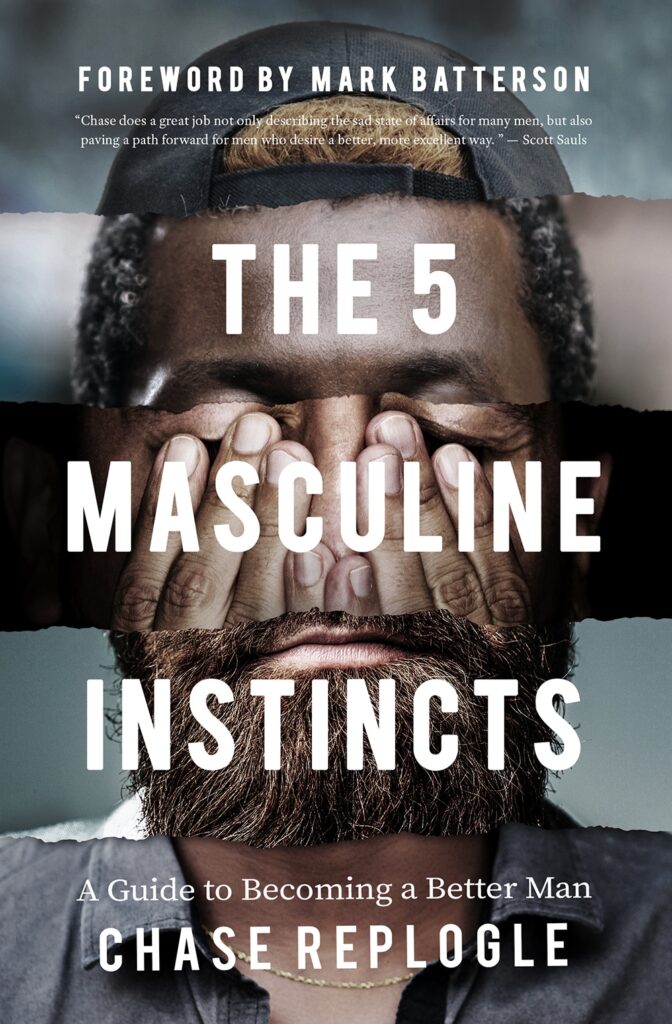
Chase: I’ve had that happen. I’ve had people go through and read every single quote in my manuscript. My first book, The 5 Masculine Instincts (affiliate link), was on Christian character. Much of what I quoted came from ancient sources about virtue and how Christianity transformed the concept of character within the study of virtue.
A publisher expressed concerns that I wasn’t quoting diverse enough sources and requested rewrites because of that.
Thomas: How did you get around that?
Chase: I didn’t. We didn’t end up going with that publisher. That came up early in the process. So yes, I know firsthand that kind of thing happens.
For writers, it can be really frustrating.
Why is my Christian book getting rejected?
Chase: Sometimes you don’t know why your work is being rejected. That’s another reason I want to be careful.
When publishers aren’t clear about their theological objectives in acquisitions, it leaves room for speculation about why books are being turned down. You’ve provided good evidence, and we’ve factually demonstrated that there’s a discrepancy between what the church believes and what’s being published. But there’s also a gray area where people are left guessing why their books aren’t getting published.
If publishers were more transparent, we could rule out whether a decision was politically or theologically driven. If we knew a publisher was intentionally acquiring a certain kind of book, it would help writers understand why their own work might not be a fit.
My first traditionally published book was a great experience; I had a wonderful working relationship with that publisher. The second book, however, went round and round. We got very close with multiple publishers, but ultimately, someone objected, or the deal fell apart. That book, A Sharp Compassion (affiliate link), was about offense and why our culture is increasingly sensitive to it. It explores what we can learn from the places Jesus offends people in the Gospels, and how to respond.
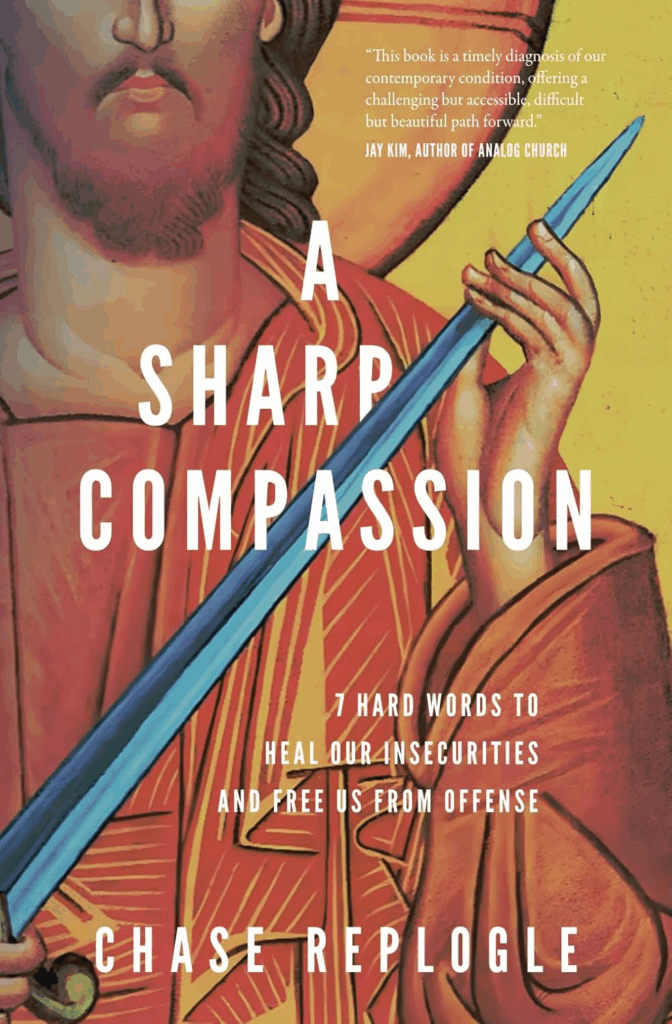
It’s hard to know why it didn’t work out. I’d like to tell you exactly why we couldn’t get it published, but the reasons we heard were inconsistent. That’s one of the hardest parts of being a writer; you don’t always know why your work is being rejected.
Sometimes, of course, it really is about fit. I know certain publishers where my writing simply wouldn’t belong because of the kinds of books they choose to publish.
Is indie publishing the answer?
Chase: The good news is that it’s getting easier to publish independently. There are still some small publishers out there, and even some denominational opportunities. Those may not have the same sales and marketing resources as a traditional publisher, but the truth is, traditional publishers are offering less of that support anyway.
In some ways, I’m grieved by that. I’m nostalgic for the old world, maybe one that never fully existed, where editors were deeply theologically engaged and publishing was a collaborative, faith-driven process. I love that idea.
But the truth is, I’m called to write about what I’m called to write about. I care deeply about these topics, I’ve researched them thoroughly, and they reflect what I believe. If a traditional publisher isn’t on board with that, whether because of platform size or perceived marketability, we still have the option to publish those books ourselves or to find other partners.
That is the future of publishing. It’s encouraging that a publisher’s “no” no longer means an ultimate no. It just means the traditional path isn’t the right one for that project.
Frustrating as that is, I encourage writers not to get discouraged. We need good books, and we need people to read good books. That might be the best message we can send to publishers about the kinds of books they should be publishing.
Isn’t indie publishing expensive?
Thomas: Money doesn’t have to be a barrier. Some people say, “Oh, I can’t go indie; I can’t afford it.” Let me tell you a story.
About 10 or 15 years ago, I was working with one of my website clients, a woman named Mary DeMuth. She wrote a book about overcoming sexual abuse before the #MeToo movement. She pitched it to the publishing boards of the day, but none of them thought there was a market for that kind of book. The zeitgeist was very different then.
Mary knew they were wrong. She knew there was a need for that book. She had already been published a dozen or more times, but her primary publisher said no. Her secondary publisher said no. Instead of giving up, we decided to put her book on Kickstarter.
Kickstarter kicked her off because, at the time, they had a rule against self-help books. It was during that transition when Kickstarter was still somewhat hostile to nonfiction. So we moved forward with Indiegogo, Kickstarter’s big competitor.
Mary put the book on Indiegogo to raise money to publish it with the same quality as her traditionally published books. She wanted to do an offset print run, so she set a goal of $10,000, essentially asking people to pre-order copies to help make the book happen. She ended up raising $25,000, which was much larger than any advance she would have received from a publisher.
Now she maintains full ownership, which means she earns 70% on every ebook sold. She enjoys the higher royalty percentages that indie authors get, but she still works with the same editors and cover designers she used before. She printed about 5,000 copies initially and got her per-unit cost very low because she used the same professional printers, funded entirely by her readers.
The financial barrier doesn’t have to exist. You can crowdfund the money. It’s not GoFundMe or GiveSendGo, where people are donating without getting anything back. They’re expecting a book in return, which is exactly what you want as an author. You want people to buy your book. That’s a feature, not a bug, in my opinion.
Mary and I ended up creating an entire course on crowdfunding. Mary and I walked through how she successfully crowdfunded her book. I went on to crowdfund one of my own books and many other projects. I believe this model of crowdfunding works.

That said, there’s still room in the market for orthodox Christian publishers who understand the times. We need publishers who recognize how the cultural moment and readership are changing, and who realize there’s an underserved market—guys like the “gym bros” who actually want to read theology books.
People say, “They don’t want to read theology books,” but hundreds of thousands of them bought We Who Wrestle with God (affiliate link) by Jordan Peterson, which is a dense theology book.
Chase: The other one that always gets me is Michael Heiser’s book The Unseen Realm (affiliate link). People don’t realize how well that book did. It was basically about angels, demons, and the Nephilim, and it’s done phenomenally well.
Often, when I talk to young men, they’re very interested in those kinds of topics. Now, we may think some of their questions are bizarre, but they’re still questions about what the Bible says. I’ve had some fascinating conversations with them because of that.
But I haven’t seen a traditional publisher put out anything even remotely close to engaging that conversation, even though I know from experience that it’s a massive area of interest among young men. Topics like aliens, conspiracy theories, spirituality, and the unseen realm come up constantly.
A lot of these guys are watching questionable YouTube videos and forming their theology around them, partly because the church hasn’t been gracious or intentional enough to publish books that speak into the topics they’re curious about.
That’s where I hope the publishing industry will move. I hope they will recognize the real questions Christians are asking across the full spectrum and provide thoughtful, biblically grounded voices to help them discern truth.
Thomas: Much of it comes down to listening. So much of success in book sales is about knowing who your Timothy is, who your target reader is, and listening to the questions that reader is asking.
The problem is that many people simply haven’t been listening to young men at all. They’re not having conversations with them, not following them on X, not engaging with them in any meaningful way. In many cases, they’re completely ignoring them or writing them off. As a result, they’re not hearing the very earnest, heartfelt questions these young men are asking. They’re missing the business opportunity in providing answers to those questions.
Jordan Peterson’s We Who Wrestle with God became a New York Times bestseller. It was a dense theology book. Of course, it helped that Jordan Peterson wrote it, but it still shows there’s a real opportunity here.
You’ve heard the phrase “Get woke, go broke.” There’s truth to that trend. Companies that go woke tend to struggle financially. But there’s also the flip side: as you get based, you make more money. There’s a financial incentive here for publishers who recognize it.
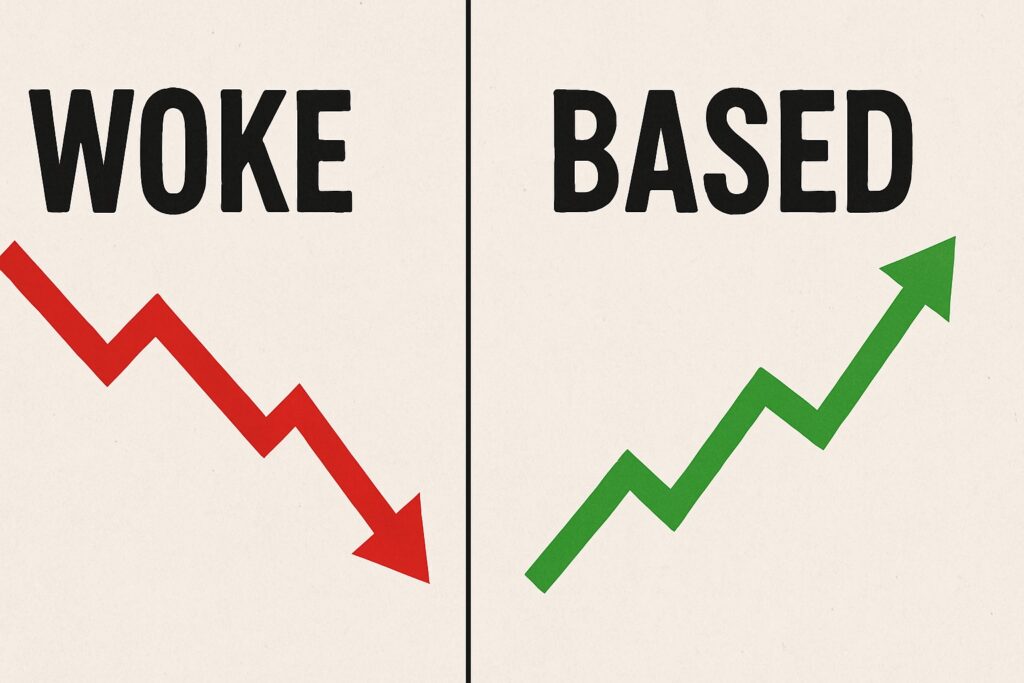
I wouldn’t be surprised if we start to see some publishers take advantage of that opportunity if they can regain control of their pub boards.
The challenge is that a certain percentage of people on the left have allowed politics to become their religion. Activists have taken on a kind of priestly role, and activism itself has become almost a sacrament.
For people like that, a financial argument—like the one I just made—is completely unconvincing. It would be like someone telling you to violate your sincerely held religious convictions for money. You’d respond, “My convictions aren’t for sale.”
In the same way, for some on the left, political beliefs function like religious tenets. They can’t break with a single point of doctrine without feeling like they’re forsaking their true religion. And it’s often when they embrace that political religion that they begin to deconstruct from Christianity.
Is Christian publishing simply a business or a messaging machine?
Chase: At the end of the day, why do we have Christian publishers?
You’ll often hear that they’re businesses. That’s how I first learned about publishing: “Don’t take it personally; at the end of the day, it’s a business.” But I’ve become less convinced that’s the full answer. There are clearly more factors influencing publishing decisions than just finances. If it were purely about money, we’d be seeing a much wider variety of voices in print.
So if there are other factors at play, often theological ones, publishers should be transparent about what those are.
They also need to decide whether they exist in a position of authority to guide the church through their acquisition strategies, or whether they exist to reflect the conversations already happening within the church.
Those are two very different acquisition models, and I don’t think it’s clear to most writers how publishers are approaching that distinction.
What advantages do Christian publishers have over secular publishers?
Thomas: There’s a concept in theology that Christ fulfills three roles: King, Priest, and Prophet. In the Old Testament, those roles were often filled by different people, but Christ embodies all three.
So my question is: where does Christian publishing fit within those three roles?
I think the most obvious fit is the prophetic role, not in the sense of predicting the future, but in calling out sin and confronting evil. If people are murdering their babies, Jeremiah would have some words about that.
Chase: And who are the prophetic voices in the church today? Who are the writers who are speaking to these issues? Under this idea, publishers should be intentionally seeking out those prophetic voices who can speak truthfully and powerfully to the times we’re living in.
Thomas: Secular publishers are really at a disadvantage here because they don’t have the spiritual insight to see what changes need to happen. The church is always in some kind of error, and God is always bringing his bride back. We’re continually repenting of old sins and sometimes overcorrecting in the process.
The sins we face today are not the same ones we faced a hundred years ago, or five hundred years ago. Although Scripture says that there’s nothing new under the sun, it may be that we’re facing the same sins we dealt with three hundred years ago. The wheel turns, and we’re constantly being called to repentance.
The challenge for a secular publisher is that it can’t provide that prophetic voice. It can only land somewhere in the middle of where things are right now. That means it really only fills the priestly role. Maybe it can offer a good devotional to help you feel encouraged in the morning. That’s valuable, but it’s not going to call you to repentance or help you confront evil.
What it can do is help you practice the presence of God, and that’s a good and necessary thing. We don’t want a nation of nothing but prophets. We need kings and priests, too. We need pastors like yourself. Not every book confronts evil, just as not every sermon does.
Sitting with someone who’s grieving the death of a loved one isn’t about confronting evil. It’s about helping them navigate a world that’s still broken, where death still exists. That’s different from addressing a societal evil. We’re not going to solve death ourselves. Jesus solved it, and He will ultimately defeat it. Better science isn’t going to make people immortal. That’s not how it works.
Chase: That’s a good way of putting it. We need lots of different kinds of books. We need books that do different things.
As a writer, I need to understand what Christian publishers are here for, how they’re acquiring books, and how we can partner together if it’s the right fit. And if it’s not, I’m not going to let that discourage me from what I feel called to do. I’ll find the next opportunity.
That said, I’m currently working on my third book and seeking a traditional publishing partnership for it. So I’m not done with traditional publishers, even though we’ve raised some concerns. But if that doesn’t work out, and I’ve had plenty of rejections, that’s not going to stop me.
I hope that’s what other writers take away, too. At the end of the day, write the book God’s called you to write. Listen, learn, take advice, and get an editor. If it’s something you truly feel called to do, don’t let a “no” from a traditional publisher keep you from doing it.
Thomas: Because you don’t serve traditional publishers. You don’t serve your editor. You don’t serve your agent. You serve the King of Kings, and He is sitting on the throne right now. He’s not going to sit on the throne someday; He’s reigning right now. In the end, Jesus wins, and He’s ruling in this very moment.
Ultimately, it’s our obedience to Him that we’ll be judged by.
When we stand before the judgment seat of Christ, we’ll give an account for the deeds done in the body, whether they be good or evil. So be obedient. Don’t follow the so-called “closed doors and open doors.” That’s bad theology. God might speak through circumstances, but when I read the Old Testament and see the Israelites facing closed doors in Canaan—big walls and scary giants—they didn’t say, “Oh, God must be speaking through those closed doors.”
God didn’t say, “Stay in the wilderness.” He said, “Go in. Kill those giants. Tear down those walls.”
So don’t follow the path of least resistance. Follow the King of Kings and Lord of Lords, Jesus Christ. That might mean starting your own publishing company. It might mean going independent. Or it might mean taking over a publishing company that’s lost its way.
We are called to be victorious. In the book of Revelation, all seven churches are called to overcome. We’ve been called to be more than conquerors. So go out there and conquer. Write a book that honors God.
Chase: I became a writer because I love conversation. You’re welcome to disagree, but let’s want each other’s positions. Let’s allow one another to hold different perspectives.
Hopefully, through genuine, honest, and gracious Christian dialogue, we can move the conversation forward. I want to see all of these voices represented in Christian publishing. And I believe the Spirit will guide us, and that truth will ultimately come through.
God spoke through your words today as I listened to the podcast episode. This exact topic was weighing on my heart as my sister just sent me the link to a message by a very progressive church in WA state that she found “encouraging” and it had me really upset. The wisdom and truth that pastor Chase delivered were like a balm to my soul. Thank you for doing what you do!
You mentioned some Christian publishers and conferences, but I am curious what your thoughts are on the ACFW and their conference? Is it worth the membership?