
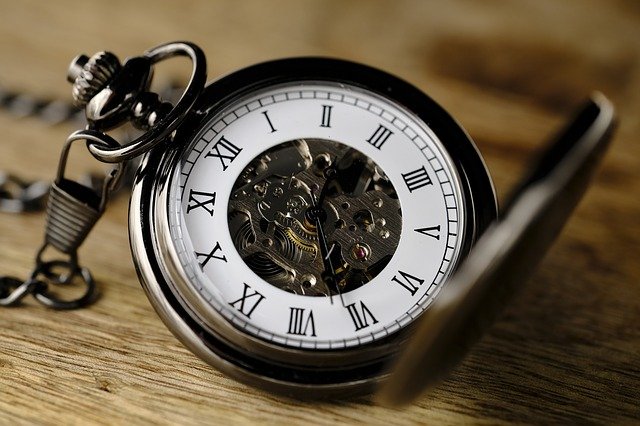
One popular genre in Christian publishing right now is split-time fiction, also called time-slip fiction. It tells two connected stories separated by time, often linked by a theme, a mystery, or a physical object.

Popular split-time novels include The Wedding Dress by Rachel Hauck, and in the general market, Outlander is a well-known example as both a book series and TV show.

You might be wondering, how do you write split-time fiction? Writing one story is hard enough. Writing two connected stories can feel twice as hard. So how do you do it, and how do you do it well?

I asked Melanie Dobson, an award-winning author of more than 20 novels and the author of A Split in Time: How to Write Dual Timeline, Split Time, and Time-Slip Fiction (Affiliate Link)

How is split-time fiction different from time travel and historical novels?

Thomas: Before we talk about how to write time-slip fiction, let’s talk about how it’s different from time travel and historical novels. I think a lot of people get confused about the difference between these genres.

Melanie: That’s a great question. In time-slip fiction, or split-time, people call it by all kinds of names. My publisher calls it time-slip.

The difference is that there’s a distinct past plot and a distinct present plot. You have two timelines, two stories moving forward at the same time, and they gradually connect. It’s like weaving threads. A small thread connects here, another thread connects there, and before you know it, the two stories become one story as they collide. Usually, something surprising happens at the end, a twist, or a big reveal.

That’s different from time travel, where you typically have a contemporary character who goes back in time. With split-time, you have two distinct plots working hand in hand.

Why is split-time fiction so popular right now?

Melanie: I don’t know, but I love it, and I’m grateful for it.

I started writing what we would call time-slip about 20 years ago. It was my dream to write fiction, and I was passionate about it. My first novel had a past story and a present story. The past story involved a woman in Colorado who disappeared. The present story followed a woman trying to find out what happened to her relative 100 years ago.

I sent it to a number of publishers, excited about the book, hoping they’d be equally excited, and I received rejection after rejection, like so many authors do with a first novel. People didn’t know what to do with this new genre, this dual-timeline story, and my writing needed a lot of work.

So, I went back and kept learning. I tweaked and worked, and I ended up publishing about 10 novels that were historical or contemporary. My historical novels are often based on real past stories.

Then something amazing happened around 2014. I went to the American Christian Fiction Writers Conference and pitched a story based on a true account of a woman in France during World War II. She helped Allied airmen and Jewish men and women hide in the tunnels under her family’s chateau.

I came with a lot of trepidation and talked to an editor from Howard Books. I said, “This is what I really want to write. I don’t know what it’s called. I just love this genre.”

She said, “Oh, this is a time-slip novel,” and I wanted to hug her. She finally gave a name to my baby. More and more people were writing this kind of story, even before it had a widely used name. Ever since then, people have gotten really excited about it.

Before that, there were authors like Sarah Key, and Kate Morton does what we would call split-time fiction. It built and built, and here we are today. Readers seem to really enjoy it.

Why do split-time stories work so well on screen?

Thomas: It also took off in Hollywood. You see a lot of TV shows told in a split-time way, even superhero shows. Arrow famously uses flashbacks to him on the island, showing how he became the man he is today.

And of course, Outlander is a strong example. It didn’t necessarily create the genre, but it showed what’s possible.

I think part of why split-time is less common is that it’s harder to write than a single-timeline story. Your experience of trying it early in your career and realizing you weren’t ready yet is normal.

It reminds me of books written with omniscient point of view or first-person point of view. As a reader, I often prefer them, but they’re harder to do well. That’s why some conference speakers warn writers away from them, not because readers don’t like them, but because they’re difficult to execute.

I don’t recommend writing split time as your first novel.

Here’s a metaphor. Mastering the guitar and mastering the violin take the same amount of work, but getting decent at guitar is a lot easier. After a year of violin practice, you’re still scratching away and it’s awful to listen to. After a year of guitar practice, you can play a few worship songs and be pleasant to listen to.

So how can someone level up their skill set before writing a split-time book? Walk us through the “boot camp” you went through.

What should writers learn before attempting a dual-timeline novel?

Melanie: The first thing to do, is to write a full novel first, whether contemporary or historical. Know the process of writing a complete novel in one genre before you try to write a dual-timeline novel.

I suggest being able to write a full historical novel and being able to write a full contemporary novel, so you know how both genres work. Then you can come back and start learning how to write split-time.

Some authors dive right in, like I attempted to do, and that’s fine. But my recommendation is to write a full novel first, either historical or contemporary, or preferably both.

How does historical writing sharpen a novelist’s skills?

Thomas: This is great because learning to write a contemporary novel forces you to focus on fundamentals, strong characters, strong scenes, strong pacing, without the research burden.

Then writing a historical novel adds research and world-building. As a student of history, I get taken out of stories all the time when something feels anachronistic. If the author knows less than I do, and I’m just the reader, my respect for that author drops fast.

Melanie: I often say that I write to support my research habit, because I love to research. It’s so much fun for me. I have to cut myself off because I could research forever and never write.

It depends on where a novel starts for me. Sometimes a friend or family member tells me a story, or I learn something that makes me want to dig deeper. I start online first to verify basic facts and details. Then I go offline.

My library is my favorite place. I have a research librarian who helps me track down old books, papers, references, diaries, whatever I need for that time period.

Then I go to the location, or I try to, if I can. Right now, I’m primarily writing World War II-era European fiction, and it’s been so much fun to go to France, Amsterdam, England, wherever I need to go.

I tell novelists, if you can, go to the setting. You can do a lot online, and Google Maps is fantastic. I even have a virtual reality headset that lets me “visit” the location and see where my characters need to be. But there’s something about being there, the sensory experience, taste, smell, sounds, that pulls the audience into the story.

Also, talk to people. Rely on experts. Do interviews. I’m working on a story set in France right now, and I’m connected with people across the United States who have stories from what happened back in 1940 in France.

People love to help you once you tell them what you’re working on. If it’s their area of expertise, they’ll answer your questions and often give you more than you expected.

What does the split-time writing process look like after the research is done?

Melanie: I’m what you’d call a pantser, or at least I lean that way. I’m intuitive in my writing. I learn the story as I go, as opposed to being a big plotter like many of my friends. I admire plotters so much.

I come home with my research and a general direction for the story. I put everything into Scrivener because it helps me keep all the research organized.

Then I build my characters. I’m very detailed with character development, even if I’m not as detailed with my plot. If I don’t know who my characters are, it’s hard to put them on a journey. I need to know what they want and how they’ll react.

I use different online tools and offline resources to develop them. I give them desires, passions, something they want to do in life, and then I set them on a course.

Then I start writing. The book explains some of the key elements that need to be in a time-slip novel, and I add those in as I go, but my first goal is to pour out the story and get it on the page.

People often ask if I write the historical part first and then the contemporary part. I write them both at the same time because they’re so interwoven. What happens in the past affects the present, and what the characters face in the present relates back to the past.

Then I do a lot of editing. I have to come back and clean it up quite a bit.

What are the essential elements of split-time fiction?

Multiple Time Periods

Melanie: The first key element is obvious. There are multiple time periods. You cannot have just one timeline and call it split-time. You have to have at least two.

Often that means one historical timeline and one contemporary timeline. Contemporary does not have to mean 2020. It could be 2003. A friend of mine, Misa Andrews, wrote a novel set before Christ. Her “contemporary” story was still before year zero. What matters is that there are two distinct timelines, whatever that looks like for your genre or story.

Usually, there is a contemporary character trying to discover something that happened in the past. It does not have to be a mystery, but often it is. The character is trying to find out what happened and why it matters now. That urgency is critical in split-time fiction. There has to be a reason the characters go on this journey to uncover the past.

The contemporary plot is where most of the tension lives. There will be tension in the historical timeline too, but the present-day story usually drives the momentum.

Thomas: Because there is naturally less tension in the historical timeline simply because you know everyone is already dead.

Melanie: Right. That’s one of the fun parts of the genre. Your contemporary protagonists often know a great deal about what happened in the past, but they do not know the whole story.

For example, I wrote a novel called Memories of Glass, based on the true story of three business leaders in Amsterdam who rescued 600 children from a deportation center. My contemporary characters know the broad outlines of that history. They know the children were taken in September 1943, but they do not know exactly how it happened, who escaped, or what it cost the people involved.

That gap lets me increase tension through what the present-day characters say and how they interact, even though the historical events have already occurred.

Bridge to the Past

Melanie: One of the biggest elements is what we call a bridge to the past. Not all 13 elements we discuss in the book have to appear in every time-slip novel, but most of them do, and this one is common.

A bridge to the past is usually a physical object that exists in both timelines. The contemporary characters have it, and the historical characters had it. In Freedom’s Ring, Heidi Chiavaroli Rowley uses a literal ring. In The Wedding Dress, Rachel Hauck uses the wedding dress, a writing desk, and similar objects. In The Butterfly and the Violin, by Kristy Cambron, the bridge is an old painting.

It could also be photographs, jewelry, diaries, or letters. These physical objects naturally link the past and present and allow the story to move back and forth in a way readers can easily follow.

Thomas: That’s really the magic of split-time fiction. Something has to connect the two stories. You cannot just tell two unrelated stories side by side, or it becomes disorienting.

I love your approach because it’s very pantsing-oriented. You know the ingredients that need to be included, and you add them as the story unfolds.

Mirror Theme

Melanie: One of the hardest elements to add is what I call the mirror theme, or moral premise. The Moral Premise by Stanley Williams is a fantastic book that explains this concept well.

Both the past and present characters wrestle with the same core question or theme. They face similar moral choices, even though they live in different eras. In my novel Catching the Wind, both timelines deal with the question of forgiveness. Will the characters forgive or not forgive, and what are the consequences of each choice? Something tangible happens as a result of those decisions in both timelines.

Passing the Baton

Another element I often have to refine in revision is what we call passing the baton. This is not something that happens in every chapter. Readers usually do not notice it consciously, but they feel it.

For example, you might end a historical chapter with a storm approaching. You begin the next contemporary chapter with a storm as well. Or the historical chapter ends with someone running, and the contemporary chapter opens with someone running. It creates a natural, seamless transition between past and present. When that transition is missing, the shift can feel jarring.

Thomas: When transitions are rough, the book becomes high-friction. It can feel almost painful to read because the reader keeps getting hit with abrupt scene changes.

You can occasionally get away with an aggressive cut. One of the most memorable examples is in The Two Towers, when Frodo is taken by Shelob. Sam realizes Frodo is alive, the doors close, the chapter ends, and the next chapter opens with “Pippin.” Tolkien leaves Sam at that door for an entire book.

That works because it is rare. If every chapter did that, readers would resent the characters and enjoy the book less. I love that you point out how subtle these techniques are. Readers will not notice them, but they will like the book more. It’s like using fewer adverbs and adjectives. Readers don’t consciously track it, but it makes a big difference.

The Collision

Melanie: As a pantser, I love being surprised. Characters and connections emerge that I never could have plotted in advance. I especially love the people connections between past and present that I did not plan.

At the end, there is always a collision. The past and present come together in a big way. It feels like two cymbals crashing. Something significant happens that unites both stories.

At the beginning, the timelines can feel like two very different stories. As they move closer, readers start having those “aha” moments. They begin connecting the dots. When it all comes together at the end, and if it’s done well, it leaves readers deeply satisfied.

Often readers tell me they went back and read the book a second time because they knew there were connections they missed. They enjoy seeing how all the pieces fit together.

How does split-time fiction help us understand the past?

Thomas: That second reading only works if you deliver on the foreshadowing. There has to be something waiting for the reader when they go back.

I also love how split-time fiction makes history feel relevant. There’s a common belief that history is just something you study for fun, not something practical. I strongly disagree. Understanding history helps you make better decisions because you can learn from the past without having to live through all the pain yourself.

Split-time fiction embodies that idea. There is knowledge in the past that the present-day character needs in order to move forward and accomplish their goal.

Melanie: That’s exactly why I was drawn to this genre. When I read historical novels, I always wanted to know what happened later. What became of these characters? How did their choices affect future generations?

When I read contemporary novels, I always wanted to know the backstory. But as novelists, we are told not to overload our books with backstory.

Split-time fiction gives me the freedom to do both. I can show the historical events and then show their impact years later. I can write the contemporary story and fully explore the backstory by turning it into its own compelling narrative. I love learning, and I love exploring why history matters and how it speaks to today. I try to weave all of that into my novels.

What common mistakes do authors make with split-time novels?

Unclear Connection

Melanie: One of the biggest mistakes is not clearly showing the connection between the past and present stories. They can start out distinct, but readers need to understand why these two stories are being told together.

Dissimilar Character Themes

Another mistake is not having both protagonists wrestle with similar themes. They should be on parallel journeys, even in different eras.

Failure to Connect the Ending

A third mistake is failing to bring the stories together at the end. There needs to be a meaningful collision that shows why it was necessary to tell both stories. You have to demonstrate why the novel needed two timelines. When everything comes together at the end, it can be beautiful and powerful.

Thomas: That interweaving is critical, especially for traditional publishing. If an acquisitions editor asks, “Why isn’t this two books?” you need a strong answer.

Even for indie publishing, you need that answer. You could theoretically make more money by splitting the stories apart, but split-time fiction only works when all the threads intertwine and belong together.

One of the best strategies is to read a lot of split-time novels, especially those that are well executed. This is a complex genre. If you are not a reader of it, you will struggle to write it. Once you learn to spot techniques like mirrored transitions or thematic echoes, you start reading with author eyes, not just reader eyes.

What can writers learn from your book A Split in Time?

Melanie: A Split in Time is what I like to call a workshop in a book.

My co-author, Morgan Tarpley Smith, runs a successful Facebook community for readers and writers who love split-time fiction. That community is also called A Split in Time. At the same time, I had been teaching workshops on how to write this genre. We realized there was no single resource that helped writers understand how to write split-time fiction well.

So, we combined our experience, our teaching, and our reading and decided to create the resource we wished had existed. We reviewed a wide range of novels, distilled what works, and put everything into one place to answer the many questions writers have about this genre.

The book includes our own stories, a breakdown of the 13 key elements that should be present in most split-time novels, and interviews with seven successful split-time novelists, including Rachel Hauck, Lisa Wingate, and Susan Meissner. At the back of the book, we also include worksheets and tools writers can use to analyze other novels, identify how the elements are working, and then apply those insights to their own manuscripts.

What final encouragement would you give aspiring split-time writers?

Melanie: This genre is growing. We call it an emerging genre, and more readers are discovering it and falling in love with it.

For those of you who want to write split-time fiction, I encourage you to research, outline, and really learn how this genre works. And above all, go ahead and write the story God has put on your heart.

Links: 

Sponsor: Christian Writers Market Guide

The Christian Writers Market Guide 2020 is the most comprehensive and highly recommended resource on the market for finding an agent, an editor, a publisher, a publicist, a writing coach, or a place to sell whatever you are writing. Wherever you are on the writing spectrum–from beginner to seasoned professional–the guide will help you find what you are looking for. Over 1,000 curated listings, including more than 200 book publishers, 150 periodical publishers, 40 agents, 200 freelance editors and designers, podcasts, and much more. Includes a denominational index.

You can get it in print or online