
118 How to Create Compelling Secondary Characters for Your Novel with Angela Hunt
On this show, we have covered protagonists, the characters who want something so badly it drives the whole plot forward. We have also covered villains and antagonists, which are the characters who get in their way.
But stories do not survive on protagonists alone. Side characters or supporting characters play a vital role in your novel. Without interesting side characters, it is much harder to write an interesting story.
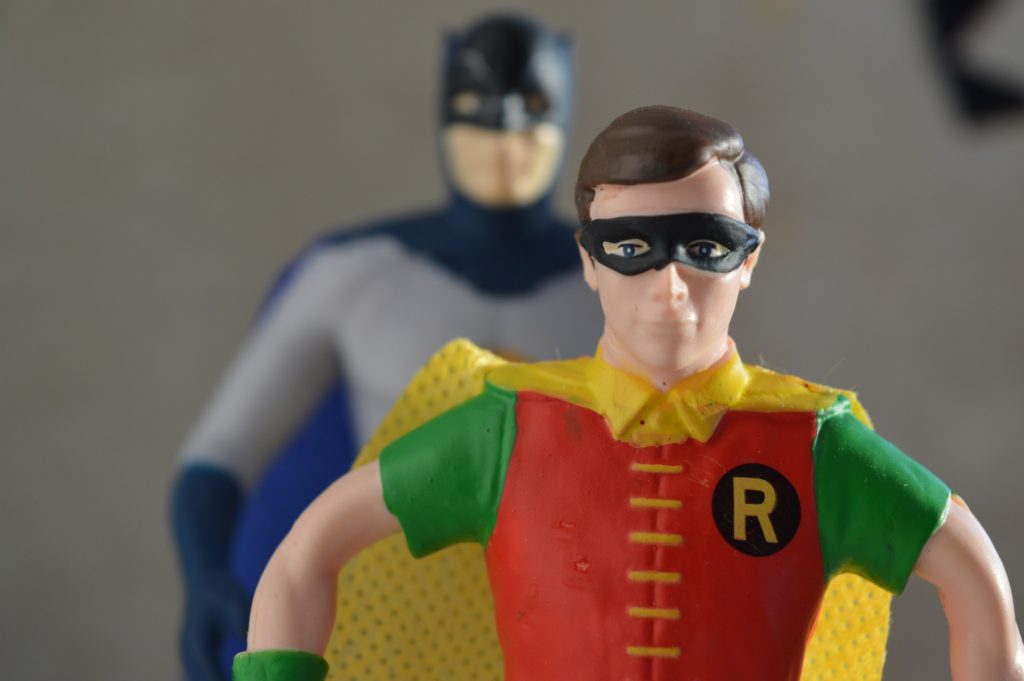
There are many kinds of side characters, including sidekicks, love interests, guides, mentors, and more.
How do you make your secondary characters interesting without letting them steal the show?
I asked Angela Hunt, a Christy Award-winning novelist who writes for readers who expect the unexpected. She is the bestselling author of more than 150 books across multiple genres, including the children’s picture book A Tale of Three Trees, which has sold over 5,000,000 copies.
How do you use different types of side characters in a novel?
Angela: A novel is one person’s story. There will be other characters in the book, but if they have nothing to do with the protagonist, they do not belong in that story. Every member of the supporting cast has to connect to the protagonist somehow.
We will get to the fancy academic and mythological terms for these characters later. But when I start a novel, I begin with my plot skeleton, a metaphor I developed for teaching plotting. I give my main character a problem. Then I ask who is involved in solving that problem, and those are the characters I need.
One of the first things I do is put that character in a family with a spouse, a sibling, or parents. You don’t need a huge family, just enough people for your character to interact with.
Why are parents often missing from children’s stories?
Angela: Have you ever noticed how often parents in children’s stories are absent, on vacation, or dead? They are just gone because parents get in the way of a child’s story.
Children’s stories are about children trying to reach a goal independently. A parent who keeps saying you cannot do that, or you have to be home by 7:00, puts a damper on the whole thing. So when you put your character in a family, limit it to the people the story absolutely needs.
Thomas: It is like writing a thriller in the age of cell phones. Every thriller author has to give a reason for why they don’t just call the police? Everyone has a phone in their pocket. There are a thousand ways to solve that problem, but you need one, because if all the protagonist has to do is call the police and have them arrest the bad guy, there is no story.
Parents often play that same role in children’s stories. They are so powerful and all-knowing that, in the eyes of my two toddlers, there is no problem in their lives I cannot solve. When I tell them I do not know something, they look at me like I am lying. Eventually they will grow out of that view, but the power and knowledge gap between parent and child makes it hard to create stakes that are interesting when the parent in the room could just fix everything.
Angela: It is also helpful to have a parent missing. In The Wizard of Oz, Dorothy could have lived with her parents, but instead she lives with her Auntie Em and Uncle Henry. Her hidden emotional need, the thing the story finally resolves, is accepting her circumstances. She sings “Over the Rainbow,” wanting to get out of there, and she tries to run away.
We are never told what happened to her parents, but you do not end up living with your aunt and uncle if everything is fine at home. So, her hidden need is learning to accept the farm as her new home, where she is loved and cared for. Often, the absence of parents in a children’s story creates an emotional need that is useful in character development.
As you build your plot, add characters only as you need them. The novel I am working on now is about a young girl who has a mom and a dad, and something happens to the dad that affects everyone. I decided not to give her siblings because I did not want to dilute the story with the effects on Tommy, Susie, Sally, and Joe. The more characters you add, the weaker the bond between your reader and your main character becomes. For the strongest bond, cut out everyone but the people the story truly needs.
Should you combine characters to simplify your story?
Thomas: During the editing phase, characters are often combined. You have a character in Act One who exists to solve one problem or have one kind of conversation with the protagonist, and a different character in Act Two doing something else. But people are multifaceted. They can ask hard questions in Act One and also show up asking what is going on in Act Two.
When a book gets adapted to screen, one of the most common changes for a wider audience is combining characters. If Hollywood adapted your book, which characters would they combine? You do not have to combine them, but the exercise may show you that you do not need as many names.
I am bad with names myself, and I have read The Wheel of Time, which has 86 named point-of-view characters, though only four of them are true protagonists. Those 86 characters, across roughly 5,000 pages, do not even count the side characters in each other’s stories. It is a complicated story to tell, and the more you simplify your character count, the easier it is for readers like me to keep up with what is going on.
Angela: That is exactly right. If you have characters who are extraneous, merge them. If Sally is doing something in one chapter and Jo Beth is doing something in the next, why not have Sally do both?
Think about movie adaptations. Scarlett O’Hara lost two children in the book, but they never happened in the movie, because nothing significant happened to them. The one child who made it into the movie, Bonnie Blue Butler, mattered because her death tore Scarlett and Rhett apart.
Thomas: The same thing happens in the original Dune with the character Gurney Halleck. He is the bard who quotes scripture and poetry, but he is also the weapons trainer. It would have been easy to split those into two characters, and in The Wheel of Time, that is exactly what happens. One character is the bard, but by combining the bard and the weapons trainer into Gurney Halleck, he becomes a warrior poet with two sides to his personality. Even though he is not in many scenes, when he is there, he brings out the other characters in interesting ways.
Angela: Good. And one thing to remember: these characters need to intersect with your protagonist at some point, past, present, or future. You could introduce a character in Chapter 2 who does not interact with the protagonist until Chapter 20. Dean Koontz does that often. But if the character never intersects with the protagonist, the reader starts wondering who this person is and why they are reading about him.
Give your protagonist a friend, not necessarily a buddy, but someone he can bounce ideas off of, someone who gives advice. Sometimes that is a mentor, the wise old man or woman. After something significant happens, some great loss or joy, your main character needs someone to talk to and get a reaction from.
How does adding a sidekick make the story better for the reader?
Thomas: It also makes the story more visceral, because it moves the action from inside someone’s head into dialogue. My wife and I are watching Monk, a show about a detective with a sidekick who is not a detective. Her only storytelling role is to keep the show from being Monk silently looking around a crime scene. It would be boring without someone who is not an expert to ask the questions the audience is thinking.
That is why Sherlock Holmes needs Dr. Watson to ask the obvious questions, so Holmes can explain them to the reader without talking down to us. It is Watson who gets talked down to, even though he is genuinely smart. Having a second character in the room moves the story out of Holmes’s head, which is a scary place to visit, and into the room in real life, where you can hear and feel it.
It makes the book more of a page-turner because dialogue moves faster than a paragraph of internal thought, and readers feel like they are flipping through an entertaining book. All because you added a side character strategically to a scene.
Angela: Watson serves another purpose that matters in a mystery. When you choose your point of view, first person, second person, which almost nobody chooses, or third person, which is detached, you are also choosing how much the reader knows.
In first person, readers expect access to every thought in the protagonist’s head. But a mystery is a puzzle, a race between the reader and the detective to solve the crime. If readers had access to everything in Sherlock Holmes’s head, there would be no race, because his thoughts would give it away. That is why Watson tells the stories. He does not have access to what is in Holmes’s head, so the reader is kept at arm’s length from the actual deductions.
Point of view is a tool for keeping a mystery alive.
Thomas: I love that. It comes down to how much tension and information you want to convey.
Christian fiction leans heavily on third-person limited point of view.
Having just read Dune before the movie came out, I noticed it is written in an omniscient, head-hopping point of view. You get into everyone’s head, and it still sold millions of copies and became a classic, even though it breaks the rule against head-hopping. There is a way to do it well, and it is one more tool for side characters.
How many point-of-view characters should you use?
Angela: When you consider your supporting cast and point of view, I have been writing mostly in first person lately, because I write mainly for women readers. It is intimate, and it lets the reader feel exactly what the character is thinking, without drifting into a stream of consciousness that covers everything under the sun.
I try to limit my point-of-view characters to fewer than five. I learned that the hard way after writing a novel with three equally balanced point-of-view characters, one of them the true protagonist, plus her two sisters. Reading the Amazon reviews afterward, I kept seeing the same comment: “I don’t know which sister I liked best. I found it hard to bond with any of them.” I had split my readers’ loyalty three ways instead of one. If I had picked one first-person point-of-view character and written the other two in third person, which is permissible, readers would have bonded with the first-person character instead.
Thomas: If you do want three equally likable characters, the trick is to make each character likable to a different kind of reader. You are either a Captain America person or an Iron Man person. You might like both, but you have a preference, and it gives fans something to debate.
What you do not want is a reader who likes all three equally, because that balancing act matters. Sometimes a side character ends up more interesting than the protagonist.
Angela: Yes, and that should never happen, as long as you keep every character’s role tied to the protagonist. But never forget, your supporting characters need a reason for being in the story beyond just being there when the protagonist needs them. They have jobs, families, places to be by 7:00. That can work well for complications. Maybe the friend your protagonist needs for target shooting has to be home by 5:00 because his wife has dinner waiting, which makes things harder for your protagonist. Give your supporting characters lives of their own, but make sure those lives never overshadow your protagonist’s problem.
I once heard Michael Hauge talk about Meg Ryan and Tom Hanks in You’ve Got Mail. He asked why those two fall in love, other than being cute and being the movie’s leads. I was in a room of writers listening to him, and none of us could answer either. They barely got to know each other until near the end. If you are writing a romance or romantic subplot, give your characters a real reason to fall in love, qualities in each other that earn admiration, not just good looks and shared page space.
Should your characters be physically attractive?
Thomas: That is such a classic Hollywood habit: good guys are beautiful, bad guys are ugly. It is shorthand, and it is a lie. Plenty of beautiful people are evil, and plenty of unattractive people are virtuous. If you get your morality from Hollywood, you start to believe beauty makes you more lovable. As an author, you can fight that by making a character appealing for reasons other than looks. Your characters do not all need to be unattractive, but looks do not have to be their most important trait.
Angela: When I write in first person, I usually skip describing my characters, partly because I think readers will do it themselves. It is also tacky to write, “I held up my hand mirror and looked at my sparkling blue eyes and shiny blonde hair.” Nobody does that. Occasionally another character might say something like, “If I were as cute as you, I would not have any problems,” and my protagonist answers, “Cute is in the eye of the beholder. Let’s move on.”
My husband and I have been watching Acorn TV, which is all British, and I love that their leads are ordinary-looking. Nobody is jaw-dropping or Hollywood-polished, though I think they are all attractive.
Thomas: I suspect the UK hires for acting ability first, and being attractive is a bonus. They grow up on Shakespeare, so they learn to act young.
What if your side character is more interesting than your protagonist?
Thomas: Have you ever realized partway through a story that you picked the wrong protagonist, that someone else in the story is more interesting? Do you rewrite to make your original protagonist more compelling, or let the side character take over the story?
Angela: That has happened to me in my last two books. The protagonist is the one who changes the most and has the epiphany. In my last book, I went back and rewrote it so that character told the story instead.
It is happening again in my current book, about a teenage girl and her grandmother, whom she goes to live with after something happens to her dad. The teenager’s story is more dramatic and emotional, because teenagers are dramatic and emotional, but my readers are the grandmother’s age. This book is not written for teenagers, so I have to make a deliberate effort to keep it the grandmother’s story, even though they will both change.
Thomas: Have you seen the movie Saving Mr. Banks? It is about the making of the original Mary Poppins, where Mary Poppins was written as the protagonist and the story was about the children. Disney brought in the author of the original book to consult, and she hated the film.
What you eventually realize is that the real protagonist of Mary Poppins is Mr. Banks. He is the one who transforms. He wants an orderly life where his children are seen and not heard, and Mary Poppins, the hero, is the antagonist bringing chaos into his life. The children are not even the main characters. They are the object of desire, almost a MacGuffin, not the protagonist or the antagonist, even though I related to them as a child watching the film.
How do you know who your protagonist really is?
Angela: I taught plotting for years before Saving Mr. Banks came out, and I always asked my classes: who is the protagonist of The Wizard of Oz? They always say Dorothy, not the Wizard. Who is the protagonist of The Sound of Music? Maria. Who is the protagonist of Mary Poppins? Everyone says Mary Poppins, and I ask them who changes and learns a lesson, and they slowly work it out. The protagonist is the person who changes the most and learns a lesson.
What’s the difference between an antagonist and a villain?
Angela: Not every story needs a villain, as in someone who is evil and deliberately sets out to do bad things.
An antagonist is anyone who stands in the protagonist’s way. I wrote a book about a woman who inherits a funeral home and wants to run the business and live there, but her mother wants her to move back to Virginia to be near the grandkids. The mother loves her daughter and grandkids, and she even moves to Florida to help, but she is the antagonist every time she shoots down her daughter’s ideas.
The antagonist does not have to stay the antagonist for the whole book. She is only working against the protagonist’s goal at certain points.
Can a side character be an antagonist for just one scene?
Thomas: It can even be for a single scene. In The Lion, the Witch, and the Wardrobe, Edmund has told the White Witch where his siblings are staying with the beavers. The beavers know the wolves are coming and need to leave immediately, but Mrs. Beaver insists on packing her things while the wolves get closer. What is stopping the protagonists from escaping is not the White Witch or the wolves. It is their own ally, Mrs. Beaver, who has a different goal.
That is what makes a side character work as an antagonist for a short stretch. The protagonists never come to hate her. They just have to work around what she wants.
How many friends should your protagonist have?
Angela: Side characters need goals and families, a reason for being in the story. As for friends, have you noticed that a friendship of three is always a little frictional? I don’t know if that is true for men, but it seems true for women.
Three women might get along fine for months, and then something small happens that causes jealousy, resentment, and suddenly there is friction. Friction equals drama, and drama is what fiction is about.
If you want another complication for your protagonist, bring in a new friend and watch the pot start to boil. It will happen easily.
What are the story archetypes from The Writer’s Journey?
Thomas: When you develop these side characters, do you give them their own arcs, a beginning, middle, and end? How do you decide?
Angela: If a character is major, though not the main character, I sketch a small plot skeleton for them too. At minimum, they need a goal and some complications, which gives them a reason to exist and gives the protagonist chances to be helpful, encouraging, or critical. It creates more opportunities for drama, which is always good.
Christopher Vogler, who wrote The Writer’s Journey, a take on Joseph Campbell’s hero’s journey, laid out several story archetypes. You do not need all of them in every story, but they are useful to consider.
Mentor
The first is the mentor, the wise old man or woman who guides and teaches, like Yoda in Star Wars. A mentor often gives the main character a gift to help on the journey ahead, a lightsaber in Star Wars, or in a woman’s fiction novel, a locket with a family motto inscribed inside.
Buddy
The second is the ally, or buddy. You can also add enemies your character makes along the way, people who dislike them and act on it. Another is the herald, who announces the coming change, often at the inciting incident; the sister-in-law who shows up and says you have inherited a castle in England, sending everyone off on the story’s real direction.
Trickster
The trickster provides comic relief. Shakespeare always had a trickster or jester who provided comic relief while also delivering some real wisdom. A shapeshifter looks like a friend but is secretly a spy or false friend who will eventually turn on your main character. There is a false FBI agent in the movie Along Came a Spider who is supposed to help Morgan Freeman’s character but is working against him.
Guardian
There is also the threshold guardian, someone who blocks the character’s path as they pursue their goal, whether it is someone they have not forgiven or someone literally holding a sword. And there is the shadow, a character who represents the qualities the hero must give up to reach the goal. If your protagonist is a recovering addict, the shadow might be the old friend who shows up looking for a fix and tries to pull him back to who he used to be.
How do you know which side characters to add?
Thomas: Think of these archetypes as a pantry of ingredients. You do not need to cook every book with all of them, but a couple of good archetypes go a long way.
In video games, every character has an alignment on two axes: good versus evil, and lawful versus chaotic. Darth Vader is arguably lawful evil. He works under an authority and does evil things within its laws. The Joker is chaotic evil. He does evil for its own sake and follows no laws.
That gives you room for interesting conflict. In The Lord of the Rings, the hobbits are lawful good, or maybe neutral good, and they approach the tree Ents, who are true neutral. The Ents do not answer to anyone’s laws but do not break them for their own sake either. Watching the hobbits try to convince the Ents to help fight evil, and watching the Ents refuse and then agree, creates real conflict that is not the usual good-versus-evil kind.
This tool is more common in fantasy and science fiction, but I would love to see romance writers try alignment with their characters.
If everyone is lawful good, you miss out on conflict. A lawful good character follows the rules to do the right thing. A chaotic good character does the right thing regardless of the rules. Both want to do good, but their methods clash, which is where the fun lives. Do you break a window to save a child inside? It is against the law, but it is the right thing to do.
Try mixing up the alignments of your side characters instead of keeping them all in the same box.
Angela: That should come as a deck of cards. You could just pick one from the lawful box and put things together.
Thomas: Or roll dice, the true role-playing way. Some authors solve plot problems that way too, rolling to see if a character survives a situation. I would not recommend it for most authors, but I know some who do.
Knowing your genre and your readers’ expectations also matters here. Everybody tends to be pretty lawful in the romance world. If your readers expect everyone to follow the law, you need to know that. Drop a chaotic good character into an Amish story, for example, and they will not fit well in that community, unless that clash is the whole point of the story.
What’s the biggest mistake authors make with side characters?
Angela: I was once at a writer’s conference doing 15-minute appointments, where someone sits down and describes their book. A woman told me her book was about a woman who is kidnapped. I said, “Oh, so it is about her escaping throughout the book?” She said, “No, because her boyfriend is a cop trying to rescue her.”
I said, “So he is the protagonist?” She said, “No, because there is also a lawyer helping the cop figure out what the bad guys are doing.”
I told her to stop right there, because she had lost me. She had not settled on who her protagonist was.
That is the number one problem I see with beginning writers. They fall in love with every character and want to tell all of their stories, which turns into a morass because nobody knows who the story is about.
How do you choose one main character?
Angela: You have to know who your main character is first. I once read a book by Donald Maass, a New York literary agent and something of a guru of novel writing, where he mentioned ensemble casts. I decided to try one myself and wrote a story with six main characters, six protagonists, if you will. I brought it to his advanced writer’s workshop, where you submit a completed manuscript and he questions you about it.
When we met, he told me it was not working. I asked why not, since it was an ensemble cast. He said even an ensemble cast needs one main character. If you keep it perfectly balanced, you end up with six inciting incidents, six calls to adventure, six bleakest moments, and it becomes repetitive and boring because all the characters are having the same things happen to them.
He was right.
I took the book home and rewrote it completely, and it became far more profound and moving. The story is about six people who survive a shipwreck and wash up on a strange island where something metaphysical has happened to them. I chose to focus on the woman with a teenage daughter, worried about whether she can ever reach her again, not wanting her daughter to end up somewhere like this. The book ends with her casting bottles with messages into the ocean, hoping one reaches her daughter. That choice gave the book a completely different heart and improved it a thousandfold.
Do not get so attached to every character that you lose sight of who has the most to change, and whose story is the heart of the book. Make that person your protagonist.
Thomas: I love that. X-Men needs Professor Xavier to be the most important X-Man, because even though it is an ensemble story, it is about him. The Avengers looks like an ensemble story with a dozen plotlines, but every character in that movie already had their own film. They each had their inciting moment and their bleakest hour. They had already gone through the hero’s journey. That is why you have to do your homework. I have heard of people whose first Marvel movie was an Avengers film, and they had no idea what was going on, just that the explosions were cool. You do not want your book to feel that way, because every one of your side characters is the main character of their own story.
Do you have any final encouragement for writers?
Angela: I never set out to be a writer. I never dreamed of writing the great American novel, and I still do not. But writing is not rocket science. It is a craft you can learn. It takes plenty of work, practice, and learning, but it is completely achievable if you put in the hours. And the reward, crafting a story that changes people’s hearts and lives and gives them hours of enjoyment, is priceless.